Going Home
집에 가기
Emma and Mia pack their things and leave the beach. They talk about the fun day and the bus ride home.
에마와 미아는 짐을 챙겨 해변을 떠나요. 즐거웠던 하루와 집에 가는 버스에 대해 이야기해요.
대화7
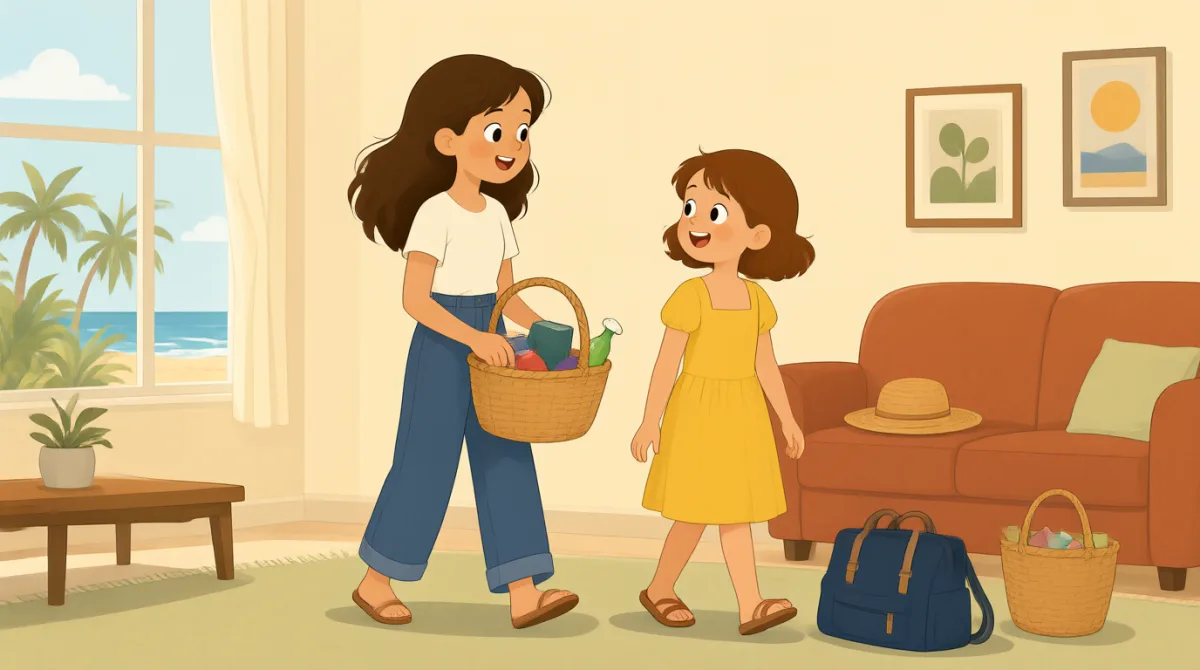

I have my towel and bag. Do you have everything?
수건이랑 가방 챙겼어. 너도 다 챙겼어?

Yes. I have my hat and water bottle.
응. 모자랑 물병 챙겼어.
The beach was so much fun today.
오늘 해변에서 정말 신나게 놀았어.
Yes, but I am a little tired now.
응, 그런데 이제 조금 피곤해.
Let's take the bus home. Is the stop nearby?
버스 타고 집에 가자. 정류장 가까워?
Yes, it's just across the street.
응, 길 건너편에 바로 있어.
Great! I can't wait to sit down.
좋아! 얼른 앉고 싶어.
어휘7
- towel수건
A towel is a piece of cloth used to dry yourself. You can take it to the beach.
수건은 몸의 물기를 닦는 데 쓰는 천이에요. 해변에 가져갈 수도 있어요.
- water bottle물병
A water bottle holds water to drink. You can bring one with you.
물병은 마실 물을 담는 병이에요. 가지고 다닐 수 있어요.
- a little tired조금 피곤한
This means slightly tired, but not very tired. Use it to describe how you feel.
많이 피곤한 건 아니지만 약간 피곤하다는 뜻이에요. 자신의 기분이나 상태를 말할 때 써요.
- take the bus버스를 타다
This means to travel by bus. You can say, “I take the bus to school.”
버스를 이용해 이동한다는 뜻이에요. “I take the bus to school.”(학교에 버스를 타고 가.)처럼 말할 수 있어요.
- nearby근처에
Nearby means close to where you are. You can ask if a place is nearby.
지금 있는 곳에서 가까운 곳이라는 뜻이에요. 어떤 장소가 근처에 있는지 물어볼 때 쓸 수 있어요.
- across the street길 건너편에
This means on the other side of the street. You can use it to tell someone where a place is.
길의 반대쪽에 있다는 뜻이에요. 장소가 어디 있는지 알려줄 때 쓸 수 있어요.
- sit down앉다
Sit down means to move into a sitting position. You can say this when you want to rest.
앉은 자세를 취한다는 뜻이에요. 쉬고 싶을 때 이렇게 말할 수 있어요.
핵심 문장8
- 1
I have my towel and bag.
수건이랑 가방 챙겼어.
Use this sentence to say which things you have with you. You can replace “towel and bag” with other items.
이 문장은 가지고 있는 물건이 무엇인지 말할 때 써요. “towel and bag” 대신 다른 물건을 넣어 말할 수도 있어요.
- 2
Do you have everything?
너도 다 챙겼어?
Use this question to check that someone has all their things. It is useful before leaving a place.
상대방이 물건을 빠짐없이 챙겼는지 확인할 때 쓰는 질문이에요. 어떤 장소를 떠나기 전에 유용해요.
- 3
The beach was so much fun today.
오늘 해변에서 정말 신나게 놀았어.
Use this sentence to say that an activity was very enjoyable. Replace “the beach” with another activity or place.
어떤 활동이 정말 즐거웠다고 말할 때 쓰는 문장이에요. “the beach” 대신 다른 활동이나 장소를 넣어 보세요.
- 4
I am a little tired now.
나 이제 조금 피곤해.
Use this sentence to describe feeling slightly tired. You can replace “tired” with another feeling, such as “hungry.”
조금 피곤하다고 말할 때 쓰는 문장이에요. “tired” 대신 “hungry”처럼 다른 기분을 나타내는 말을 넣을 수도 있어요.
- 5
Let's take the bus home.
버스 타고 집에 가자.
Use “Let’s” to suggest doing something together. You can replace “take the bus” with another way to travel.
함께 뭔가 하자고 제안할 때 “Let’s”를 써요. “take the bus” 대신 다른 이동 방법을 넣어 말할 수도 있어요.
- 6
Is the stop nearby?
정류장 가까워?
Use this question to ask if a stop or place is close. Replace “the stop” with another place.
정류장이나 장소가 가까운지 물어볼 때 쓰는 질문이에요. “the stop” 대신 다른 장소를 넣어 보세요.
- 7
Yes, it's just across the street.
응, 길 건너편에 바로 있어.
Use this sentence to explain that something is very close and on the other side of the street. Replace “it” with the place you mean.
무언가가 아주 가까운 곳, 길 건너편에 있다고 설명할 때 쓰는 문장이에요. “it” 대신 말하려는 장소를 넣어 보세요.
- 8
I can't wait to sit down.
얼른 앉고 싶어.
Use “I can’t wait to” to show that you really want to do something soon. You can say, “I can’t wait to go home.”
“I can’t wait to”는 어떤 일을 빨리 하고 싶다는 마음을 나타내요. “I can’t wait to go home.”(빨리 집에 가고 싶어.)처럼 말할 수 있어요.