Giving Precise Facts
In a formal follow-up, Mia gives dates, approval records, and the sequence of payments, carefully separating documented evidence from unanswered questions. The compliance officer clarifies details and records her account.
Dialogue12
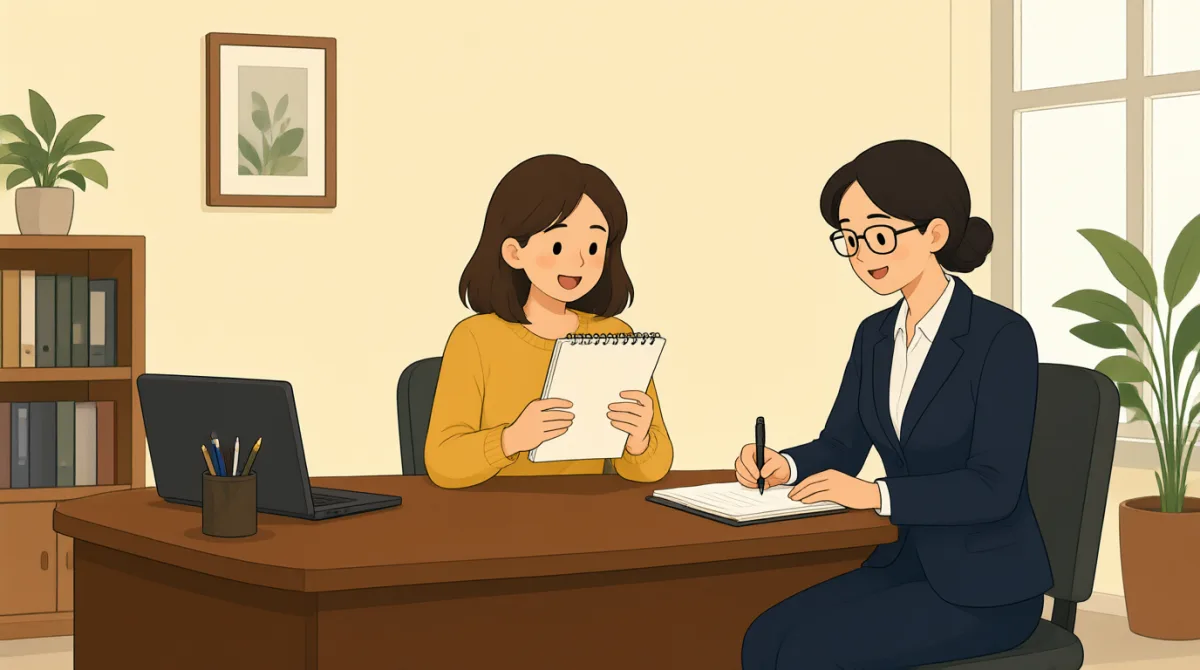

Thanks for coming back, Mia. I’m recording this as a formal follow-up. Please walk me through the payment sequence, and distinguish what you personally verified from what remains uncertain.
The first payment was issued on March 4 for $48,600. I verified the amount, date, and supplier name in the accounts-payable ledger and the bank confirmation.
And what did you find about the second payment? Please include its date and any records showing how it was authorized.
A second payment for the same amount went out on March 11. The payment record lists the same invoice number, and the approval log shows authorization through an exception workflow.
When you say “exception workflow,” are you referring to a specific control bypass, or simply to a route outside the standard approval sequence?
I can confirm it was outside the standard sequence. I can’t say whether a control was intentionally bypassed; the log doesn’t explain why that route was selected.
Understood. Did you verify whether either payment was reversed, refunded, or matched to a credit? We should capture that before drawing conclusions about the loss.
As of March 14, neither payment showed a reversal or refund in the records I reviewed. I haven’t checked subsequent activity, so I can’t confirm the current balance.
That distinction is helpful. Do you have copies of the ledger, bank confirmation, and approval log, and can you tell me when you obtained them?
I saved read-only copies on March 15 from the company’s records system. I haven’t edited them. I can provide the files and identify the source paths I used.
Please send them through the secure channel I’ll provide. I’ll note that your account is based on those records, and that the reason for the exception route remains unanswered.
That’s accurate. I’m reporting the duplicate payment and the unusual approval path as documented facts, not claiming that I know who caused them or why.
Vocabulary8
- payment sequence
The order in which payments were made. Use it to describe financial events clearly and chronologically.
- accounts-payable ledger
A company record of money owed and payments made to suppliers. Here, it is one source Mia used to verify the payment details.
- approval log
A record showing how and when a payment or other action was authorized. It can help establish which approval process was used.
- exception workflow
An approval route used when a transaction does not follow the standard process. The phrase describes the route, but does not by itself explain why it was chosen.
- standard sequence
The usual order of steps in a process. Use this phrase to distinguish normal procedures from an alternative route.
- subsequent activity
Events or transactions that happened later. Here, Mia uses it to clarify that she has not checked records after a particular date.
- read-only copies
Copies of records that can be viewed but not edited. This phrase is useful when explaining how evidence was preserved.
- documented facts
Information supported by records or other evidence. The phrase helps separate what is verified from what is only suspected.
Key Sentences8
- 1
Please walk me through the payment sequence, and distinguish what you personally verified from what remains uncertain.
This is a precise way to request a chronological account while separating confirmed information from uncertainty. Reuse the structure when asking someone to explain events based on evidence.
- 2
I verified the amount, date, and supplier name in the accounts-payable ledger and the bank confirmation.
This sentence identifies both the facts checked and the records used to check them. Adapt it by listing the specific details and sources you personally verified.
- 3
The approval log shows authorization through an exception workflow.
This reports what a record indicates without claiming more than it establishes. Use “shows” to attribute a finding to a specific document.
- 4
I can confirm it was outside the standard sequence.
This clearly states what the speaker knows while avoiding an unsupported conclusion about intent. Reuse “I can confirm…” to introduce verified details.
- 5
I can’t say whether a control was intentionally bypassed; the log doesn’t explain why that route was selected.
This distinguishes an observed process from an unanswered question about motive. It is useful when reporting irregularities without making accusations.
- 6
As of March 14, neither payment showed a reversal or refund in the records I reviewed.
This limits the claim to a specific date and the records examined. Use “As of [date]” and “in the records I reviewed” to make the scope of a finding clear.
- 7
I saved read-only copies on March 15 from the company’s records system.
This states when and where the copies came from and indicates they were not editable. It is useful for explaining how records were preserved.
- 8
I’m reporting the duplicate payment and the unusual approval path as documented facts, not claiming that I know who caused them or why.
This carefully separates evidence from conclusions about responsibility or motive. Reuse this contrast when you need to report concerns without implying that unverified claims are proven.