Getting Your Things Back
소지품 찾기
The officer tells Emma she can collect her things. Jack helps her put her laptop and liquids back in her bag.
직원이 에마에게 소지품을 가져가도 된다고 말해요. 잭은 에마가 노트북과 액체류를 가방에 다시 넣는 걸 도와줘요.
대화8
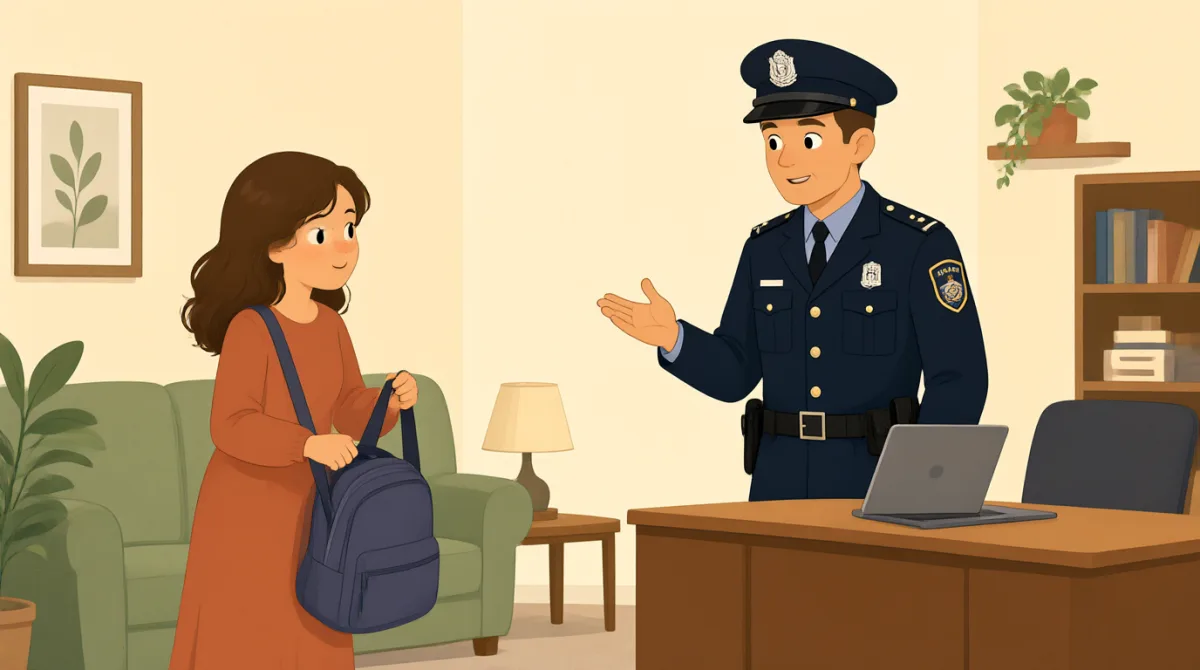

You can get your things now.
이제 소지품 가져가도 돼.

Okay. Is this my tray?
알았어. 이게 내 바구니야?
Yes. Your laptop and liquids are here.
응. 네 노트북이랑 액체류가 여기 있어.
Thanks. Can you help me with my bag?
고마워. 내 가방 좀 도와줄래?
Sure. Put the laptop in first.
물론이지. 노트북부터 넣어.
Okay. Now I put the liquids in.
알았어. 이제 액체류를 넣을게.
Great. Your jacket is here, too.
잘했어. 네 재킷도 여기 있어.
Thanks. I have everything now.
고마워. 이제 다 챙겼어.
어휘7
- get your things소지품을 가져가다
This means to collect the things that belong to you. You can use it when your belongings are ready.
자기 물건을 챙겨 간다는 뜻이에요. 소지품을 가져갈 준비가 되었을 때 쓸 수 있어요.
- tray바구니
A tray is a flat container used to carry things. At airport security, you put your things in a tray.
물건을 담아 옮기는 납작한 용기예요. 공항 보안 검색대에서는 소지품을 바구니에 담아요.
- liquids액체류
Liquids are things like water or shampoo. At the airport, you may need to take them out of your bag.
물이나 샴푸처럼 액체인 것들을 말해요. 공항에서는 가방에서 액체류를 꺼내야 할 수도 있어요.
- help me with my bag가방을 도와주다
This is a polite way to ask someone to help you handle your bag. You can change “my bag” to another thing you need help with.
상대방에게 가방을 다루는 걸 도와달라고 정중하게 부탁할 때 쓰는 표현이에요. “my bag”을 도움이 필요한 다른 물건으로 바꿔 말할 수 있어요.
- first먼저
This means before the other things. Use it to say what to do before doing something else.
다른 것보다 앞서 한다는 뜻이에요. 다른 일을 하기 전에 무엇을 할지 말할 때 써요.
- too도
Here, “too” means “also.” Use it to add another thing or person.
여기서 “too”는 “also”와 같은 뜻이에요. 물건이나 사람을 하나 더 덧붙일 때 써요.
- I have everything now.이제 다 챙겼어.
This means you have all the things you need. You can say it after collecting your belongings.
필요한 물건을 모두 가지고 있다는 뜻이에요. 소지품을 챙긴 뒤에 말할 수 있어요.
핵심 문장8
- 1
You can get your things now.
이제 소지품을 가져가도 돼요.
This tells someone they can collect their belongings. You can use “You can get your [thing] now” when something is ready.
상대방에게 소지품을 가져가도 된다고 알려 주는 말이에요. 무언가 가져갈 준비가 되었을 때 “You can get your [thing] now”라고 말할 수 있어요.
- 2
Is this my tray?
이게 제 바구니예요?
This is a simple way to check if something belongs to you. You can replace “tray” with another object.
무언가가 자기 것인지 확인하는 간단한 표현이에요. “tray”를 다른 물건으로 바꿔 말할 수 있어요.
- 3
Your laptop and liquids are here.
노트북과 액체류가 여기 있어요.
This tells someone where their things are. You can use “Your [things] are here” to point out belongings.
상대방의 물건이 어디 있는지 알려 주는 말이에요. 소지품을 가리킬 때 “Your [things] are here”라고 말할 수 있어요.
- 4
Can you help me with my bag?
제 가방 좀 도와주시겠어요?
This is a polite way to ask for help. You can replace “my bag” with another task or object.
도움을 정중하게 부탁하는 표현이에요. “my bag” 대신 도움이 필요한 일이나 물건을 넣어 말할 수 있어요.
- 5
Put the laptop in first.
노트북부터 넣으세요.
This gives a simple instruction about what to do before something else. You can use “Put the [thing] in first” when packing.
다른 일을 하기 전에 무엇을 해야 하는지 간단히 알려 주는 말이에요. 짐을 쌀 때 “Put the [thing] in first”라고 말할 수 있어요.
- 6
Now I put the liquids in.
이제 액체류를 넣을게요.
This says what you are doing next. You can use “Now I put the [thing] in” while packing or organizing.
다음에 무엇을 하는지 말하는 표현이에요. 짐을 싸거나 정리하면서 “Now I put the [thing] in”이라고 말할 수 있어요.
- 7
Your jacket is here, too.
재킷도 여기 있어요.
This points out another item that someone can collect. Use “too” to add one more thing.
상대방이 가져갈 수 있는 물건을 하나 더 알려 주는 말이에요. “too”를 써서 물건을 하나 더 덧붙여요.
- 8
I have everything now.
이제 다 챙겼어요.
This tells someone you have collected all your belongings. You can use it when you are ready to leave.
자기 소지품을 모두 챙겼다고 알리는 말이에요. 떠날 준비가 되었을 때 쓸 수 있어요.