Getting Your Things Back
Recoger tus cosas
The officer tells Emma she can collect her things. Jack helps her put her laptop and liquids back in her bag.
El agente le dice a Emma que puede recoger sus cosas. Jack la ayuda a guardar el portátil y los líquidos en su bolso.
Diálogo8
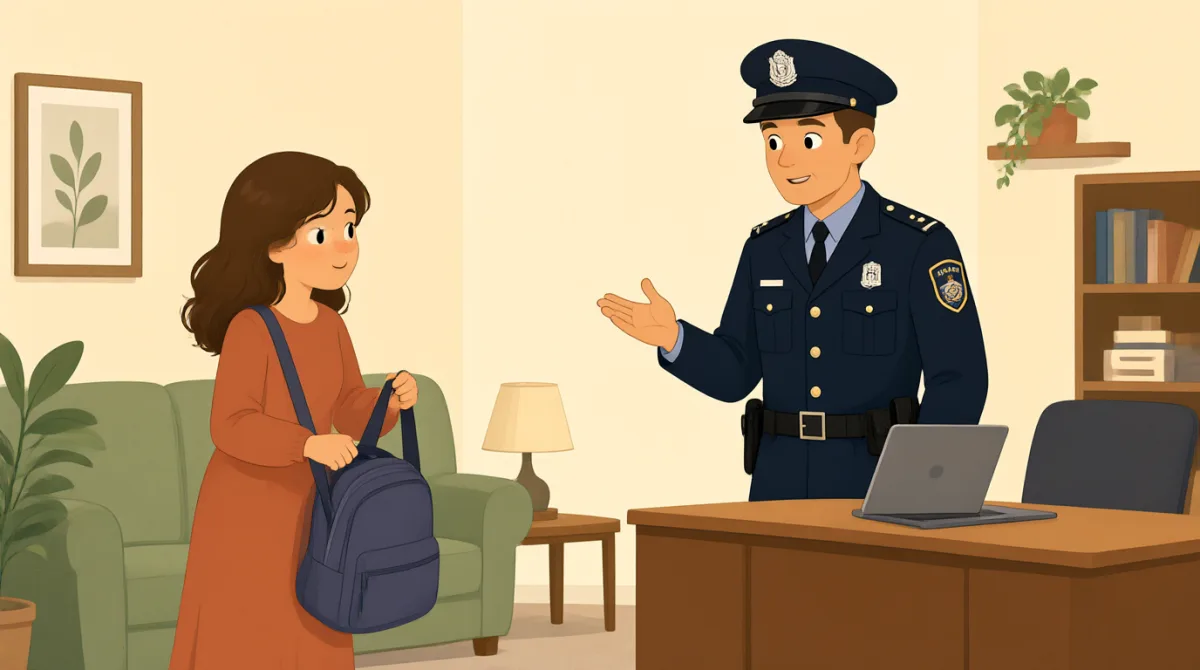

You can get your things now.
Ya puedes recoger tus cosas.

Okay. Is this my tray?
Vale. ¿Esta es mi bandeja?
Yes. Your laptop and liquids are here.
Sí. Aquí están tu portátil y los líquidos.
Thanks. Can you help me with my bag?
Gracias. ¿Me ayudas con el bolso?
Sure. Put the laptop in first.
Claro. Mete primero el portátil.
Okay. Now I put the liquids in.
Vale. Ahora meto los líquidos.
Great. Your jacket is here, too.
Genial. Aquí también está tu chaqueta.
Thanks. I have everything now.
Gracias. Ya tengo todo.
Vocabulario7
- get your thingsrecoger tus cosas
This means to collect the things that belong to you. You can use it when your belongings are ready.
Significa recoger las cosas que te pertenecen. Puedes usar esta expresión cuando tus pertenencias ya estén listas para recoger.
- traybandeja
A tray is a flat container used to carry things. At airport security, you put your things in a tray.
Una bandeja es un recipiente plano que se usa para llevar cosas. En el control de seguridad del aeropuerto, pones tus cosas en una bandeja.
- liquidslíquidos
Liquids are things like water or shampoo. At the airport, you may need to take them out of your bag.
Los líquidos son cosas como el agua o el champú. En el aeropuerto, puede que tengas que sacarlos del bolso.
- help me with my bagayudarme con el bolso
This is a polite way to ask someone to help you handle your bag. You can change “my bag” to another thing you need help with.
Es una forma amable de pedirle a alguien que te ayude con tu bolso. Puedes cambiar “my bag” por otra cosa con la que necesites ayuda.
- firstprimero
This means before the other things. Use it to say what to do before doing something else.
Significa antes que las otras cosas. Úsalo para decir qué hay que hacer antes de hacer otra cosa.
- tootambién
Here, “too” means “also.” Use it to add another thing or person.
Aquí, “too” significa “también”. Úsalo para añadir otra cosa o persona.
- I have everything now.Ya tengo todo.
This means you have all the things you need. You can say it after collecting your belongings.
Significa que tienes todas las cosas que necesitas. Puedes decirlo después de recoger tus pertenencias.
Frases clave8
- 1
You can get your things now.
Ya puedes recoger tus cosas.
This tells someone they can collect their belongings. You can use “You can get your [thing] now” when something is ready.
Le dices a alguien que ya puede recoger sus pertenencias. Puedes usar “You can get your [thing] now” cuando algo ya está listo.
- 2
Is this my tray?
¿Esta es mi bandeja?
This is a simple way to check if something belongs to you. You can replace “tray” with another object.
Es una forma sencilla de comprobar si algo te pertenece. Puedes sustituir “tray” por otro objeto.
- 3
Your laptop and liquids are here.
Aquí están tu portátil y los líquidos.
This tells someone where their things are. You can use “Your [things] are here” to point out belongings.
Le dices a alguien dónde están sus cosas. Puedes usar “Your [things] are here” para señalar sus pertenencias.
- 4
Can you help me with my bag?
¿Me ayudas con el bolso?
This is a polite way to ask for help. You can replace “my bag” with another task or object.
Es una forma amable de pedir ayuda. Puedes sustituir “my bag” por otra tarea u objeto.
- 5
Put the laptop in first.
Mete primero el portátil.
This gives a simple instruction about what to do before something else. You can use “Put the [thing] in first” when packing.
Es una instrucción sencilla sobre qué hacer antes que otra cosa. Puedes usar “Put the [thing] in first” al hacer el equipaje.
- 6
Now I put the liquids in.
Ahora meto los líquidos.
This says what you are doing next. You can use “Now I put the [thing] in” while packing or organizing.
Dices qué haces a continuación. Puedes usar “Now I put the [thing] in” mientras haces el equipaje u organizas tus cosas.
- 7
Your jacket is here, too.
Aquí también está tu chaqueta.
This points out another item that someone can collect. Use “too” to add one more thing.
Señalas otro objeto que alguien puede recoger. Usa “too” para añadir una cosa más.
- 8
I have everything now.
Ya tengo todo.
This tells someone you have collected all your belongings. You can use it when you are ready to leave.
Le dices a alguien que ya has recogido todas tus pertenencias. Puedes decirlo cuando estés listo para irte.