Getting Gloves and Bags
장갑과 봉투 받기
At the park, Grace gives Emma and Mia gloves and bags. She explains where to put the trash.
공원에서 그레이스가 에마와 미아에게 장갑과 봉투를 건네줘요. 쓰레기를 어디에 두면 되는지도 알려줘요.
대화8
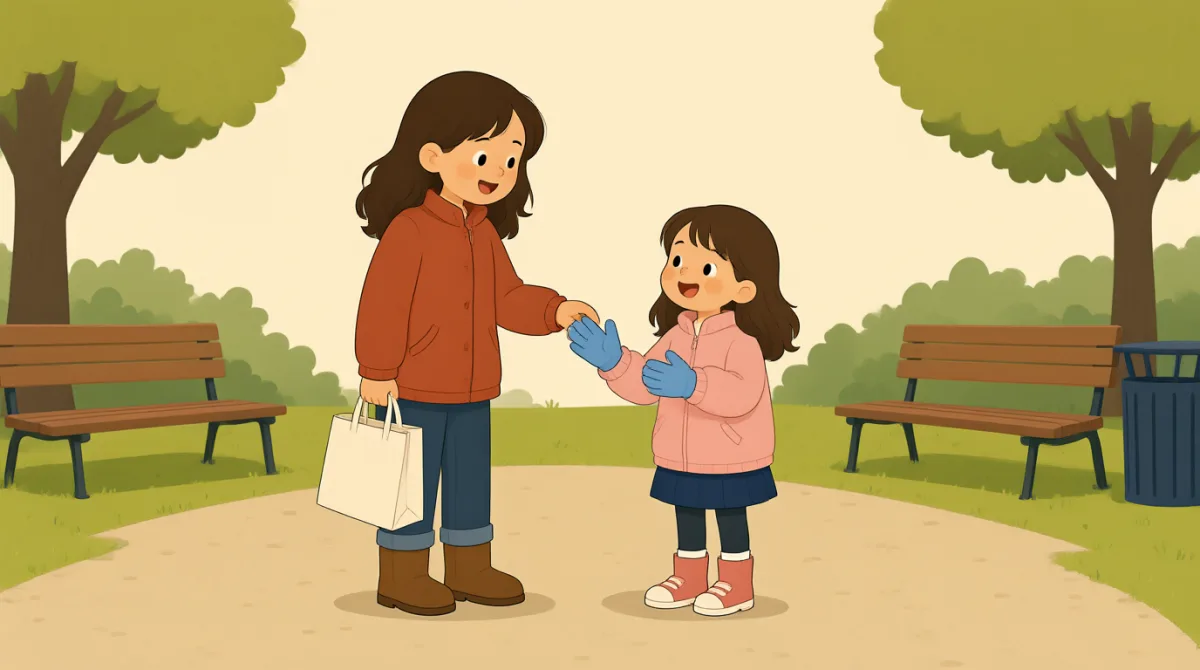

Here are your gloves and bags. Please put on the gloves before you start.
여기 장갑이랑 봉투 있어. 시작하기 전에 장갑부터 껴.

Thanks, Grace. Where should we put the trash when our bags are full?
고마워, 그레이스. 봉투가 다 차면 쓰레기는 어디에 두면 돼?
Leave full bags by the park entrance. We’ll collect them there later.
꽉 찬 봉투는 공원 입구 옆에 둬. 나중에 거기서 우리가 모을게.

Should we pick up broken glass too, or leave it for someone else?
깨진 유리도 주워야 해, 아니면 다른 사람한테 맡겨야 해?
Please don’t touch broken glass. Tell me, and I’ll bring a special container.
깨진 유리는 만지지 마. 나한테 말하면 전용 용기를 가져올게.
Got it. Are there any areas we should clean first?
알았어. 먼저 청소해야 할 곳이 있어?
Start along the paths near the playground. Watch for people walking by.
놀이터 근처 산책로를 따라 시작해. 지나가는 사람들 조심하고.
Okay, we’ll take these bags and start near the playground.
좋아, 이 봉투들 들고 놀이터 근처부터 시작할게.
어휘8
- put on the gloves장갑을 끼다
To put on the gloves means to wear them on your hands. You can use “put on” for clothes and accessories.
“put on the gloves”는 손에 장갑을 끼라는 뜻이에요. “put on”은 옷이나 액세서리를 착용할 때도 쓸 수 있어요.
- bags are full봉투가 가득 차다
This means there is no more space in the bags. You can say “My bag is full” when it cannot hold anything else.
봉투에 더는 공간이 없다는 뜻이에요. 더 이상 뭘 넣을 수 없을 때 “My bag is full”이라고 말할 수 있어요.
- park entrance공원 입구
The park entrance is the place where people enter the park. You can use this phrase to give someone a meeting place.
공원 입구는 사람들이 공원으로 들어가는 곳이에요. 이 표현을 이용해 만날 장소를 알려줄 수도 있어요.
- pick up줍다
Here, “pick up” means to collect something from the ground. You can also say “pick up litter” when cleaning outside.
여기서 “pick up”은 땅에 있는 것을 줍는다는 뜻이에요. 야외에서 청소할 때 “pick up litter”라고도 할 수 있어요.
- broken glass깨진 유리
Broken glass is glass that has cracked into pieces. It can be dangerous, so people should not touch it.
“broken glass”는 깨져서 조각난 유리를 말해요. 위험할 수 있으니 만지면 안 돼요.
- special container전용 용기
A special container is a particular box or holder made for a certain purpose. You can use “container” for something that holds or carries items.
“special container”는 특정한 용도로 만든 상자나 담는 용기를 뜻해요. 물건을 담거나 옮기는 것을 “container”라고 할 수 있어요.
- walking by지나가는
“Walking by” means passing near a place on foot. You can use it to talk about people moving past you.
“walking by”는 걸어서 어떤 장소 옆을 지나간다는 뜻이에요. 사람들이 내 옆을 지나가는 상황을 말할 때 쓸 수 있어요.
- near the playground놀이터 근처에
This means close to the playground. You can use “near” to say that one place is not far from another.
놀이터에서 가까운 곳이라는 뜻이에요. 한 장소가 다른 장소에서 멀지 않다고 말할 때 “near”를 쓸 수 있어요.
핵심 문장8
- 1
Please put on the gloves before you start.
시작하기 전에 장갑을 껴.
This is a polite way to give someone an instruction. Use “Please” to make a request sound friendly.
상대방에게 정중하게 지시할 때 쓰는 표현이에요. “Please”를 쓰면 부탁을 더 친근하게 들리게 할 수 있어요.
- 2
Where should we put the trash when our bags are full?
봉투가 다 차면 쓰레기는 어디에 두면 돼?
This is a useful way to ask where something belongs. Replace “the trash” with another item to ask where to put it.
무언가를 어디에 두면 되는지 물을 때 유용한 표현이에요. “the trash” 대신 다른 물건을 넣어 어디에 두면 되는지 물어볼 수 있어요.
- 3
Leave full bags by the park entrance.
꽉 찬 봉투는 공원 입구 옆에 둬.
This gives a clear instruction about where to leave something. You can replace “full bags” and “the park entrance” with other items and places.
무언가를 어디에 두면 되는지 분명하게 알려주는 표현이에요. “full bags”와 “the park entrance”를 다른 물건이나 장소로 바꿔 쓸 수 있어요.
- 4
Please don’t touch broken glass.
깨진 유리는 만지지 마.
This is a polite but clear warning. Use “Please don’t” to ask someone not to do something.
정중하면서도 분명하게 주의를 주는 표현이에요. 누군가에게 어떤 행동을 하지 말라고 할 때 “Please don’t”를 쓸 수 있어요.
- 5
Tell me, and I’ll bring a special container.
나한테 말하면 전용 용기를 가져올게.
This offers help and explains what you will do next. Use “I’ll” to talk about a future action or decision.
도움을 제안하면서 다음에 무엇을 할지 알려주는 표현이에요. 앞으로 할 행동이나 결정을 말할 때 “I’ll”을 쓸 수 있어요.
- 6
Are there any areas we should clean first?
먼저 청소해야 할 곳이 있어?
This is a useful way to ask which task or place to begin with. Replace “areas we should clean” with another activity to ask what to do first.
어떤 일이나 장소부터 시작해야 하는지 물을 때 유용한 표현이에요. “areas we should clean” 대신 다른 활동을 넣어 무엇을 먼저 해야 하는지 물어볼 수 있어요.
- 7
Watch for people walking by.
지나가는 사람들 조심해.
This reminds someone to be careful and notice people nearby. Use “Watch for” to warn someone to look out for something.
주변 사람들을 살피고 조심하라고 알려주는 표현이에요. 무언가를 주의 깊게 살피라고 경고할 때 “Watch for”를 쓸 수 있어요.
- 8
Okay, we’ll take these bags and start near the playground.
좋아, 이 봉투들 들고 놀이터 근처부터 시작할게.
This confirms a plan and says what will happen next. Use “we’ll” to describe a future action you have decided on.
계획을 확인하고 다음에 할 일을 말하는 표현이에요. 하기로 결정한 미래의 행동을 말할 때 “we’ll”을 쓸 수 있어요.