Watching the Monkeys
サルを見よう
Emma and Jack find the monkeys. They watch them climb and play.
エマとジャックはサルを見つける。サルが木に登ったり遊んだりするのを見る。
会話7
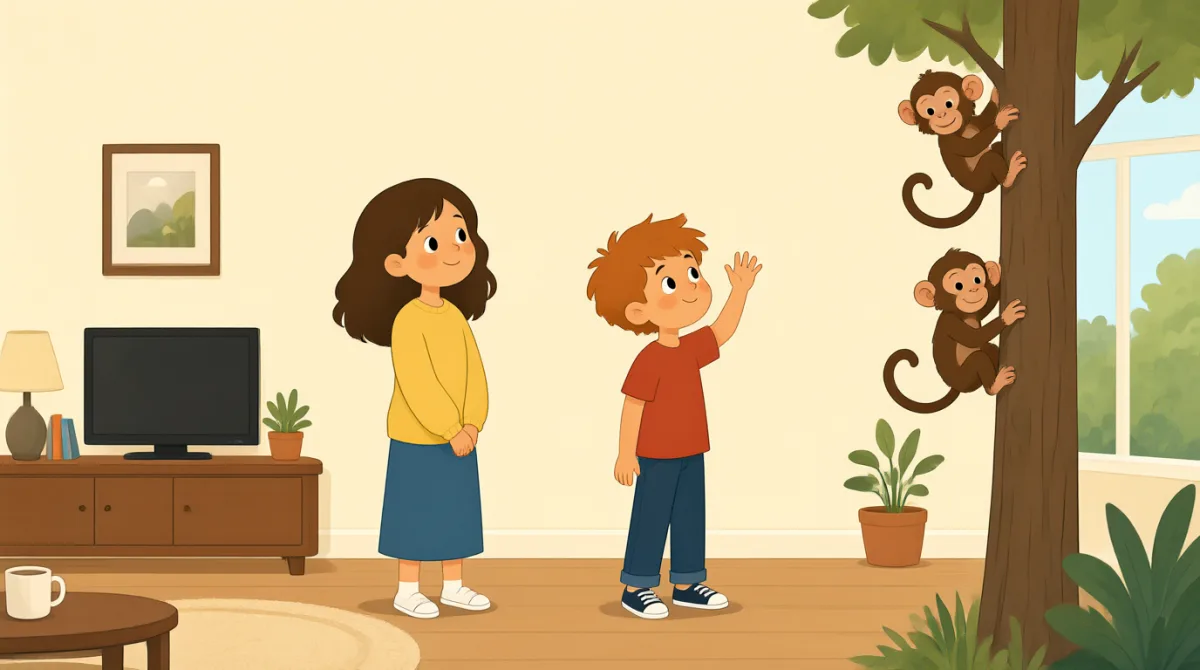

Look, Jack! The monkeys are over there.
見て、ジャック!サルがあそこにいるよ。

They are climbing the trees.
木に登ってるね。
That little monkey is so fast!
あの小さいサル、すごく速いね!
Yes, and this one is eating a banana.
うん、それにこっちのサルはバナナを食べてるよ。
Can you see the baby monkey?
赤ちゃんザルが見える?
Yes! It is playing with its mother.
うん!お母さんと遊んでるよ。
They are so fun to watch.
見ていてすごく楽しいね。
語彙8
- over thereあそこに
This means in a place that is not near you. Use it to point out where something is.
「over there」は、自分から少し離れた場所にあるという意味です。何かがどこにあるか指し示すときに使います。
- climbing the trees木に登っている
This means moving up the trees. You can use “climbing” to talk about moving up something.
「climbing the trees」は、木を上へ登っているという意味です。「climbing」は、何かを登っている動作を表すときに使えます。
- so fastとても速い
This means very fast. Use “so” before an adjective to show how you feel about something.
「so fast」は、とても速いという意味です。形容詞の前に「so」を置くと、何かについて感じたことを表せます。
- this oneこっちの
This means the thing or animal you are pointing to. Use it when you choose one from a group.
「this one」は、自分が指している物や動物のことです。いくつかの中から一つを選ぶときに使います。
- eating a bananaバナナを食べている
This means having a banana as food. Use “is eating” for an action happening now.
「eating a banana」は、食べ物としてバナナを食べているという意味です。今起きている動作には「is eating」を使います。
- baby monkey赤ちゃんザル
This means a very young monkey. You can use “baby” before an animal name to talk about its young.
「baby monkey」は、とても幼いサルのことです。動物の名前の前に「baby」を付けると、その動物の子どもを表せます。
- playing with its motherお母さんと遊んでいる
This means having fun together with its mother. Use “playing with” to say who someone is having fun with.
「playing with its mother」は、お母さんと一緒に楽しく過ごしているという意味です。「playing with」を使うと、誰と遊んでいるかを表せます。
- fun to watch見ていて楽しい
This means enjoyable to look at. Use “fun to watch” to describe something you like seeing.
「fun to watch」は、見ていて楽しいという意味です。見るのが好きなものを説明するときに使います。
重要な文8
- 1
Look, Jack!
見て、ジャック!
Use this short phrase to get someone's attention and point out something. You can say “Look!” before showing a person something interesting.
誰かの注意を引いて、何かを指し示すときに使う短い表現です。興味深いものを見せる前に「Look!」と言えます。
- 2
The monkeys are over there.
サルがあそこにいるよ。
This is useful for telling someone where something is. Replace “the monkeys” with another person or thing.
何かがどこにあるか相手に伝えるときに便利な表現です。「the monkeys」を別の人や物に置き換えられます。
- 3
They are climbing the trees.
木に登ってるね。
Use “are” plus an action ending in “-ing” to describe what people or animals are doing now. You can change “climbing” to another action.
「are」と「-ing」で終わる動作を組み合わせると、人や動物が今していることを表せます。「climbing」は別の動作に置き換えられます。
- 4
That little monkey is so fast!
あの小さいサル、すごく速いね!
Use this sentence to describe an animal or person you can see. Replace “little monkey” and “fast” with other words.
目の前にいる動物や人について説明するときに使える文です。「little monkey」や「fast」を別の言葉に置き換えられます。
- 5
Yes, and this one is eating a banana.
うん、それにこっちのサルはバナナを食べてるよ。
This sentence agrees and adds information about something happening now. You can use “this one is” plus an action to describe one person or thing.
相手に同意し、今起きていることを付け加える文です。「this one is」のあとに動作を続けると、一人や一つについて説明できます。
- 6
Can you see the baby monkey?
赤ちゃんザルが見える?
Use this question to ask if someone can see something. Replace “the baby monkey” with another person or thing.
相手に何かが見えるかどうか尋ねるときに使う質問です。「the baby monkey」を別の人や物に置き換えられます。
- 7
Yes!
うん!
Use this short answer to agree or say that something is true. You can also use it to show excitement.
同意したり、何かが本当だと言ったりするときに使う短い返事です。うれしさを表すときにも使えます。
- 8
It is playing with its mother.
お母さんと遊んでるよ。
Use this sentence to describe what an animal is doing and who it is with. Replace “playing” and “its mother” to describe another activity or companion.
動物が何をしていて、誰と一緒にいるかを説明するときに使う文です。「playing」と「its mother」を別の活動や相手に置き換えられます。