Watching the Monkeys
원숭이 구경하기
Emma and Jack find the monkeys. They watch them climb and play.
에마와 잭은 원숭이를 찾아요. 원숭이들이 나무에 오르고 노는 모습을 구경해요.
대화7
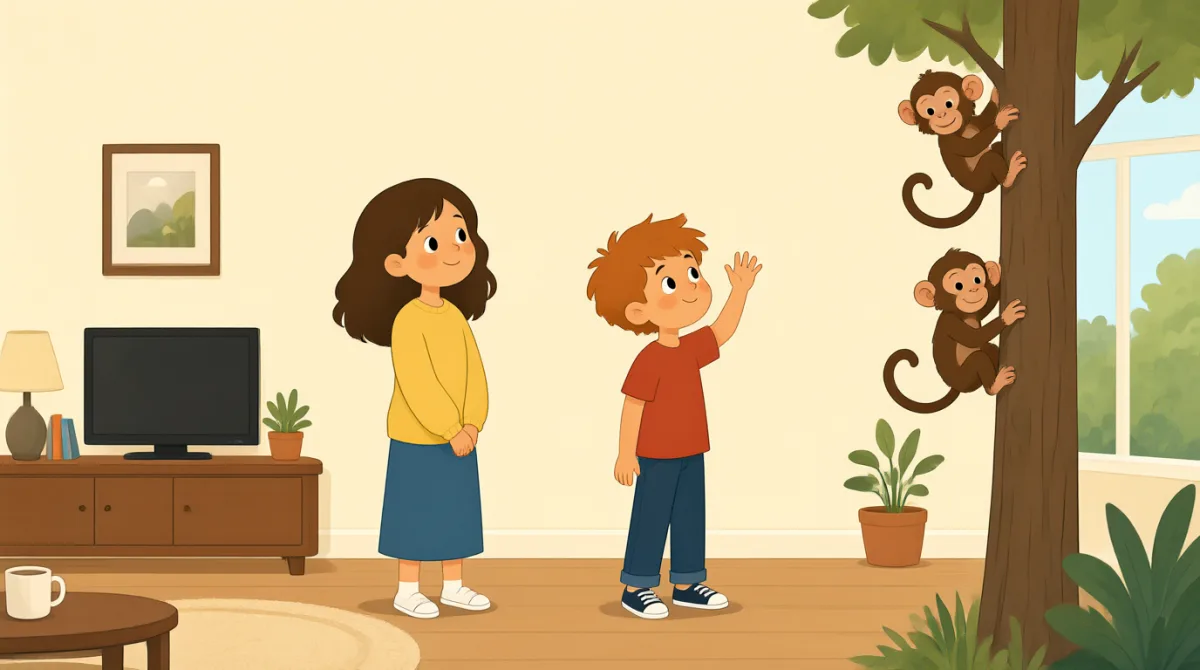

Look, Jack! The monkeys are over there.
잭, 저기 봐! 원숭이들이 저쪽에 있어.

They are climbing the trees.
나무에 오르고 있네.
That little monkey is so fast!
저 작은 원숭이 정말 빠르다!
Yes, and this one is eating a banana.
응, 그리고 이 원숭이는 바나나를 먹고 있어.
Can you see the baby monkey?
아기 원숭이 보여?
Yes! It is playing with its mother.
응! 엄마랑 놀고 있어.
They are so fun to watch.
원숭이들은 구경하는 재미가 정말 있어.
어휘8
- over there저쪽에
This means in a place that is not near you. Use it to point out where something is.
너와 가까이 있지 않은 곳을 뜻해요. 어떤 것이 어디에 있는지 가리켜 말할 때 써요.
- climbing the trees나무에 오르는 중
This means moving up the trees. You can use “climbing” to talk about moving up something.
나무를 타고 위로 올라가는 것을 뜻해요. 무언가를 타고 올라가는 동작을 말할 때 “climbing”을 쓸 수 있어요.
- so fast정말 빠른
This means very fast. Use “so” before an adjective to show how you feel about something.
아주 빠르다는 뜻이에요. 어떤 것에 대한 느낌을 강조하려면 형용사 앞에 “so”를 써요.
- this one이것
This means the thing or animal you are pointing to. Use it when you choose one from a group.
네가 가리키고 있는 물건이나 동물을 뜻해요. 여러 개 중 하나를 골라 말할 때 써요.
- eating a banana바나나를 먹는 중
This means having a banana as food. Use “is eating” for an action happening now.
바나나를 음식으로 먹고 있다는 뜻이에요. 지금 일어나고 있는 동작을 말할 때 “is eating”을 써요.
- baby monkey아기 원숭이
This means a very young monkey. You can use “baby” before an animal name to talk about its young.
아주 어린 원숭이를 뜻해요. 동물의 새끼를 말할 때 동물 이름 앞에 “baby”를 붙일 수 있어요.
- playing with its mother엄마와 놀기
This means having fun together with its mother. Use “playing with” to say who someone is having fun with.
엄마와 함께 즐겁게 놀고 있다는 뜻이에요. 누구와 함께 즐겁게 노는지 말할 때 “playing with”를 써요.
- fun to watch구경하는 재미가 있는
This means enjoyable to look at. Use “fun to watch” to describe something you like seeing.
보기에 즐겁다는 뜻이에요. 보는 걸 좋아하는 대상을 설명할 때 “fun to watch”를 써요.
핵심 문장8
- 1
Look, Jack!
잭, 저기 봐!
Use this short phrase to get someone's attention and point out something. You can say “Look!” before showing a person something interesting.
상대의 주의를 끌고 무언가를 가리킬 때 쓰는 짧은 표현이에요. 흥미로운 것을 보여 주기 전에 “Look!”이라고 말할 수 있어요.
- 2
The monkeys are over there.
원숭이들이 저쪽에 있어.
This is useful for telling someone where something is. Replace “the monkeys” with another person or thing.
어떤 것이 어디에 있는지 알려 줄 때 유용한 표현이에요. “the monkeys”를 다른 사람이나 사물로 바꿔 말할 수 있어요.
- 3
They are climbing the trees.
나무에 오르고 있네.
Use “are” plus an action ending in “-ing” to describe what people or animals are doing now. You can change “climbing” to another action.
지금 사람이나 동물이 무엇을 하고 있는지 말할 때 “are” 뒤에 “-ing”로 끝나는 동작을 붙여 써요. “climbing”을 다른 동작으로 바꿀 수 있어요.
- 4
That little monkey is so fast!
저 작은 원숭이 정말 빠르다!
Use this sentence to describe an animal or person you can see. Replace “little monkey” and “fast” with other words.
눈에 보이는 동물이나 사람을 묘사할 때 쓰는 문장이에요. “little monkey”와 “fast”를 다른 단어로 바꿔 쓸 수 있어요.
- 5
Yes, and this one is eating a banana.
응, 그리고 이 원숭이는 바나나를 먹고 있어.
This sentence agrees and adds information about something happening now. You can use “this one is” plus an action to describe one person or thing.
동의하면서 지금 일어나고 있는 일에 대한 정보를 덧붙이는 문장이에요. 한 사람이나 사물이 무엇을 하는지 설명할 때 “this one is” 뒤에 동작을 붙여 쓸 수 있어요.
- 6
Can you see the baby monkey?
아기 원숭이 보여?
Use this question to ask if someone can see something. Replace “the baby monkey” with another person or thing.
상대방이 무언가를 볼 수 있는지 물을 때 쓰는 질문이에요. “the baby monkey”를 다른 사람이나 사물로 바꿔 쓸 수 있어요.
- 7
Yes!
응!
Use this short answer to agree or say that something is true. You can also use it to show excitement.
동의하거나 어떤 일이 사실이라고 말할 때 쓰는 짧은 대답이에요. 신나는 마음을 나타낼 때도 쓸 수 있어요.
- 8
It is playing with its mother.
엄마랑 놀고 있어.
Use this sentence to describe what an animal is doing and who it is with. Replace “playing” and “its mother” to describe another activity or companion.
동물이 무엇을 하고 있고 누구와 함께 있는지 설명할 때 쓰는 문장이에요. 다른 활동이나 함께하는 대상을 말하려면 “playing”과 “its mother”를 바꿔 보세요.