At the Memorial
स्मृति सभा में
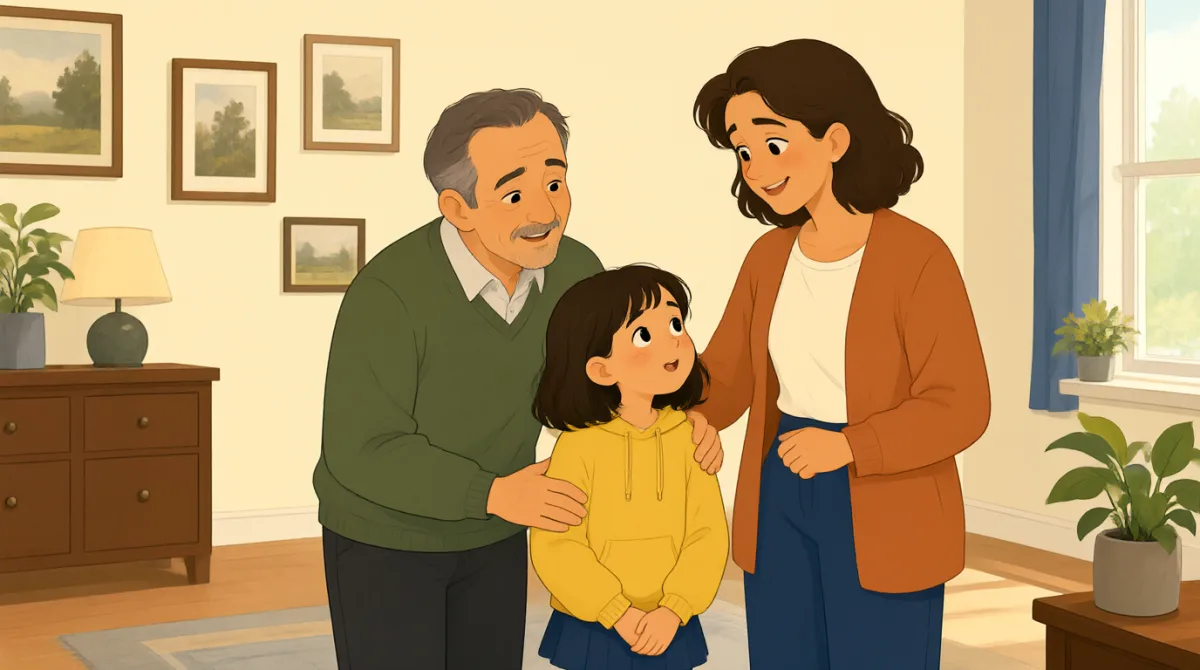
At the memorial, Grace supports Mia through an emotionally demanding day and shares a thoughtful memory of Mia’s father when Mia welcomes it.
स्मृति सभा में, ग्रेस एक भावनात्मक रूप से कठिन दिन में मिया का साथ देती है और जब मिया इसके लिए तैयार होती है, तो उसके पिता की एक प्यारी याद साझा करती है।
संवाद11

You’ve been standing with people all afternoon. Would it help if I stayed beside you for a while, or would you rather have a little space?
तुम पूरी दोपहर लोगों के साथ खड़ी हो। क्या मैं थोड़ी देर तुम्हारे पास रहूँ तो तुम्हें अच्छा लगेगा, या तुम कुछ देर अकेले रहना चाहोगी?

Stay, please. I’m grateful everyone came, but there’s been so much to take in—condolences, stories, and trying to look composed when I’m not.
रुको, प्लीज़। मैं शुक्रगुज़ार हूँ कि सब आए, लेकिन एक साथ बहुत कुछ हो रहा है—लोग अपनी संवेदनाएँ जता रहे हैं, यादें सुना रहे हैं, और मुझे ऐसे शांत दिखने की कोशिश करनी पड़ रही है जबकि मैं वैसा महसूस नहीं कर रही।
You don’t owe anyone composure today. You can step outside, sit quietly, or say nothing at all. I’ll follow your lead.
आज तुम्हें किसी के सामने भी खुद को संभला हुआ दिखाने की ज़रूरत नहीं है। तुम बाहर जा सकती हो, चुपचाप बैठ सकती हो, या बिल्कुल कुछ न कहो। जैसा तुम चाहोगी, मैं वैसा ही करूँगी।
Could we go somewhere quieter? I want to be here, but the room is starting to feel like a performance I have to keep up.
क्या हम कहीं ज़्यादा शांत जगह जा सकते हैं? मैं यहाँ रहना चाहती हूँ, लेकिन अब यह कमरा ऐसा लगने लगा है जैसे मुझे कोई भूमिका निभाते रहना है।
Of course. There’s a small garden just beyond those doors. We can sit there, and if anyone needs you, I can let them know you’re taking a moment.
बिल्कुल। उन दरवाज़ों के ठीक आगे एक छोटा-सा बगीचा है। हम वहाँ बैठ सकते हैं, और अगर किसी को तुमसे कुछ काम हो, तो मैं उन्हें बता दूँगी कि तुम थोड़ा वक्त ले रही हो।
Thank you. I keep thinking Dad would have been embarrassed by all this attention, then I remember how much he loved having everyone together.
शुक्रिया। मैं सोचती रहती हूँ कि पापा को इतना ध्यान मिलना शायद अटपटा लगता, फिर याद आता है कि उन्हें सबको एक साथ देखना कितना पसंद था।
That sounds like him. I remember how he’d quietly pull another chair over whenever someone was left standing, as if making room were the most natural thing in the world.
यह बिल्कुल उन्हीं जैसा लगता है। मुझे याद है, जब भी कोई खड़ा रह जाता, तो वे चुपचाप एक और कुर्सी खिसका देते थे—मानो किसी के लिए जगह बनाना दुनिया की सबसे स्वाभाविक बात हो।
Yes, exactly. He did that everywhere. I’m glad you remember him that way; today I’m afraid the details will blur under all the arrangements.
हाँ, बिल्कुल। वे हर जगह ऐसा करते थे। मुझे अच्छा लग रहा है कि तुम्हें उनकी यह बात याद है; आज डर लग रहा है कि इन सारी व्यवस्थाओं के बीच उनकी बातें धुँधली पड़ जाएँगी।
They may blur for a while, but they’re not yours to preserve perfectly today. You can let other people carry a few stories with you.
हो सकता है कुछ समय के लिए वे धुँधली पड़ जाएँ, लेकिन आज हर बात को बिल्कुल सही-सही याद रखना तुम्हारी ज़िम्मेदारी नहीं है। तुम दूसरों को भी कुछ यादें तुम्हारे साथ सँभालने दे सकती हो।
I’d like that. Could you stay through the reception? I may not have much to say, but it helps knowing I won’t have to manage every moment alone.
मुझे अच्छा लगेगा। क्या तुम स्वागत समारोह तक मेरे साथ रहोगी? शायद मैं ज़्यादा कुछ न कह पाऊँ, लेकिन यह जानकर मदद मिलती है कि मुझे हर पल अकेले नहीं सँभालना पड़ेगा।
Absolutely. We’ll take it one moment at a time. And if you want to leave early, we can slip out without explaining anything to anyone.
बिल्कुल। हम एक-एक पल करके आगे बढ़ेंगे। और अगर तुम जल्दी जाना चाहो, तो बिना किसी को कुछ समझाए चुपचाप निकल सकते हैं।
शब्दावली7
- take inसमझना, आत्मसात करना
To absorb or process a lot of information or emotion. Here, Mia is trying to cope with many conversations and feelings at once.
किसी ढेर सारी जानकारी या भावनाओं को समझने या मन में सँभालने के लिए इसका इस्तेमाल होता है। यहाँ मिया एक साथ कई बातचीतों और भावनाओं से निपटने की कोशिश कर रही है।
- look composedसंभला हुआ दिखना
To appear calm and in control, even if you do not feel that way inside.
शांत और अपने आप पर काबू में दिखाई देना, भले ही भीतर से आप ऐसा महसूस न कर रहे हों।
- follow your leadतुम्हारे मुताबिक चलना
To let someone else decide what to do next. It shows respect for their preferences and pace.
दूसरे व्यक्ति को तय करने देना कि आगे क्या करना है। इससे उसकी पसंद और उसकी गति का सम्मान झलकता है।
- blurधुँधला पड़ना
To become less clear or distinct. Mia worries that the memories of her father may become harder to recall amid the demands of the day.
कम साफ़ या कम स्पष्ट हो जाना। मिया को डर है कि दिन की भागदौड़ के बीच उसके पिता की यादें धीरे-धीरे धुँधली पड़ सकती हैं।
- carry a few stories with youकुछ यादें साथ मिलकर सँभालना
To share and remember stories together. The phrase suggests that Mia does not have to hold on to every memory by herself.
यादों को एक-दूसरे के साथ साझा करना और उन्हें मिलकर याद रखना। इस वाक्यांश से पता चलता है कि मिया को हर याद अकेले सँभालने की ज़रूरत नहीं है।
- one moment at a timeएक बार में एक पल
A way to focus on the present instead of worrying about everything ahead. It can offer reassurance during a difficult experience.
आगे आने वाली हर बात की चिंता करने के बजाय मौजूदा पल पर ध्यान देने का तरीका। मुश्किल अनुभव के दौरान यह दिलासा दे सकता है।
- slip outचुपचाप निकल जाना
To leave quietly and without drawing attention. Here, it offers Mia an easy way to leave the reception if she needs to.
बिना शोर किए और किसी का ध्यान खींचे बिना चले जाना। यहाँ यह मिया को ज़रूरत पड़ने पर स्वागत समारोह से आसानी से निकलने का विकल्प देता है।
मुख्य वाक्य8
- 1
You don’t owe anyone composure today.
आज तुम्हें किसी के सामने भी खुद को संभला हुआ दिखाने की ज़रूरत नहीं है।
This reassures someone that they do not have to hide their feelings. Reuse “You don’t owe anyone [behavior]” to relieve pressure to meet others’ expectations.
इससे सामने वाले को भरोसा मिलता है कि उसे अपनी भावनाएँ छिपाने की ज़रूरत नहीं है। दूसरों की उम्मीदें पूरी करने का दबाव कम करने के लिए “You don’t owe anyone [behavior]” का दोबारा इस्तेमाल करें।
- 2
I’ll follow your lead.
तुम जैसा चाहोगी, मैं वैसा ही करूँगी।
A concise way to show that you will respect someone’s choices. Use it when you want to offer support without taking control.
यह दिखाने का छोटा और सीधा तरीका है कि आप किसी की पसंद का सम्मान करेंगे। जब आप बिना नियंत्रण अपने हाथ में लिए मदद की पेशकश करना चाहें, तब इसका इस्तेमाल करें।
- 3
Could we go somewhere quieter?
क्या हम कहीं ज़्यादा शांत जगह जा सकते हैं?
A polite, direct way to ask to move to a calmer place. You can reuse “Could we go somewhere [adjective]?” when a setting feels uncomfortable or overwhelming.
यह किसी शांत जगह जाने का विनम्र और सीधा अनुरोध है। जब कोई जगह असहज या बहुत भारी लगने लगे, तो “Could we go somewhere [adjective]?” का दोबारा इस्तेमाल कर सकते हैं।
- 4
We can sit there, and if anyone needs you, I can let them know you’re taking a moment.
हम वहाँ बैठ सकते हैं, और अगर किसी को तुमसे कुछ काम हो, तो मैं उन्हें बता दूँगी कि तुम थोड़ा वक्त ले रही हो।
This combines practical help with a gentle explanation for stepping away. Reuse the pattern “I can let them know you’re [taking a break / unavailable]” to help someone set a boundary.
इसमें व्यावहारिक मदद के साथ कुछ देर के लिए वहाँ से हटने का सहज कारण भी दिया गया है। किसी को अपनी सीमा तय करने में मदद देने के लिए “I can let them know you’re [taking a break / unavailable]” वाले ढाँचे का दोबारा इस्तेमाल करें।
- 5
They may blur for a while, but they’re not yours to preserve perfectly today.
हो सकता है कुछ समय के लिए वे धुँधली पड़ जाएँ, लेकिन आज हर बात को बिल्कुल सही-सही याद रखना तुम्हारी ज़िम्मेदारी नहीं है।
This offers comfort without dismissing Mia’s concern about her memories. The phrase “They may [verb] for a while” acknowledges a difficulty while reassuring someone that they need not solve it immediately.
यह मिया की यादों को लेकर उसकी चिंता को नज़रअंदाज़ किए बिना उसे दिलासा देता है। “They may [verb] for a while” वाला वाक्यांश मुश्किल को स्वीकार करता है और साथ ही भरोसा दिलाता है कि उसे तुरंत उसका हल निकालने की ज़रूरत नहीं।
- 6
You can let other people carry a few stories with you.
तुम दूसरों को भी कुछ यादें तुम्हारे साथ सँभालने दे सकती हो।
This gently invites someone to share the emotional weight of remembering. Reuse “You can let other people [verb] with you” to encourage someone to accept support.
यह किसी को यादों का भावनात्मक बोझ साझा करने का कोमल निमंत्रण देता है। किसी को मदद स्वीकार करने के लिए प्रोत्साहित करने हेतु “You can let other people [verb] with you” का दोबारा इस्तेमाल करें।
- 7
We’ll take it one moment at a time.
हम एक-एक पल करके आगे बढ़ेंगे।
This is a reassuring way to make a difficult day feel more manageable. Use it when someone is overwhelmed by what lies ahead.
मुश्किल दिन को थोड़ा आसान और सँभालने लायक बनाने का यह दिलासा देने वाला तरीका है। जब कोई आने वाली बातों से घबरा रहा हो, तब इसका इस्तेमाल करें।
- 8
And if you want to leave early, we can slip out without explaining anything to anyone.
और अगर तुम जल्दी जाना चाहो, तो हम बिना किसी को कुछ समझाए चुपचाप निकल सकते हैं।
This offers a clear, low-pressure way to end an event. Reuse “If you want to [action], we can [plan]” to make support feel practical and unconditional.
यह किसी आयोजन से निकलने का एक साफ़ और बिना दबाव वाला तरीका सुझाता है। मदद को व्यावहारिक और बिना शर्त दिखाने के लिए “If you want to [action], we can [plan]” का दोबारा इस्तेमाल करें।