Renting a Mat
요가 매트 대여하기
Before class, Emma asks Grace if she can rent a mat. Grace tells her the price and where to leave her shoes.
수업 전에 에마가 그레이스에게 매트를 빌릴 수 있는지 물어봐요. 그레이스는 대여료와 신발을 둘 곳을 알려 줘요.
대화8
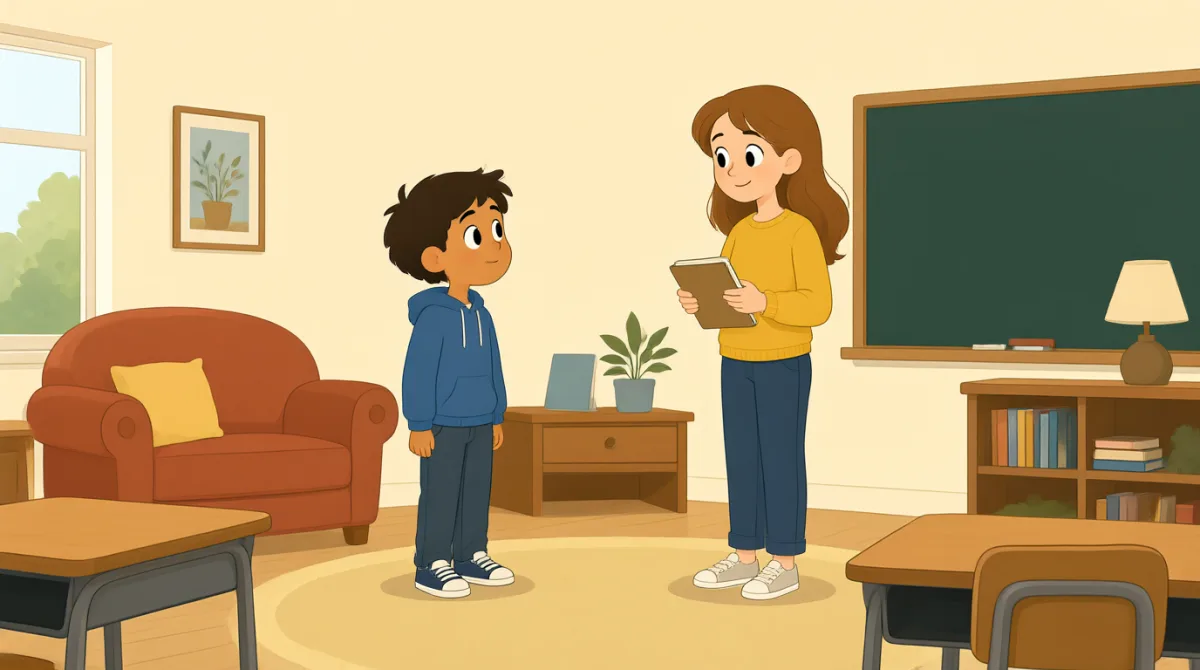

Hi, Grace. Can I rent a yoga mat for class today?
안녕하세요, 그레이스. 오늘 수업 때 쓸 요가 매트를 빌릴 수 있을까요?

Of course. It’s three dollars for the class.
물론이죠. 수업당 3달러예요.
Great. Where can I get one?
좋아요. 매트는 어디서 가져가면 되나요?
Take one from the shelf by the front desk.
프런트 데스크 옆 선반에서 하나 가져가세요.
Thanks. Should I leave my shoes here?
감사합니다. 신발은 여기에 두면 되나요?
Yes, please leave them in the cubbies by the door.
네, 문 옆 신발장에 넣어 주세요.
Okay. Do I pay you now?
네. 지금 결제하면 되나요?
Yes, you can pay at the front desk before class starts.
네, 수업이 시작하기 전에 프런트 데스크에서 결제하시면 돼요.
어휘7
- rent a yoga mat요가 매트를 빌리다
To pay to use a yoga mat for a short time. You can use this phrase to ask about borrowing equipment for a fee.
요가 매트를 잠깐 사용하기 위해 돈을 내는 거예요. 장비를 유료로 빌릴 수 있는지 물을 때 이 표현을 쓸 수 있어요.
- for the class수업당
This tells you how long or for what activity the price applies. You can also say “for the day” or “for the lesson.”
이 표현은 가격이 적용되는 기간이나 활동을 알려 줘요. “for the day”(하루 동안) 또는 “for the lesson”(수업당)이라고도 할 수 있어요.
- front desk프런트 데스크
The place where staff welcome visitors and answer questions. You can ask for help or pay there.
직원이 방문객을 맞이하고 질문에 답해 주는 곳이에요. 도움을 요청하거나 그곳에서 결제할 수 있어요.
- shelf선반
A flat place used to store things. You can say where something is by using “on the shelf” or “by the shelf.”
물건을 올려 두는 평평한 공간이에요. 물건이 어디 있는지 말할 때 “on the shelf”(선반 위에)나 “by the shelf”(선반 옆에)를 쓸 수 있어요.
- cubbies개인 수납 칸
Small open spaces used to store personal items. In this conversation, students leave their shoes in them.
개인 물건을 보관하는 작은 오픈형 공간이에요. 이 대화에서는 수강생들이 신발을 여기에 둬요.
- leave my shoes here신발을 여기에 두다
A way to ask where you should put your shoes. You can replace “shoes” with another item, such as “bag.”
신발을 어디에 둬야 하는지 물을 때 쓰는 표현이에요. “shoes” 대신 “bag”(가방)처럼 다른 물건을 넣어 말할 수도 있어요.
- pay at the front desk프런트 데스크에서 결제하다
To give money to the staff at the reception area. You can use this phrase to explain where you will pay.
접수처에서 직원에게 돈을 내는 거예요. 어디에서 결제할지 설명할 때 이 표현을 쓸 수 있어요.
핵심 문장8
- 1
Can I rent a yoga mat for class today?
오늘 수업 때 쓸 요가 매트를 빌릴 수 있을까요?
Use this polite question to ask if you can rent something. Replace “a yoga mat” with another item you need.
무언가를 빌릴 수 있는지 정중하게 물을 때 쓰는 질문이에요. 필요한 다른 물건으로 “a yoga mat”를 바꿔 보세요.
- 2
It’s three dollars for the class.
수업당 3달러예요.
This is a simple way to tell someone the price. You can change the amount and say what the price covers.
가격을 간단히 알려 줄 때 쓰는 표현이에요. 금액을 바꾸고 그 가격에 무엇이 포함되는지 말할 수 있어요.
- 3
Where can I get one?
매트는 어디서 가져가면 되나요?
Use this question to ask where you can find or pick up something. “One” refers to an item already mentioned.
물건을 어디서 찾거나 가져갈 수 있는지 물을 때 쓰는 질문이에요. “One”은 앞에서 이미 언급한 물건을 가리켜요.
- 4
Take one from the shelf by the front desk.
프런트 데스크 옆 선반에서 하나 가져가세요.
This gives a clear instruction about where to get something. You can use “Take one from…” to tell someone where an item is.
물건을 어디서 가져가면 되는지 분명하게 알려 주는 말이에요. “Take one from…”을 사용해 물건이 있는 곳을 알려 줄 수 있어요.
- 5
Should I leave my shoes here?
신발은 여기에 두면 되나요?
Use this question to ask if you should put something in a certain place. Replace “my shoes” with another item.
무언가를 특정한 장소에 둬도 되는지 물을 때 쓰는 질문이에요. “my shoes”를 다른 물건으로 바꿔 보세요.
- 6
Yes, please leave them in the cubbies by the door.
네, 문 옆 신발장에 넣어 주세요.
This is a polite instruction about where to put something. “Them” refers to items mentioned earlier, such as shoes.
물건을 어디에 두면 되는지 정중하게 알려 주는 말이에요. “Them”은 앞에서 언급한 신발 같은 물건을 가리켜요.
- 7
Do I pay you now?
지금 결제하면 되나요?
Use this question to check when or how to pay. You can replace “now” with a time, such as “after class.”
언제 또는 어떻게 결제하면 되는지 확인할 때 쓰는 질문이에요. “now”를 “after class”(수업 후에)처럼 다른 시간 표현으로 바꿀 수 있어요.
- 8
Yes, you can pay at the front desk before class starts.
네, 수업이 시작하기 전에 프런트 데스크에서 결제하시면 돼요.
This explains where and when someone can pay. You can reuse “before [event] starts” to give a deadline.
어디서 언제 결제할 수 있는지 설명하는 문장이에요. 마감 시간을 알려 줄 때 “before [event] starts”([행사]가 시작하기 전에)라는 표현을 활용할 수 있어요.