Your Lunch Break
तुम्हारा लंच ब्रेक
Mia asks Grace what she does at lunchtime. Grace talks about her lunch and where she eats.
मिया ग्रेस से पूछती है कि वह दोपहर के खाने के समय क्या करती है। ग्रेस अपने खाने और यह बताती है कि वह कहाँ खाती है।
संवाद8
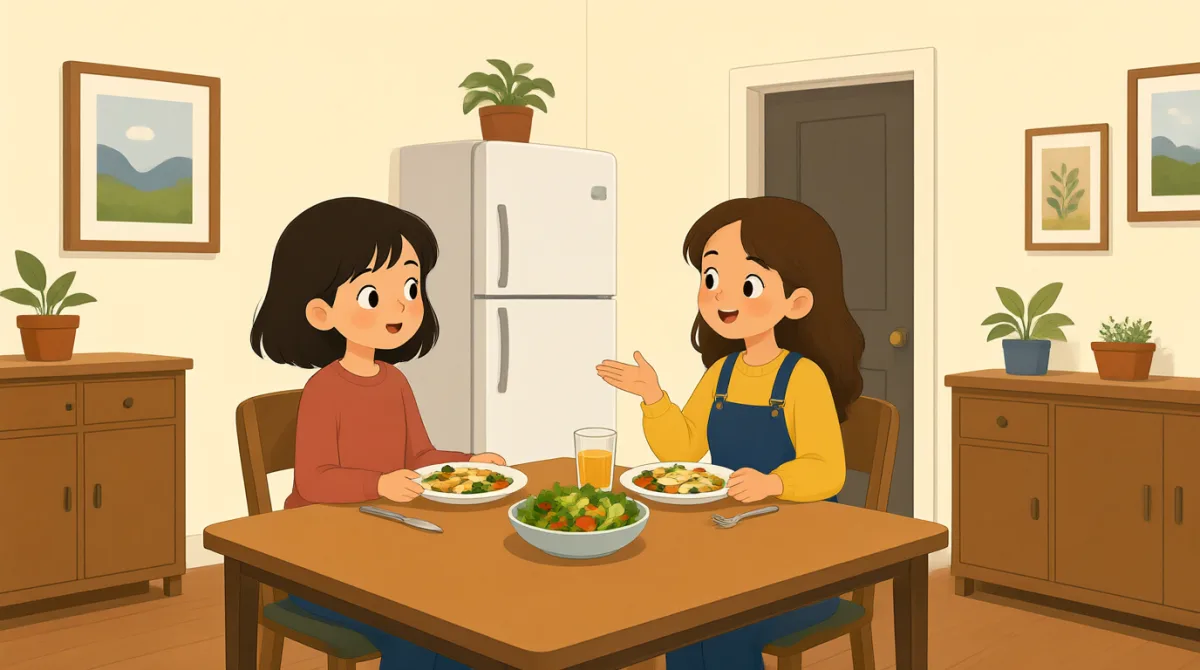

Grace, what do you do at lunchtime?
ग्रेस, तुम दोपहर के खाने के समय क्या करती हो?

I eat lunch at twelve every day.
मैं हर दिन बारह बजे दोपहर का खाना खाती हूँ।
What do you usually eat?
तुम आम तौर पर क्या खाती हो?
I usually eat a sandwich and some fruit.
मैं आम तौर पर सैंडविच और कुछ फल खाती हूँ।
Do you eat at your desk?
क्या तुम अपनी मेज़ पर खाना खाती हो?
No, I eat in the break room.
नहीं, मैं ब्रेक रूम में खाती हूँ।
Do you talk with your coworkers there?
क्या तुम वहाँ अपने सहकर्मियों से बात करती हो?
Yes, we talk and relax for thirty minutes.
हाँ, हम तीस मिनट तक बात करते हैं और आराम करते हैं।
शब्दावली8
- at lunchtimeदोपहर के खाने के समय
This means during the time when people eat lunch. You can ask, “What do you do at lunchtime?”
इसका मतलब है उस समय के दौरान जब लोग दोपहर का खाना खाते हैं। तुम पूछ सकती हो, “What do you do at lunchtime?” (तुम दोपहर के खाने के समय क्या करती हो?)
- every dayहर दिन
This means each day. Use it to talk about a regular routine.
इसका मतलब है प्रत्येक दिन। इसका इस्तेमाल किसी नियमित दिनचर्या के बारे में बात करने के लिए करो।
- usuallyआम तौर पर
This means something happens most of the time. Use it to describe what you often do.
इसका मतलब है कि कोई चीज़ ज़्यादातर समय होती है। अक्सर तुम क्या करती हो, यह बताने के लिए इसका इस्तेमाल करो।
- a sandwichसैंडविच
A sandwich is food made with bread and a filling. You can use “a” before one sandwich.
सैंडविच ब्रेड और उसके बीच रखी किसी चीज़ से बना खाना होता है। एक सैंडविच के लिए “a” का इस्तेमाल किया जाता है।
- some fruitकुछ फल
This means an amount of fruit, without saying exactly how much. Use “some” with food when the amount is not specific.
इसका मतलब है कुछ मात्रा में फल, बिना यह बताए कि ठीक कितने। जब खाने की मात्रा तय न हो, तो “some” का इस्तेमाल करो।
- at your deskअपनी मेज़ पर
This means sitting at the desk where you work. You can ask if someone eats there.
इसका मतलब है उस मेज़ पर बैठकर जहाँ तुम काम करती हो। तुम पूछ सकती हो कि कोई वहाँ खाना खाता है या नहीं।
- break roomब्रेक रूम
A break room is a place at work where people can rest or eat. We say “in the break room.”
ब्रेक रूम काम की जगह पर वह जगह होती है जहाँ लोग आराम कर सकते हैं या खाना खा सकते हैं। हम “in the break room” कहते हैं।
- coworkersसहकर्मी
Coworkers are people who work with you. You can talk with your coworkers during a break.
सहकर्मी वे लोग होते हैं जो तुम्हारे साथ काम करते हैं। ब्रेक के दौरान तुम अपने सहकर्मियों से बात कर सकती हो।
मुख्य वाक्य8
- 1
Grace, what do you do at lunchtime?
ग्रेस, तुम दोपहर के खाने के समय क्या करती हो?
Use this question to ask about someone’s lunch routine. You can change “at lunchtime” to another time, such as “in the morning.”
किसी की दोपहर के खाने की दिनचर्या के बारे में पूछने के लिए इस सवाल का इस्तेमाल करो। “at lunchtime” की जगह कोई और समय रख सकती हो, जैसे “in the morning” (सुबह)।
- 2
I eat lunch at twelve every day.
मैं हर दिन बारह बजे दोपहर का खाना खाती हूँ।
This is a simple way to say when you eat lunch and how often. Change “twelve” to your lunch time.
यह बताने का आसान तरीका है कि तुम दोपहर का खाना कब खाती हो और कितनी बार खाती हो। अपने खाने का समय बताने के लिए “twelve” की जगह दूसरा समय रखो।
- 3
What do you usually eat?
तुम आम तौर पर क्या खाती हो?
Use this question to ask what food someone often eats. You can replace “eat” with another action, such as “drink.”
किसी से यह पूछने के लिए इस सवाल का इस्तेमाल करो कि वह अक्सर कौन-सा खाना खाता है। “eat” की जगह कोई दूसरी क्रिया, जैसे “drink”, रख सकती हो।
- 4
I usually eat a sandwich and some fruit.
मैं आम तौर पर सैंडविच और कुछ फल खाती हूँ।
This sentence tells someone what you often eat. You can replace the foods with your usual lunch.
यह वाक्य किसी को बताता है कि तुम अक्सर क्या खाती हो। अपनी रोज़ की पसंद का दोपहर का खाना बताने के लिए खाने की चीज़ों की जगह अपनी पसंद की चीज़ें रखो।
- 5
Do you eat at your desk?
क्या तुम अपनी मेज़ पर खाना खाती हो?
Use this yes-or-no question to ask where someone eats. Replace “at your desk” with a place, such as “in the kitchen.”
किसी से यह पूछने के लिए इस हाँ-या-नहीं वाले सवाल का इस्तेमाल करो कि वह कहाँ खाना खाता है। “at your desk” की जगह कोई जगह रखो, जैसे “in the kitchen” (रसोई में)।
- 6
No, I eat in the break room.
नहीं, मैं ब्रेक रूम में खाती हूँ।
This is a simple way to say no and explain where you eat. You can use “I eat in…” with another place.
यह ना कहने और यह बताने का आसान तरीका है कि तुम कहाँ खाना खाती हो। किसी दूसरी जगह के साथ “I eat in…” का इस्तेमाल कर सकती हो।
- 7
Do you talk with your coworkers there?
क्या तुम वहाँ अपने सहकर्मियों से बात करती हो?
Use this question to ask whether someone talks with people they work with. “There” means the place mentioned before.
किसी से यह पूछने के लिए इस सवाल का इस्तेमाल करो कि वह अपने साथ काम करने वाले लोगों से बात करता है या नहीं। “There” का मतलब है पहले बताई गई जगह।
- 8
Yes, we talk and relax for thirty minutes.
हाँ, हम तीस मिनट तक बात करते हैं और आराम करते हैं।
This sentence describes what a group does and how long they do it. You can replace the actions or the time to talk about your own break.
यह वाक्य बताता है कि एक समूह क्या करता है और कितनी देर तक करता है। अपने ब्रेक के बारे में बताने के लिए इसमें क्रियाएँ या समय बदल सकती हो।