Comparing Routines With a Roommate
रूममेट के साथ दिनचर्या की तुलना
Leo and Jack compare their daily routines at home. They talk about getting up, making breakfast, and sharing chores.
Leo और Jack घर पर अपनी रोज़मर्रा की दिनचर्या की तुलना करते हैं। वे उठने, नाश्ता बनाने और घर के काम बाँटने के बारे में बात करते हैं।
संवाद8
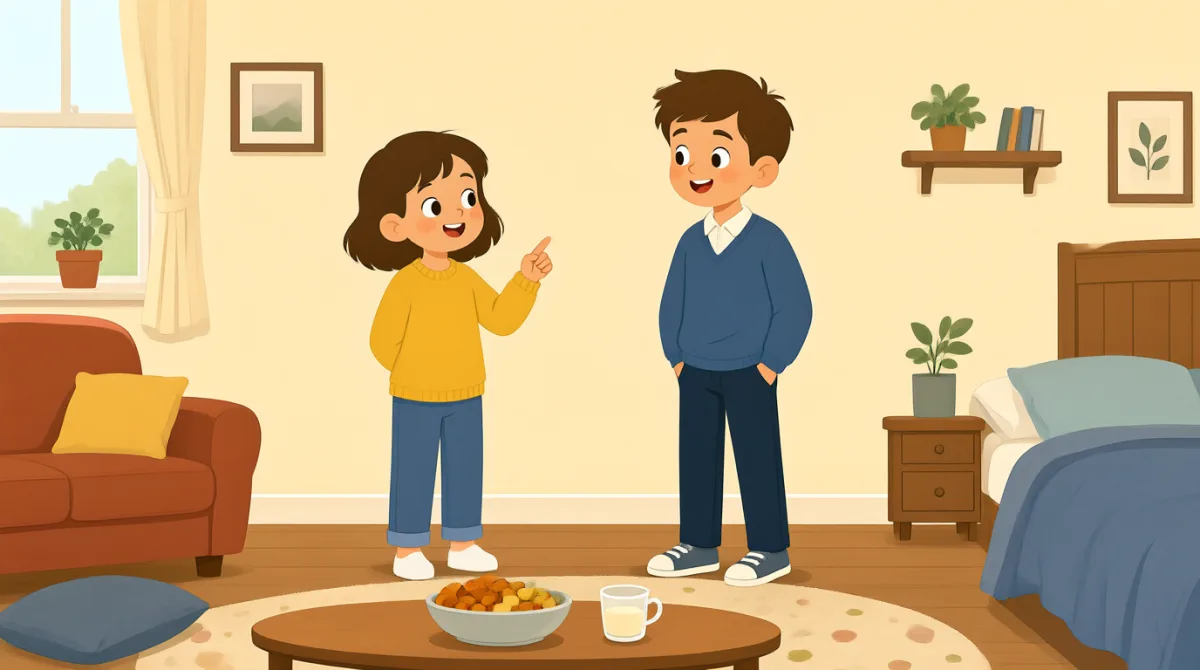

Jack, what time do you get up?
Jack, तुम कितने बजे उठते हो?

I get up at seven. What about you?
मैं सात बजे उठता हूँ। तुम बताओ?
I get up at six thirty. I make breakfast.
मैं साढ़े छह बजे उठता हूँ। मैं नाश्ता बनाता हूँ।
I buy breakfast. I am not good at cooking.
मैं नाश्ता खरीद लेता हूँ। मुझे खाना बनाना नहीं आता।
I make eggs and coffee every morning.
मैं हर सुबह अंडे और कॉफ़ी बनाता हूँ।
I wash the dishes after breakfast.
मैं नाश्ते के बाद बर्तन धोता हूँ।
I clean the kitchen, and you take out the trash.
मैं रसोई साफ़ करता हूँ और तुम कचरा बाहर ले जाते हो।
Good plan. We share the chores.
अच्छी बात है। हम घर के काम बाँट लेते हैं।
शब्दावली7
- get upउठना
To get up means to leave your bed in the morning. Use it to talk about when you start your day.
“get up” का मतलब है सुबह बिस्तर से उठना। दिन की शुरुआत कब करते हो, यह बताने के लिए इसका इस्तेमाल करो।
- make breakfastनाश्ता बनाना
To make breakfast means to prepare food for the morning meal. You can say, “I make breakfast at home.”
“make breakfast” का मतलब है सुबह के खाने के लिए भोजन तैयार करना। तुम कह सकते हो, “I make breakfast at home.” (मैं घर पर नाश्ता बनाता हूँ।)
- buy breakfastनाश्ता खरीदना
To buy breakfast means to pay for breakfast instead of making it. You can say what you usually buy or where you buy it.
“buy breakfast” का मतलब है नाश्ता बनाने के बजाय उसे खरीदने के पैसे देना। तुम बता सकते हो कि आम तौर पर क्या खरीदते हो या कहाँ से खरीदते हो।
- every morningहर सुबह
This means each morning. Use it to talk about a routine that happens daily.
“every morning” का मतलब है हर सुबह। रोज़ होने वाली दिनचर्या के बारे में बात करते समय इसका इस्तेमाल करो।
- wash the dishesबर्तन धोना
This means to clean the plates, cups, and other things used for eating. You can say when you wash the dishes.
“wash the dishes” का मतलब है खाने में इस्तेमाल की गई प्लेटें, कप और दूसरी चीज़ें साफ़ करना। तुम बता सकते हो कि बर्तन कब धोते हो।
- take out the trashकचरा बाहर ले जाना
This means to carry the garbage outside. It is a common chore at home.
“take out the trash” का मतलब है कचरे को बाहर ले जाना। यह घर का एक आम काम है।
- share the choresघर के काम बाँटना
This means that two or more people divide the jobs they do at home. You can use it to talk about housework with a roommate.
“share the chores” का मतलब है कि दो या उससे ज़्यादा लोग घर के काम आपस में बाँटते हैं। रूममेट के साथ घर के कामों के बारे में बात करते समय इसका इस्तेमाल कर सकते हो।
मुख्य वाक्य8
- 1
Jack, what time do you get up?
Jack, तुम कितने बजे उठते हो?
Use this question to ask when someone gets out of bed. Change “Jack” to the person’s name.
किसी से यह पूछने के लिए इस सवाल का इस्तेमाल करो कि वह बिस्तर से कब उठता है। “Jack” की जगह उस व्यक्ति का नाम रखो।
- 2
I get up at seven.
मैं सात बजे उठता हूँ।
This is a simple way to say when you wake up and leave your bed. Replace “seven” with your time.
जागने और बिस्तर से उठने का समय बताने का यह एक आसान तरीका है। “seven” की जगह अपना समय बताओ।
- 3
I get up at six thirty.
मैं साढ़े छह बजे उठता हूँ।
Use this sentence to tell someone your morning wake-up time. You can change “six thirty” to another time.
सुबह उठने का समय बताने के लिए इस वाक्य का इस्तेमाल करो। “six thirty” की जगह कोई और समय रख सकते हो।
- 4
I make breakfast.
मैं नाश्ता बनाता हूँ।
Use this sentence to say that you prepare the morning meal. You can replace “breakfast” with another meal.
सुबह का खाना तैयार करने की बात कहने के लिए इस वाक्य का इस्तेमाल करो। “breakfast” की जगह किसी दूसरे खाने का नाम रख सकते हो।
- 5
I buy breakfast.
मैं नाश्ता खरीदता हूँ।
This sentence says that you purchase breakfast instead of making it. You can use it to describe your usual routine.
इस वाक्य का मतलब है कि तुम नाश्ता बनाने के बजाय खरीदते हो। अपनी आम दिनचर्या बताने के लिए इसका इस्तेमाल कर सकते हो।
- 6
I wash the dishes after breakfast.
मैं नाश्ते के बाद बर्तन धोता हूँ।
Use this sentence to say what chore you do and when you do it. Replace “after breakfast” with another time.
कौन-सा काम करते हो और कब करते हो, यह बताने के लिए इस वाक्य का इस्तेमाल करो। “after breakfast” की जगह कोई और समय रखो।
- 7
I clean the kitchen, and you take out the trash.
मैं रसोई साफ़ करता हूँ और तुम कचरा बाहर ले जाते हो।
This sentence divides two chores between two people. You can change the chores to describe how you share housework.
इस वाक्य में दो लोगों के बीच घर के दो काम बाँटे गए हैं। घर के काम कैसे बाँटते हो, यह बताने के लिए कामों के नाम बदल सकते हो।
- 8
We share the chores.
हम घर के काम बाँटते हैं।
Use this sentence to say that people divide household jobs. You can use it when talking about chores with a roommate or family member.
लोग घर के काम आपस में बाँटते हैं, यह कहने के लिए इस वाक्य का इस्तेमाल करो। रूममेट या परिवार के किसी सदस्य के साथ घर के कामों की बात करते समय इसे कह सकते हो।