Talking About Your Morning
सुबह के बारे में बात करना
Emma asks Mia about her morning routine. Mia talks about when she gets up and what she eats for breakfast.
एम्मा मिया से उसकी सुबह की दिनचर्या के बारे में पूछती है। मिया बताती है कि वह कब उठती है और नाश्ते में क्या खाती है।
संवाद8
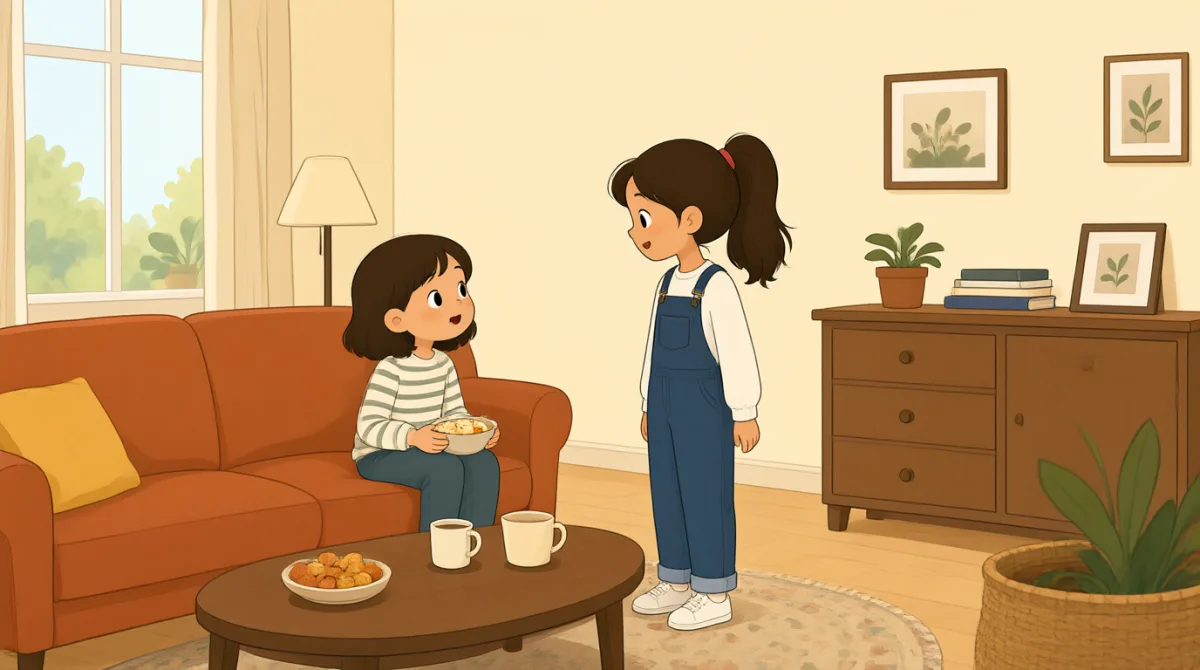

What time do you get up, Mia?
मिया, तुम कितने बजे उठती हो?

I get up at seven every morning.
मैं रोज़ सुबह सात बजे उठती हूँ।
Do you eat breakfast at home?
क्या तुम घर पर नाश्ता करती हो?
Yes, I eat breakfast in the kitchen.
हाँ, मैं रसोई में नाश्ता करती हूँ।
What do you have for breakfast?
तुम नाश्ते में क्या खाती हो?
I have eggs and toast. I drink tea.
मैं अंडे और टोस्ट खाती हूँ। चाय पीती हूँ।
That sounds nice. Do you eat early?
अच्छा लग रहा है। क्या तुम जल्दी नाश्ता करती हो?
Yes, I eat at seven thirty.
हाँ, मैं साढ़े सात बजे नाश्ता करती हूँ।
शब्दावली8
- get upउठना
To get up means to leave your bed and start your day. You can say, “I get up at seven.”
“get up” का मतलब है बिस्तर से उठकर अपना दिन शुरू करना। आप कह सकते हैं, “I get up at seven.” (मैं सात बजे उठती हूँ।)
- every morningहर सुबह
This means something happens each morning. Use it to talk about a daily routine.
इसका मतलब है कि कोई काम हर सुबह होता है। रोज़ की दिनचर्या के बारे में बताने के लिए इसका इस्तेमाल करें।
- eat breakfastनाश्ता करना
This means to have the first meal of the day. You can say where or when you eat breakfast.
इसका मतलब है दिन का पहला खाना खाना। आप बता सकते हैं कि आप नाश्ता कहाँ या कब करते हैं।
- at homeघर पर
This means in your own house. Use it to say where you do something.
इसका मतलब है अपने घर में। किसी काम की जगह बताने के लिए इसका इस्तेमाल करें।
- in the kitchenरसोई में
This means inside the room where you cook and eat. Use “in” to say where an activity happens.
इसका मतलब है उस कमरे के अंदर जहाँ आप खाना बनाते और खाते हैं। “in” का इस्तेमाल यह बताने के लिए करें कि कोई काम कहाँ होता है।
- have for breakfastनाश्ते में खाना
This asks or tells what food someone eats in the morning. For example, “I have eggs for breakfast.”
इसका इस्तेमाल यह पूछने या बताने के लिए होता है कि कोई सुबह कौन-सा खाना खाता है। उदाहरण के लिए, “I have eggs for breakfast.” (मैं नाश्ते में अंडे खाती हूँ।)
- toastटोस्ट
Toast is bread that is cooked until it is warm and crisp. It is often eaten for breakfast.
टोस्ट वह ब्रेड है जिसे गर्म और कुरकुरा होने तक सेंका जाता है। इसे अक्सर नाश्ते में खाया जाता है।
- earlyजल्दी
Early means before the usual or expected time. You can use it to talk about when you eat or get up.
“early” का मतलब है सामान्य या तय समय से पहले। आप इसका इस्तेमाल यह बताने के लिए कर सकते हैं कि आप कब खाते या उठते हैं।
मुख्य वाक्य8
- 1
What time do you get up, Mia?
मिया, तुम कितने बजे उठती हो?
Use this question to ask when someone gets out of bed. Replace “Mia” with the person’s name or use “you” alone.
किसी से यह पूछने के लिए इस सवाल का इस्तेमाल करें कि वह बिस्तर से कब उठता है। “Mia” की जगह उस व्यक्ति का नाम रखें या सिर्फ “you” कहें।
- 2
I get up at seven every morning.
मैं रोज़ सुबह सात बजे उठती हूँ।
This is a simple way to describe a daily routine. Change the time to say when you get up.
रोज़ की दिनचर्या बताने का यह एक आसान तरीका है। आप कब उठते हैं, यह बताने के लिए समय बदल दें।
- 3
Do you eat breakfast at home?
क्या तुम घर पर नाश्ता करती हो?
Use this yes-or-no question to ask where someone eats breakfast. Change “at home” to another place if needed.
किसी से यह पूछने के लिए इस हाँ-या-नहीं वाले सवाल का इस्तेमाल करें कि वह नाश्ता कहाँ करता है। ज़रूरत हो तो “at home” की जगह किसी दूसरी जगह का नाम लें।
- 4
Yes, I eat breakfast in the kitchen.
हाँ, मैं रसोई में नाश्ता करती हूँ।
This answers a question about where you eat breakfast. You can replace “in the kitchen” with another place.
नाश्ता कहाँ करते हैं, इस सवाल का जवाब देने के लिए यह वाक्य कहें। “in the kitchen” की जगह किसी दूसरी जगह का नाम ले सकते हैं।
- 5
What do you have for breakfast?
तुम नाश्ते में क्या खाती हो?
Use this question to ask what food someone eats in the morning. You can answer with “I have” and the food.
किसी से यह पूछने के लिए इस सवाल का इस्तेमाल करें कि वह सुबह क्या खाता है। जवाब में “I have” के बाद खाने की चीज़ का नाम बता सकते हैं।
- 6
I have eggs and toast.
मैं अंडे और टोस्ट खाती हूँ।
This is a simple way to name foods you eat. Replace “eggs and toast” with your own breakfast foods.
आप कौन-कौन सी चीज़ें खाते हैं, यह बताने का यह एक आसान तरीका है। “eggs and toast” की जगह अपने नाश्ते की चीज़ों के नाम लें।
- 7
I drink tea.
मैं चाय पीती हूँ।
Use this sentence to say what you drink. Replace “tea” with another drink, such as “coffee” or “water.”
आप क्या पीते हैं, यह बताने के लिए इस वाक्य का इस्तेमाल करें। “tea” की जगह किसी दूसरे पेय का नाम लें, जैसे “coffee” या “water।”
- 8
Yes, I eat at seven thirty.
हाँ, मैं साढ़े सात बजे खाती हूँ।
This gives the time you eat. Replace “seven thirty” with another time.
इस वाक्य में आपके खाने का समय बताया जाता है। “seven thirty” की जगह कोई दूसरा समय रखें।