Grocery Shopping for Healthy Ingredients
स्वस्थ सामग्री की खरीदारी
A conversation between a shopper and a store employee or another shopper about choosing fresh, safe, and nutritious ingredients, perhaps discussing organic options, reading food labels, or avoiding certain additives.
एक ग्राहक और दुकान के कर्मचारी या दूसरे ग्राहक के बीच ताज़ी, सुरक्षित और पौष्टिक सामग्री चुनने की बातचीत। इसमें जैविक विकल्पों, खाद्य लेबल पढ़ने या कुछ मिलाए गए पदार्थों से बचने पर चर्चा हो सकती है।
संवाद8
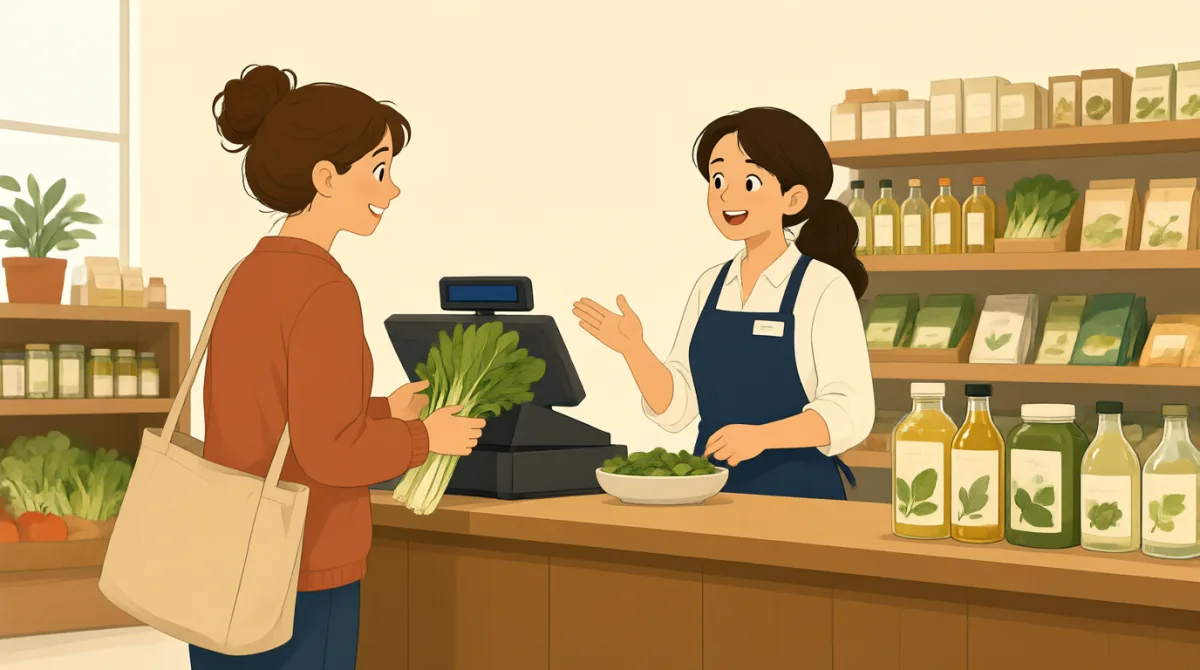

Excuse me, I'm trying to find some fresh, healthy ingredients. Do you have any recommendations for organic produce?
माफ़ कीजिए, मैं कुछ ताज़ी और सेहतमंद सामग्री ढूँढ़ रही हूँ। क्या आप जैविक फल-सब्ज़ियों के लिए कुछ सुझाव दे सकते हैं?

Certainly! Our organic section is just around the corner, near the dairy. We get fresh deliveries every morning. What kind of vegetables or fruits are you looking for?
ज़रूर! हमारा जैविक उत्पादों का विभाग डेयरी के पास, बस कोने के उस पार है। हमें हर सुबह ताज़ा सामान मिलता है। आप किस तरह की सब्ज़ियाँ या फल ढूँढ़ रही हैं?
I'm looking for some leafy greens and perhaps some berries. I'm trying to cut down on processed foods and focus on whole ingredients. How can I ensure they're truly fresh and safe?
मैं कुछ पत्तेदार सब्ज़ियाँ और शायद कुछ बेरीज़ ढूँढ़ रही हूँ। मैं प्रसंस्कृत खाद्य पदार्थ कम खाने और साबुत, प्राकृतिक सामग्री पर ध्यान देने की कोशिश कर रही हूँ। मैं कैसे सुनिश्चित करूँ कि वे सचमुच ताज़ी और सुरक्षित हैं?
For leafy greens, check for vibrant color and crispness. Avoid anything wilted or discolored. For berries, make sure they're firm and free of mold. And always wash your produce thoroughly before eating, even organic.
पत्तेदार सब्ज़ियों का रंग चटख हो और वे कुरकुरी हों, यह देखिए। मुरझाई हुई या रंग बदली हुई चीज़ें न लें। बेरीज़ के लिए देखें कि वे सख़्त हों और उन पर फफूँद न लगी हो। और खाने से पहले अपनी सब्ज़ियों और फलों को हमेशा अच्छी तरह धोएँ, चाहे वे जैविक ही क्यों न हों।
That's great advice, thank you! Also, when I'm reading food labels, what should I be looking out for if I want to avoid unhealthy additives?
यह बहुत अच्छी सलाह है, धन्यवाद! और जब मैं खाद्य लेबल पढ़ती हूँ, तो अस्वास्थ्यकर मिलाए गए पदार्थों से बचने के लिए मुझे किन चीज़ों पर ध्यान देना चाहिए?
Good question. Generally, look for shorter ingredient lists. Try to avoid things like high-fructose corn syrup, artificial colors, artificial sweeteners, and hydrogenated oils. The fewer ingredients you don't recognize, the better.
अच्छा सवाल है। आम तौर पर, ऐसी चीज़ें चुनें जिनकी सामग्री की सूची छोटी हो। हाई-फ्रक्टोज़ कॉर्न सिरप, कृत्रिम रंग, कृत्रिम मिठास और हाइड्रोजनीकृत तेल जैसी चीज़ों से बचने की कोशिश करें। सूची में जितनी कम ऐसी चीज़ें हों जिन्हें आप नहीं पहचानतीं, उतना बेहतर है।
That makes sense. It can be a bit overwhelming with all the options. I appreciate the guidance.
यह बात समझ में आती है। इतने सारे विकल्प देखकर थोड़ा उलझन हो सकती है। आपकी सलाह के लिए मैं आभारी हूँ।
No problem at all! Healthy eating is a journey. If you have any more questions about specific products, feel free to ask. Enjoy your shopping!
कोई बात नहीं! सेहतमंद खाना एक सफ़र है। अगर किसी ख़ास उत्पाद के बारे में आपके और सवाल हों, तो बेझिझक पूछिए। ख़रीदारी का आनंद लीजिए!
शब्दावली8
- organicजैविक
Organic refers to food grown without synthetic chemicals, pesticides, or fertilizers. It's popular for healthier and more natural options in grocery shopping.
“Organic” का मतलब है ऐसा भोजन जिसे कृत्रिम रसायनों, कीटनाशकों या उर्वरकों के बिना उगाया गया हो। किराने की ख़रीदारी में सेहतमंद और अधिक प्राकृतिक विकल्पों के लिए यह शब्द अक्सर इस्तेमाल होता है।
- produceताज़े फल और सब्ज़ियाँ
Produce means fresh fruits and vegetables sold in stores. Use it when asking about or buying items like apples or lettuce.
“Produce” का मतलब है दुकानों में बिकने वाले ताज़े फल और सब्ज़ियाँ। सेब या सलाद पत्ते जैसी चीज़ों के बारे में पूछते या उन्हें ख़रीदते समय इस शब्द का इस्तेमाल करें।
- leafy greensपत्तेदार सब्ज़ियाँ
Leafy greens are vegetables with edible leaves, such as spinach or kale. They are nutritious and often recommended for healthy diets.
“Leafy greens” ऐसी सब्ज़ियाँ होती हैं जिनकी पत्तियाँ खाई जाती हैं, जैसे पालक या केल। ये पौष्टिक होती हैं और सेहतमंद खान-पान के लिए अक्सर सुझाई जाती हैं।
- berriesबेरीज़
Berries are small, juicy fruits like strawberries or blueberries. They are rich in vitamins and good for snacks or smoothies.
“Berries” छोटे, रसीले फल होते हैं, जैसे स्ट्रॉबेरी या ब्लूबेरी। इनमें विटामिन भरपूर होते हैं और इन्हें नाश्ते या स्मूदी में लिया जा सकता है।
- processed foodsप्रसंस्कृत खाद्य पदार्थ
Processed foods are items changed from their natural form, like canned or packaged snacks. Many people avoid them to eat healthier.
“Processed foods” ऐसे खाद्य पदार्थ होते हैं जिन्हें उनके प्राकृतिक रूप से बदल दिया गया हो, जैसे डिब्बाबंद खाना या पैकेट में मिलने वाले स्नैक्स। सेहतमंद खाने के लिए कई लोग इनसे बचते हैं।
- additivesमिलाए गए पदार्थ
Additives are substances added to food to enhance flavor, color, or shelf life. Check labels to avoid unhealthy ones like artificial sweeteners.
“Additives” वे पदार्थ होते हैं जिन्हें स्वाद, रंग या खाद्य पदार्थों को ज़्यादा समय तक सुरक्षित रखने के लिए उनमें मिलाया जाता है। कृत्रिम मिठास जैसी अस्वास्थ्यकर चीज़ों से बचने के लिए लेबल देखें।
- vibrantचटख
Vibrant describes bright, lively colors, often used for fresh fruits and vegetables to show they are high quality and not spoiled.
“Vibrant” का मतलब है चमकीला और जीवंत रंग। ताज़े फल-सब्ज़ियों के लिए यह शब्द बताता है कि वे अच्छी गुणवत्ता के हैं और ख़राब नहीं हुए हैं।
- crispnessकुरकुरापन
Crispness means a firm, fresh texture that snaps when broken. It's a sign of good quality in vegetables like lettuce.
“Crispness” का मतलब है ऐसा सख़्त और ताज़ा टेक्सचर जो तोड़ने पर चटकता है। सलाद पत्ते जैसी सब्ज़ियों में यह अच्छी गुणवत्ता की निशानी है।
मुख्य वाक्य8
- 1
Excuse me, I'm trying to find some fresh, healthy ingredients. Do you have any recommendations for organic produce?
माफ़ कीजिए, मैं कुछ ताज़ी और सेहतमंद सामग्री ढूँढ़ रही हूँ। क्या आप जैविक फल-सब्ज़ियों के लिए कुछ सुझाव दे सकते हैं?
This polite question is useful for starting a conversation in a store. It uses 'Excuse me' to get attention and asks for suggestions, showing how to seek advice on healthy shopping. The structure is a statement followed by a yes/no question.
दुकान में बातचीत शुरू करने के लिए यह विनम्र सवाल उपयोगी है। इसमें ध्यान खींचने के लिए 'Excuse me' कहा गया है और फिर सुझाव माँगा गया है। इससे पता चलता है कि सेहतमंद चीज़ें चुनने के लिए सलाह कैसे माँगें। इसकी बनावट में पहले एक कथन और फिर हाँ-या-नहीं वाला सवाल आता है।
- 2
What kind of vegetables or fruits are you looking for?
आप किस तरह की सब्ज़ियाँ या फल ढूँढ़ रही हैं?
This is a helpful follow-up question in service situations. It uses 'what kind of' to specify types, making it practical for clarifying customer needs. It's a simple wh-question for gathering more details.
सेवा से जुड़ी बातचीत में आगे पूछने के लिए यह एक उपयोगी सवाल है। इसमें 'what kind of' का इस्तेमाल करके चीज़ों के प्रकार पूछे जाते हैं, जिससे ग्राहक की ज़रूरत समझने में मदद मिलती है। यह अधिक जानकारी पाने वाला एक सरल सवाल है।
- 3
I'm looking for some leafy greens and perhaps some berries.
मैं कुछ पत्तेदार सब्ज़ियाँ और शायद कुछ बेरीज़ ढूँढ़ रही हूँ।
This sentence expresses specific shopping needs. 'Perhaps' adds a soft suggestion, useful for polite requests. It's good for intermediate learners to practice listing items with 'and' and 'some' for quantities.
इस वाक्य में ख़रीदारी की कुछ ख़ास ज़रूरतें बताई गई हैं। 'Perhaps' से सुझाव थोड़ा नरम और विनम्र लगता है। बीच के स्तर के विद्यार्थी 'and' और मात्रा बताने वाले 'some' के साथ चीज़ों की सूची बनाना सीख सकते हैं।
- 4
How can I ensure they're truly fresh and safe?
मैं कैसे सुनिश्चित करूँ कि वे सचमुच ताज़ी और सुरक्षित हैं?
This asks for advice on safety, common in food contexts. 'Ensure' means to make sure, and 'truly' emphasizes genuineness. Use it when seeking tips on quality checks; it's a how-question with a subject-verb inversion.
यह खाने की सुरक्षा के बारे में सलाह माँगने का सवाल है। 'Ensure' का मतलब है पक्का करना, जबकि 'truly' इस बात पर ज़ोर देता है कि चीज़ें सचमुच वैसी ही हैं। गुणवत्ता जाँचने के सुझाव माँगते समय इसका इस्तेमाल करें। यह 'how' से शुरू होने वाला सवाल है।
- 5
For leafy greens, check for vibrant color and crispness.
पत्तेदार सब्ज़ियों का रंग चटख हो और वे कुरकुरी हों, यह देखिए।
This gives practical advice with imperatives like 'check for.' It's useful for explaining how to select food. The structure uses 'for [item], [action]' to organize tips clearly.
यहाँ 'check for' जैसे आदेशात्मक वाक्यांशों से काम की सलाह दी गई है। खाना चुनने का तरीका समझाने के लिए यह उपयोगी है। इसकी बनावट '[चीज़] के लिए, [काम करें]' की तरह है, जिससे सुझाव साफ़ ढंग से दिए जा सकते हैं।
- 6
Always wash your produce thoroughly before eating, even organic.
खाने से पहले अपनी सब्ज़ियों और फलों को हमेशा अच्छी तरह धोएँ, चाहे वे जैविक ही क्यों न हों।
This is a safety rule using 'always' for emphasis and 'even' for exceptions. It's essential for nutrition talks; practice adverb placement and conjunctions to stress importance.
यह खाने की सुरक्षा का नियम है, जिसमें ज़ोर देने के लिए 'always' और अपवाद बताने के लिए 'even' का इस्तेमाल हुआ है। पोषण के बारे में बातचीत में यह बात ज़रूरी है। अहमियत पर ज़ोर देने के लिए क्रिया-विशेषणों की जगह और संयोजकों का अभ्यास करें।
- 7
Look for shorter ingredient lists. Try to avoid things like high-fructose corn syrup.
ऐसी चीज़ें चुनें जिनकी सामग्री की सूची छोटी हो। हाई-फ्रक्टोज़ कॉर्न सिरप जैसी चीज़ों से बचने की कोशिश करें।
These imperatives offer label-reading tips. 'Look for' and 'try to avoid' are common in advice-giving. Useful for discussing healthy choices; note the imperative form and examples with 'like' for listing.
इन आदेशात्मक वाक्यों में खाद्य लेबल पढ़ने के सुझाव दिए गए हैं। सलाह देते समय 'Look for' और 'try to avoid' आम तौर पर इस्तेमाल होते हैं। ये सेहतमंद विकल्पों पर बात करने के लिए उपयोगी हैं। आदेशात्मक रूप और उदाहरणों की सूची देने के लिए 'like' के इस्तेमाल पर ध्यान दें।
- 8
The fewer ingredients you don't recognize, the better.
जितनी कम ऐसी सामग्री हों जिन्हें आप नहीं पहचानतीं, उतना बेहतर है।
This proverb-like expression uses a comparative structure 'the fewer... the better' to advise on simplicity. It's practical for food labels and teaches comparative patterns for giving opinions.
यह कहावत जैसी अभिव्यक्ति सरलता की सलाह देने के लिए 'the fewer... the better' वाली तुलनात्मक बनावट का इस्तेमाल करती है। खाद्य लेबलों पर बात करते समय यह काम आती है और राय देने के लिए तुलनात्मक ढाँचों का अभ्यास कराती है।