Greeting a Fellow Passenger and Starting Small Talk
सहयात्री का अभिवादन करना और हल्की बातचीत शुरू करना
You've just boarded the bus/train and found a seat next to someone. You want to make a friendly greeting and perhaps start a casual conversation about the weather or the commute.
आप अभी बस/ट्रेन में चढ़े हैं और किसी के पास वाली सीट पर बैठ गए हैं। आप दोस्ताना ढंग से उनका अभिवादन करना चाहते हैं और शायद मौसम या सफ़र के बारे में हल्की-फुल्की बातचीत शुरू करना चाहते हैं।
संवाद9
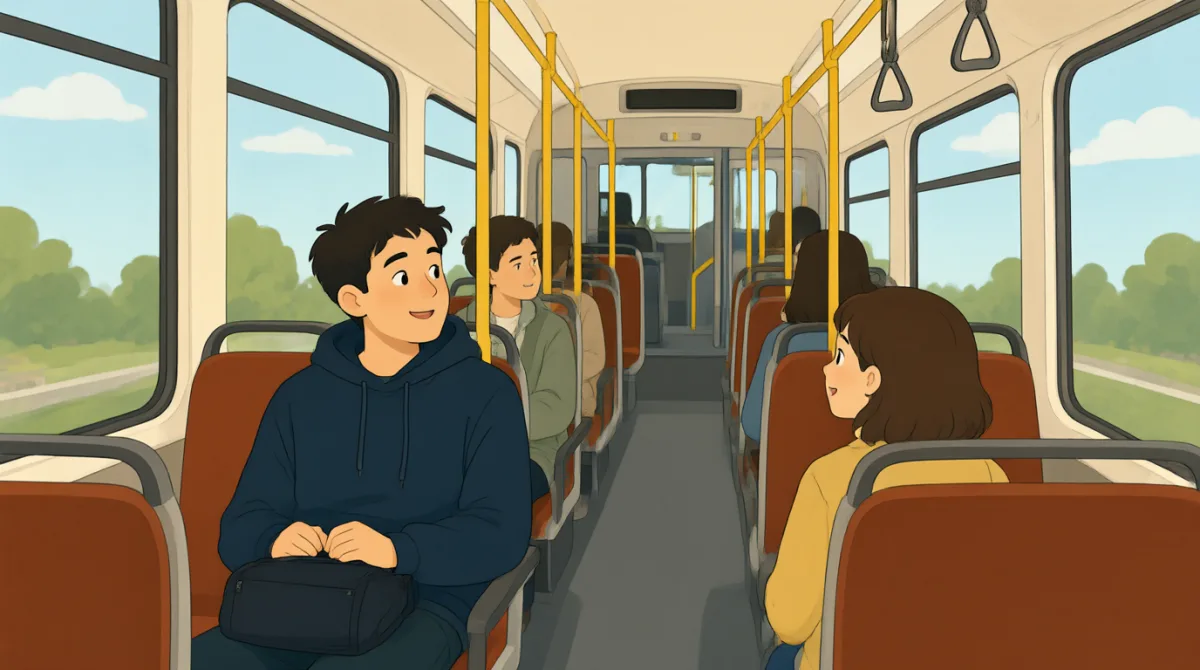

Excuse me, is this seat taken?
माफ़ कीजिए, क्या इस सीट पर कोई बैठा है?

No, it's free. Go ahead!
नहीं, यह खाली है। बैठ जाइए!
Thanks! Phew, it's quite humid today, isn't it?
शुक्रिया! उफ़, आज काफ़ी उमस है, है न?
It really is! I think a storm might be brewing later. Are you heading far?
सच में! लगता है बाद में तूफ़ान आने वाला है। आपको दूर जाना है?
Just to the downtown area for work. What about you?
बस काम के लिए शहर के बीचोंबीच तक। और आप?
Same here. Just a few more stops for me. This bus can get pretty crowded during rush hour.
मैं भी वहीं जा रही हूँ। मेरे लिए बस कुछ ही स्टॉप और हैं। भीड़भाड़ के समय इस बस में काफ़ी भीड़ हो जाती है।
Tell me about it! At least we got a seat today, right?
बिल्कुल! कम से कम आज हमें बैठने की जगह तो मिल गई, है न?
Absolutely! Well, it was nice chatting with you. This is my stop.
बिल्कुल! अच्छा, आपसे बात करके अच्छा लगा। मेरा स्टॉप आ गया।
You too! Have a good day!
मुझे भी! आपका दिन अच्छा रहे!
शब्दावली7
- takenखाली (न होना); किसी के बैठने के लिए लिया हुआ
Means occupied or already in use, like a seat someone is sitting in. Use it to politely check if a place is available.
इसका मतलब है कि कोई जगह पहले से इस्तेमाल में है या उस पर कोई बैठा है, जैसे कोई सीट। यह विनम्रता से पूछने के लिए कहें कि जगह खाली है या नहीं।
- humidउमस भरा
Describes weather that feels wet and sticky because of high moisture in the air. Common in small talk about the weather.
यह ऐसे मौसम का वर्णन करता है जिसमें हवा में नमी ज़्यादा होने के कारण चिपचिपी और भारी गर्मी महसूस होती है। मौसम के बारे में हल्की बातचीत में यह शब्द आम है।
- brewingबनना; आने के आसार होना
Here, it means forming or starting to happen, like a storm developing. It's a casual way to predict weather changes.
यहाँ इसका मतलब है कि कोई चीज़ बन रही है या शुरू होने वाली है, जैसे तूफ़ान का उठना। मौसम में बदलाव का अंदाज़ा बताने का यह अनौपचारिक तरीका है।
- headingजा रहे होना; रवाना होना
Means going towards or traveling to a place. Use it to ask about someone's destination, like 'Where are you heading?'
इसका मतलब है किसी जगह की ओर जाना या वहाँ का सफ़र करना। किसी से उनकी मंज़िल पूछने के लिए इसका इस्तेमाल करें, जैसे 'Where are you heading?' (आप कहाँ जा रहे हैं?)
- downtownशहर का मुख्य व्यावसायिक इलाका
Refers to the main business or city center area. It's a common term in American English for urban destinations.
इसका मतलब शहर का मुख्य व्यावसायिक या केंद्रीय इलाका है। अमेरिकी अंग्रेज़ी में शहर के किसी हिस्से की मंज़िल बताने के लिए यह आम शब्द है।
- rush hourभीड़भाड़ का समय
The busiest time of day for traffic and public transport, usually morning and evening commutes. Great for talking about daily travel.
दिन का वह समय जब सड़कों और सार्वजनिक परिवहन में सबसे ज़्यादा भीड़ होती है, आम तौर पर सुबह और शाम के आने-जाने के समय। रोज़ के सफ़र के बारे में बात करते हुए यह काम आता है।
- crowdedभीड़भाड़ वाला
Full of too many people, making it hard to move. Use it to describe busy places like buses during peak times.
इसका मतलब है कि किसी जगह पर इतने लोग हों कि वहाँ चलना-फिरना मुश्किल हो जाए। व्यस्त समय में बस जैसी जगहों का वर्णन करने के लिए इसका इस्तेमाल करें।
मुख्य वाक्य9
- 1
Excuse me, is this seat taken?
माफ़ कीजिए, क्या इस सीट पर कोई बैठा है?
This is a polite way to ask if a seat is available. 'Excuse me' gets attention, and 'taken' means occupied. Use it when boarding public transport to avoid awkwardness.
सीट खाली है या नहीं, यह पूछने का यह एक विनम्र तरीका है। 'Excuse me' (माफ़ कीजिए) किसी का ध्यान खींचता है और 'taken' का मतलब है कि जगह पर कोई बैठा है। सार्वजनिक परिवहन में बैठते समय अटपटी स्थिति से बचने के लिए यह कहें।
- 2
No, it's free. Go ahead!
नहीं, यह खाली है। बैठ जाइए!
A friendly response inviting someone to sit. 'Free' means available, and 'Go ahead' means proceed. It's encouraging and builds rapport in casual settings.
यह किसी को बैठने के लिए आमंत्रित करने वाला दोस्ताना जवाब है। 'Free' का मतलब है खाली और 'Go ahead' का मतलब है आगे बढ़िए या कर लीजिए। अनौपचारिक बातचीत में यह अपनापन बढ़ाता है।
- 3
Thanks! Phew, it's quite humid today, isn't it?
शुक्रिया! उफ़, आज काफ़ी उमस है, है न?
Expresses gratitude and starts small talk on weather. 'Phew' is an exclamation of relief, and 'isn't it?' is a tag question to invite agreement. Useful for breaking the ice.
इसमें शुक्रिया कहा जाता है और मौसम के बारे में हल्की बातचीत शुरू होती है। 'Phew' राहत या थकान जताने का उद्गार है, जबकि 'isn't it?' सहमति पाने के लिए जोड़ा गया सवाल है। बातचीत शुरू करने में यह काम आता है।
- 4
It really is! I think a storm might be brewing later. Are you heading far?
सच में! लगता है बाद में तूफ़ान आने वाला है। आपको दूर जाना है?
Agrees emphatically and asks about destination. 'It really is' confirms, 'might be brewing' predicts weather casually, and 'heading far' inquires politely about travel. Good for continuing conversation.
इसमें ज़ोर देकर सहमति जताई जाती है और फिर मंज़िल के बारे में पूछा जाता है। 'It really is' बात की पुष्टि करता है, 'might be brewing' मौसम के बारे में अनौपचारिक अंदाज़ा जताता है, और 'heading far' विनम्रता से पूछता है कि सफ़र लंबा है या नहीं। बातचीत आगे बढ़ाने के लिए यह अच्छा तरीका है।
- 5
Just to the downtown area for work. What about you?
बस काम के लिए शहर के बीचोंबीच तक। और आप?
Shares destination briefly and asks back. 'Just to' means only as far as, and 'What about you?' reciprocates. This pattern keeps the chat balanced and natural.
इसमें अपनी मंज़िल संक्षेप में बताकर सामने वाले से भी पूछा जाता है। 'Just to' का मतलब है केवल वहाँ तक और 'What about you?' का मतलब है और आप? यह तरीका बातचीत को संतुलित और सहज बनाए रखता है।
- 6
This bus can get pretty crowded during rush hour.
भीड़भाड़ के समय इस बस में काफ़ी भीड़ हो जाती है।
Describes a common experience. 'Can get' shows possibility, 'pretty crowded' means quite full, and 'during rush hour' specifies time. Relatable for commute small talk.
इसमें एक आम अनुभव का ज़िक्र है। 'Can get' किसी चीज़ के हो जाने की संभावना बताता है, 'pretty crowded' का मतलब है काफ़ी भीड़भाड़ वाला और 'during rush hour' समय बताता है। रोज़ के सफ़र की हल्की बातचीत में यह बात लोगों को अपनी-सी लगती है।
- 7
Tell me about it!
बिल्कुल! मुझे पता है आप क्या कह रहे हैं!
An idiomatic expression agreeing strongly with a complaint, like about crowds. It means 'I know exactly what you mean!' Use it to show empathy in casual talks.
यह किसी शिकायत, जैसे भीड़ के बारे में, ज़ोरदार सहमति जताने का मुहावरेदार तरीका है। इसका मतलब है 'I know exactly what you mean!' (मैं आपकी बात पूरी तरह समझता/समझती हूँ!) अनौपचारिक बातचीत में हमदर्दी दिखाने के लिए इसका इस्तेमाल करें।
- 8
Absolutely! Well, it was nice chatting with you. This is my stop.
बिल्कुल! अच्छा, आपसे बात करके अच्छा लगा। मेरा स्टॉप आ गया।
Agrees and ends politely. 'Absolutely' means completely true, 'chatting' means casual talking, and 'This is my stop' signals departure. Ideal for wrapping up conversations.
इसमें सहमति जताकर बातचीत को विनम्रता से खत्म किया जाता है। 'Absolutely' का मतलब है बिल्कुल सही, 'chatting' का मतलब है हल्की-फुल्की बातचीत करना और 'This is my stop' बताता है कि अब आपको उतरना है। बातचीत खत्म करने का यह अच्छा तरीका है।
- 9
You too! Have a good day!
मुझे भी! आपका दिन अच्छा रहे!
A warm farewell. 'You too' mirrors the wish, and 'Have a good day' is a standard polite goodbye. Use it to end interactions positively on public transport.
यह गर्मजोशी से विदा कहने का तरीका है। 'You too' में सामने वाले की शुभकामना लौटाई जाती है और 'Have a good day' विदा कहते समय इस्तेमाल होने वाला आम विनम्र वाक्य है। सार्वजनिक परिवहन में बातचीत को अच्छे ढंग से खत्म करने के लिए इसका इस्तेमाल करें।