Inquiring About Pool Hours and Access
पूल के समय और प्रवेश के बारे में पूछताछ
A guest or visitor approaches the front desk or pool attendant to ask about the pool's operating hours and how they can access it (e.g., specific key card, wristband, or sign-in).
एक मेहमान या आगंतुक रिसेप्शन डेस्क या पूल के कर्मचारी से पूल के खुलने-बंद होने के समय और उसमें प्रवेश करने के तरीके के बारे में पूछता है (जैसे, खास की-कार्ड, कलाईबैंड या अपना नाम दर्ज कराना)।
संवाद8
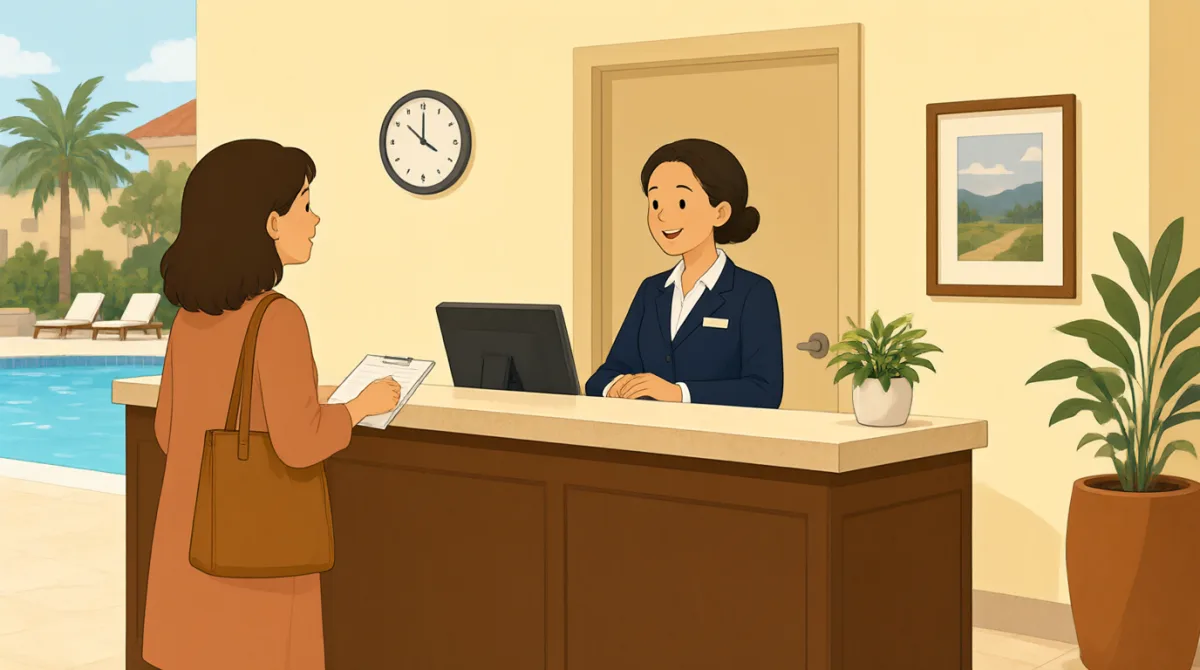

Excuse me, I'm a guest here. Could you tell me what time the pool opens and closes?
माफ़ कीजिए, मैं यहाँ ठहरा हुआ मेहमान हूँ। क्या आप बता सकते हैं कि पूल कितने बजे खुलता और बंद होता है?

Certainly! The pool is open from 6 AM to 10 PM daily. Is there anything else I can help you with?
ज़रूर! पूल रोज़ सुबह 6 बजे से रात 10 बजे तक खुला रहता है। क्या मैं आपकी किसी और तरह से मदद कर सकती हूँ?
Yes, actually. How do I get in? Do I need a key card or a wristband, or do I just sign in?
जी, एक बात और। मैं अंदर कैसे जा सकता हूँ? क्या मुझे की-कार्ड या कलाईबैंड चाहिए, या बस अपना नाम दर्ज कराना है?
You'll need your room key card for access. Just swipe it at the entrance. There's no separate sign-in or wristband required for guests.
अंदर जाने के लिए आपको अपने कमरे का की-कार्ड चाहिए। बस प्रवेश द्वार पर उसे स्वाइप कर दीजिए। मेहमानों को अलग से नाम दर्ज कराने या कलाईबैंड पहनने की ज़रूरत नहीं है।
Great, that's straightforward. And are there any specific rules I should be aware of before going down?
बहुत बढ़िया, यह तो आसान है। नीचे जाने से पहले क्या कोई खास नियम हैं जिनके बारे में मुझे पता होना चाहिए?
Just typical pool rules: no diving, no running, and children under twelve must be accompanied by an adult. You'll find all the rules posted clearly by the pool entrance as well.
बस पूल के आम नियम हैं: पानी में सिर के बल छलाँग न लगाएँ, दौड़ें नहीं, और बारह साल से कम उम्र के बच्चों के साथ किसी वयस्क का होना ज़रूरी है। पूल के प्रवेश द्वार के पास सभी नियम साफ़-साफ़ लगे हुए भी मिलेंगे।
Perfect. Thanks for all your help!
बहुत अच्छा। आपकी सारी मदद के लिए धन्यवाद!
You're welcome! Enjoy your swim!
कोई बात नहीं! तैराकी का आनंद लीजिए!
शब्दावली14
- excuse meमाफ़ कीजिए
A polite way to get someone's attention or interrupt politely, often used when starting a conversation with a stranger.
किसी का ध्यान खींचने या विनम्रता से बीच में बोलने का एक शिष्ट तरीका। इसका इस्तेमाल अक्सर किसी अजनबी से बातचीत शुरू करते समय किया जाता है।
- guestमेहमान
A person staying at a hotel or visiting a place temporarily, like a customer in a service setting.
होटल में ठहरने वाला या किसी जगह पर थोड़े समय के लिए आने वाला व्यक्ति; सेवा-संबंधी जगह में ग्राहक की तरह।
- poolपूल
Short for swimming pool, a place with water for swimming, recreation, or exercise.
तैराकी, मनोरंजन या व्यायाम के लिए पानी वाली जगह; swimming pool का छोटा रूप।
- opensखुलता है
Refers to the starting time when a place like a pool begins operating for the day.
किसी पूल जैसी जगह के रोज़ाना कामकाज शुरू होने के समय को बताता है।
- closesबंद होता है
Refers to the ending time when a place stops operating for the day.
उस समय को बताता है जब कोई जगह दिन के लिए अपना कामकाज बंद करती है।
- accessप्रवेश
The way or method to enter or use something, like gaining entry to a facility.
किसी जगह में जाने या सुविधा का इस्तेमाल करने का तरीका, जैसे किसी सुविधा में दाख़िल होना।
- key cardकी-कार्ड
A plastic card used like a key to open doors or gates in hotels or secure areas; it's electronic.
होटल या सुरक्षित जगहों के दरवाज़े अथवा गेट खोलने के लिए चाबी की तरह इस्तेमाल किया जाने वाला इलेक्ट्रॉनिक प्लास्टिक कार्ड।
- wristbandकलाईबैंड
A band worn around the wrist, often used for identification or access in events or facilities.
कलाई पर पहनी जाने वाली पट्टी, जिसका इस्तेमाल अक्सर कार्यक्रमों या सुविधाओं में पहचान या प्रवेश के लिए होता है।
- sign inनाम दर्ज कराना
To register your name or details, usually by writing in a book or on a form, to gain entry.
अंदर जाने की अनुमति पाने के लिए आम तौर पर किसी रजिस्टर या फ़ॉर्म में अपना नाम या जानकारी लिखना।
- rulesनियम
Official guidelines or instructions that must be followed to ensure safety and order in a place.
किसी जगह पर सुरक्षा और व्यवस्था बनाए रखने के लिए मानने योग्य आधिकारिक दिशा-निर्देश या हिदायतें।
- divingपानी में सिर के बल छलाँग लगाना
Jumping into water headfirst with your body straight, often prohibited in shallow pools for safety.
शरीर सीधा रखते हुए सिर पहले पानी में कूदना; सुरक्षा के लिए उथले पूल में अक्सर इसकी मनाही होती है।
- runningदौड़ना
Moving quickly on foot, which is usually not allowed around pools to prevent accidents.
तेज़ी से पैदल चलना; दुर्घटनाओं से बचने के लिए पूल के आसपास आम तौर पर इसकी अनुमति नहीं होती।
- accompaniedसाथ होना
Being with or supervised by someone else, like an adult watching a child.
किसी दूसरे व्यक्ति के साथ होना या उसकी निगरानी में रहना, जैसे किसी बच्चे पर नज़र रखने वाला वयस्क।
- postedलगा हुआ
Displayed or put up in a visible place, like signs with information or rules.
किसी दिखाई देने वाली जगह पर प्रदर्शित या लगाया हुआ, जैसे जानकारी या नियमों वाले संकेत।
मुख्य वाक्य8
- 1
Excuse me, I'm a guest here. Could you tell me what time the pool opens and closes?
माफ़ कीजिए, मैं यहाँ ठहरा हुआ मेहमान हूँ। क्या आप बता सकते हैं कि पूल कितने बजे खुलता और बंद होता है?
This is a polite question to ask for information about operating hours. Use 'Could you tell me' for formal requests. It's useful when inquiring at hotels or facilities. Grammar: Present simple for schedules.
यह खुलने-बंद होने के समय की जानकारी माँगने का एक विनम्र तरीका है। औपचारिक अनुरोध करने के लिए 'Could you tell me' (क्या आप मुझे बता सकते हैं) का इस्तेमाल करें। होटल या अन्य सुविधाओं के बारे में पूछते समय यह काम आता है। व्याकरण: समय-सारणी बताने के लिए वर्तमान सामान्य काल।
- 2
The pool is open from 6 AM to 10 PM daily.
पूल रोज़ सुबह 6 बजे से रात 10 बजे तक खुला रहता है।
This states time ranges clearly. 'From...to' shows start and end times. 'Daily' means every day. Useful for giving or understanding schedules in service dialogues.
इस वाक्य में समय की अवधि स्पष्ट रूप से बताई गई है। 'From...to' (से...तक) शुरू और खत्म होने का समय दिखाता है। 'Daily' (रोज़) का मतलब है हर दिन। सेवा-संबंधी बातचीत में समय-सारणी बताने या समझने के लिए यह उपयोगी है।
- 3
Is there anything else I can help you with?
क्या मैं आपकी किसी और तरह से मदद कर सकता/सकती हूँ?
A common service phrase to offer more assistance. It's polite and open-ended. Use it in customer service to keep the conversation going if needed.
यह सेवा-संबंधी बातचीत में और मदद की पेशकश करने के लिए इस्तेमाल होने वाला आम वाक्यांश है। यह विनम्र है और सामने वाले को अपनी ज़रूरत बताने का खुला मौका देता है। ग्राहक सेवा में बातचीत आगे बढ़ाने के लिए इसका इस्तेमाल करें।
- 4
How do I get in? Do I need a key card or a wristband, or do I just sign in?
मैं अंदर कैसे जा सकता/सकती हूँ? क्या मुझे की-कार्ड या कलाईबैंड चाहिए, या बस अपना नाम दर्ज कराना है?
This asks about entry methods using alternatives ('or'). 'Get in' means enter. Useful for clarifying access procedures. Grammar: Question form with choices for options.
इसमें 'or' (या) का इस्तेमाल करके प्रवेश के अलग-अलग तरीकों के बारे में पूछा गया है। 'Get in' का मतलब है अंदर जाना। प्रवेश की प्रक्रिया स्पष्ट करने के लिए यह उपयोगी है। व्याकरण: विकल्पों के साथ प्रश्न पूछने का ढाँचा।
- 5
You'll need your room key card for access. Just swipe it at the entrance.
अंदर जाने के लिए आपको अपने कमरे का की-कार्ड चाहिए। बस प्रवेश द्वार पर उसे स्वाइप कर दीजिए।
'You'll need' is future advice. 'Swipe' means to pass a card through a reader. This explains simple procedures. Useful for instructing on entry in secure places.
'You'll need' भविष्य के लिए सलाह या ज़रूरत बताता है। 'Swipe' का मतलब है कार्ड को कार्ड-रीडर के सामने से गुज़ारना। यह आसान प्रक्रिया समझाने के लिए उपयोगी है, जैसे किसी सुरक्षित जगह में प्रवेश करने का तरीका बताना।
- 6
Are there any specific rules I should be aware of before going down?
नीचे जाने से पहले क्या कोई खास नियम हैं जिनके बारे में मुझे पता होना चाहिए?
This politely asks for important information. 'Be aware of' means to know or remember. Use before entering areas like pools. Grammar: Present simple for general rules.
यह ज़रूरी जानकारी विनम्रता से पूछने का तरीका है। 'Be aware of' का मतलब है किसी बात को जानना या याद रखना। पूल जैसी जगहों में जाने से पहले इसका इस्तेमाल करें। व्याकरण: सामान्य नियमों के लिए वर्तमान सामान्य काल।
- 7
Just typical pool rules: no diving, no running, and children under twelve must be accompanied by an adult.
बस पूल के आम नियम हैं: पानी में सिर के बल छलाँग न लगाएँ, दौड़ें नहीं, और बारह साल से कम उम्र के बच्चों के साथ किसी वयस्क का होना ज़रूरी है।
Lists rules with 'no' for prohibitions and 'must' for requirements. 'Typical' means common or standard. Useful for explaining safety guidelines clearly.
इस वाक्य में मनाही बताने के लिए 'no' और ज़रूरी बात बताने के लिए 'must' का इस्तेमाल किया गया है। 'Typical' का मतलब है आम या सामान्य। सुरक्षा-संबंधी दिशा-निर्देश साफ़ तौर पर समझाने के लिए यह उपयोगी है।
- 8
You're welcome! Enjoy your swim!
कोई बात नहीं! तैराकी का आनंद लीजिए!
A standard response to thanks, followed by a well-wish. 'Enjoy your swim' is friendly and specific to the activity. Use to end helpful conversations positively.
यह धन्यवाद के जवाब में कहा जाने वाला आम वाक्य है, जिसके बाद शुभकामना दी जाती है। 'Enjoy your swim' तैराकी के लिए खास तौर पर दी गई एक दोस्ताना शुभकामना है। मददगार बातचीत को सकारात्मक ढंग से खत्म करने के लिए इसका इस्तेमाल करें।