Initial Greeting and Item Count
शुरुआती अभिवादन और कपड़ों की गिनती
The customer enters the dry cleaner's, is greeted by the staff, and begins to present the clothing items for cleaning. The staff member may ask for a count or start counting the items.
ग्राहक ड्राई क्लीनर की दुकान में आता है। कर्मचारी उसका स्वागत करता है और ग्राहक सफाई के लिए कपड़े देना शुरू करता है। कर्मचारी कपड़ों की संख्या पूछ सकता है या खुद उन्हें गिनना शुरू कर सकता है।
संवाद5
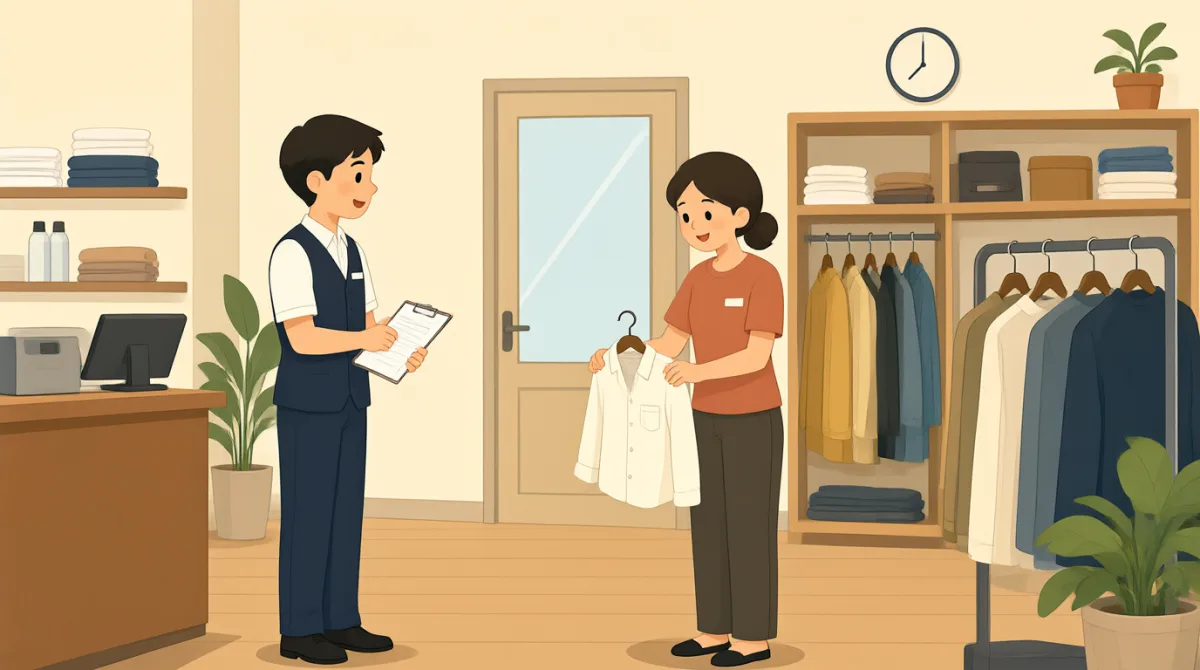

Hi there! Welcome to Spotless Dry Cleaners. How can I help you today?
नमस्ते! स्पॉटलेस ड्राई क्लीनर्स में आपका स्वागत है। आज मैं आपकी क्या मदद कर सकती हूँ?

Hi, I have a few items to drop off for dry cleaning.
नमस्ते, मुझे ड्राई क्लीनिंग के लिए कुछ कपड़े देने हैं।
Great! Just place them on the counter here. Do you know how many pieces you have?
ज़रूर! इन्हें यहाँ काउंटर पर रख दीजिए। क्या आपको पता है कि कुल कितने कपड़े हैं?
Let's see... I think it's four. Two suits, a dress, and a winter coat.
देखता हूँ... मुझे लगता है चार हैं। दो सूट, एक ड्रेस और एक सर्दियों का कोट।
Alright, I'll just do a quick count to confirm. One, two, three... and four. Perfect, four items.
ठीक है, मैं पक्का करने के लिए जल्दी से गिन लेती हूँ। एक, दो, तीन... और चार। बढ़िया, कुल चार कपड़े हैं।
शब्दावली6
- drop offदेकर जाना
This phrasal verb means to leave something at a place for someone else to handle, like leaving clothes at a dry cleaner's. It's commonly used for services like laundry or packages.
इस क्रिया का मतलब है किसी चीज़ को किसी जगह छोड़ जाना, ताकि कोई और उसे संभाल सके—जैसे ड्राई क्लीनर की दुकान पर कपड़े छोड़ना। इसका इस्तेमाल अक्सर कपड़े धुलवाने या पार्सल देने जैसी सेवाओं के लिए होता है।
- dry cleaningड्राई क्लीनिंग
This refers to a cleaning process for clothes that can't be washed in water, using special chemicals. It's useful for suits or delicate fabrics.
यह कपड़े साफ़ करने की वह प्रक्रिया है जिसमें पानी से धोने के बजाय विशेष रसायनों का इस्तेमाल किया जाता है। यह सूट या नाज़ुक कपड़ों के लिए उपयोगी है।
- counterकाउंटर
A flat surface in a shop where customers place items and talk to staff. In stores, it's where you pay or hand over things like clothes.
दुकान में बनी एक सपाट सतह, जहाँ ग्राहक सामान रखते हैं और कर्मचारियों से बात करते हैं। दुकानों में यहीं भुगतान किया जाता है या कपड़े जैसी चीज़ें सौंपी जाती हैं।
- piecesकपड़े
Here, it means individual clothing items. People often say 'pieces' when counting clothes at a dry cleaner's or laundry.
यहाँ इसका मतलब कपड़ों की अलग-अलग चीज़ों से है। ड्राई क्लीनर या लॉन्ड्री में कपड़े गिनते समय लोग अक्सर 'pieces' कहते हैं।
- suitsसूट
Formal clothing sets, usually a jacket and pants or skirt, worn for business or special occasions. 'Suits' is the plural form.
औपचारिक कपड़ों का सेट, जिसमें आम तौर पर जैकेट और पैंट या स्कर्ट होती है। इसे कामकाज या खास मौकों पर पहना जाता है। 'Suits' इसका बहुवचन रूप है।
- confirmपक्का करना
To check or make sure something is correct. Staff use this when verifying the number of items to avoid mistakes.
किसी चीज़ की जाँच करना या यह सुनिश्चित करना कि वह सही है। गलतियों से बचने के लिए कर्मचारी सामान की संख्या जाँचते समय इस शब्द का इस्तेमाल करते हैं।
मुख्य वाक्य5
- 1
How can I help you today?
आज मैं आपकी क्या मदद कर सकता/सकती हूँ?
This is a polite greeting used by service staff to offer assistance. It's useful in shops or restaurants to start a conversation. The question form invites the customer to explain their needs.
सेवा देने वाले कर्मचारी मदद की पेशकश करने के लिए यह विनम्र अभिवादन इस्तेमाल करते हैं। दुकानों या रेस्तराँ में बातचीत शुरू करने के लिए यह उपयोगी है। सवाल पूछकर ग्राहक को अपनी ज़रूरत बताने का मौका मिलता है।
- 2
I have a few items to drop off for dry cleaning.
मुझे ड्राई क्लीनिंग के लिए कुछ कपड़े देने हैं।
This sentence introduces your purpose when entering a service place. 'A few items' means a small number of things; it's practical for similar situations like banking or mailing. Use it to be clear and direct.
किसी सेवा की जगह पर पहुँचकर आप इस वाक्य से बता सकते हैं कि आप वहाँ क्यों आए हैं। 'A few items' का मतलब है कुछ चीज़ें। बैंक या डाकघर जैसी जगहों पर भी यह वाक्य काम आ सकता है। अपनी बात साफ़ और सीधे कहने के लिए इसका इस्तेमाल करें।
- 3
Just place them on the counter here.
इन्हें बस यहाँ काउंटर पर रख दीजिए।
This instructs someone to put items on the shop surface. 'Just' makes it sound casual and easy. It's useful for staff to guide customers politely, and the grammar uses imperative form for directions.
इस वाक्य में किसी को दुकान की सतह पर चीज़ें रखने के लिए कहा जाता है। 'Just' बात को सहज और आसान बनाता है। कर्मचारी ग्राहकों को विनम्रता से रास्ता बताने के लिए इसका इस्तेमाल कर सकते हैं। निर्देश देने के लिए वाक्य का रूप आदेशवाचक है।
- 4
Do you know how many pieces you have?
क्या आपको पता है कि कुल कितने कपड़े हैं?
A question to ask about the quantity of items. It's helpful for counting in services like dry cleaning. The yes/no question structure with 'do you know' is common for seeking information without pressure.
यह सामान की संख्या पूछने का सवाल है। ड्राई क्लीनिंग जैसी सेवाओं में गिनती के लिए यह उपयोगी है। जानकारी माँगने के लिए 'do you know' वाला हाँ-या-ना में जवाब दिया जा सकने वाला सवाल आम है और इससे सामने वाले पर दबाव नहीं पड़ता।
- 5
I'll just do a quick count to confirm.
मैं पक्का करने के लिए बस जल्दी से गिन लेता/लेती हूँ।
This means the staff will quickly check the number. 'Just' softens the action, making it reassuring. It's useful for verifying details in transactions; the future 'I'll' shows intention.
इसका मतलब है कि कर्मचारी संख्या जल्दी से जाँचेगा या जाँचेगी। 'Just' बात को नरम बनाता है और आश्वस्त करता है। लेन-देन में जानकारी की पुष्टि के लिए यह वाक्य उपयोगी है। भविष्यकाल का 'I'll' इरादा बताता है।