Influence of Grandparents' Philosophy
দাদা-দাদি ও নানা-নানির লালন-পালনের দর্শনের প্রভাব
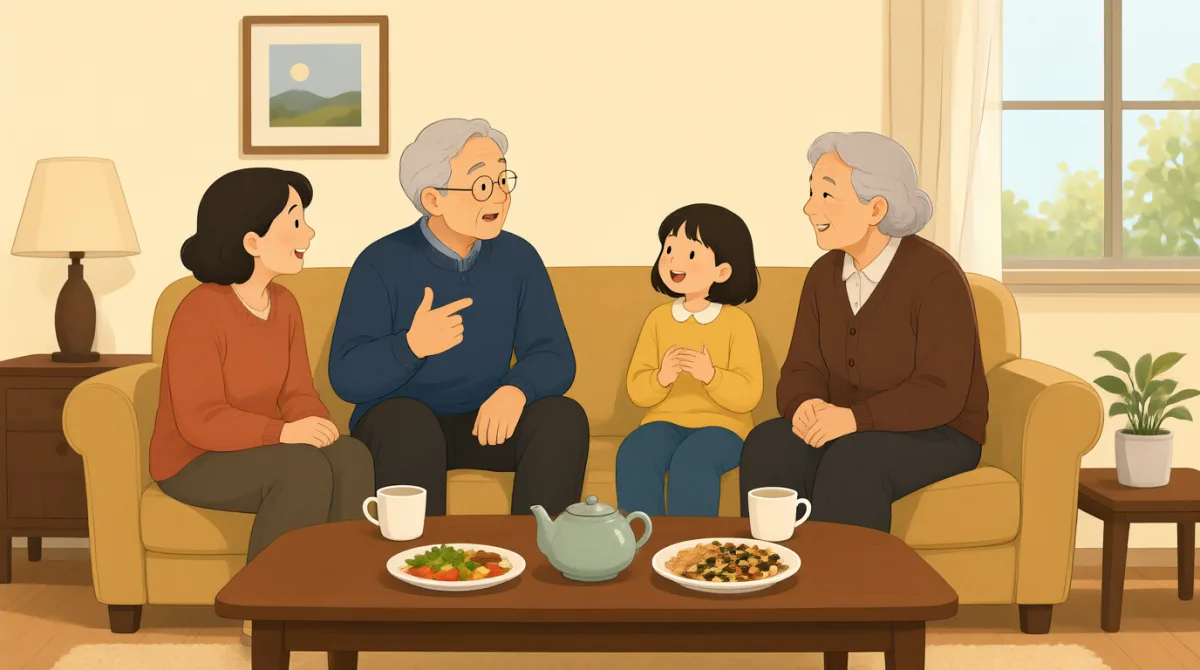
A family discusses the impact of grandparents' traditional child-rearing philosophies, which might conflict with the parents' more modern approaches, particularly regarding diet, screen time, or bedtime routines.
একটি পরিবার দাদা-দাদি ও নানা-নানির প্রচলিত শিশুপালনের ধ্যানধারণার প্রভাব নিয়ে আলোচনা করে, যা বাবা-মায়ের আধুনিক পদ্ধতির সঙ্গে—বিশেষ করে খাবার, স্ক্রিনে কাটানো সময় বা ঘুমের রুটিনের ক্ষেত্রে—সংঘাত তৈরি করতে পারে।
সংলাপ9

Hey Jack, can we talk about something that's been on my mind regarding the kids and your parents?
এই জ্যাক, বাচ্চাদের আর তোমার বাবা-মাকে নিয়ে একটা কথা আমার মনে ঘুরছে—আমরা কি সেটা নিয়ে কথা বলতে পারি?

Sure, what's up? Is it about their screen time again? I know they let them watch a bit more TV than we usually do.
অবশ্যই, কী হয়েছে? আবার কি ওদের স্ক্রিনে কাটানো সময় নিয়ে? জানি, ওরা বাচ্চাদের আমাদের চেয়ে একটু বেশি টিভি দেখতে দেয়।
That, and the diet, and the bedtime routines. I appreciate them watching the kids, but their philosophy is just so different from ours. It's almost like a constant battle to re-establish our rules when they come home.
ওটা তো আছেই, তার সঙ্গে খাবার আর ঘুমের রুটিনও। ওরা বাচ্চাদের দেখাশোনা করে বলে আমি কৃতজ্ঞ, কিন্তু বাচ্চাদের বড় করার ব্যাপারে ওদের ভাবনাটা আমাদের থেকে একেবারেই আলাদা। ওরা বাড়ি ফিরলেই আমাদের নিয়মগুলো আবার মানাতে যেন রোজকার লড়াই শুরু হয়।
I understand what you mean. They grew up in a different era, and their way of doing things is very traditional. They probably see it as being loving and generous, letting them have treats and stay up late.
তুমি কী বলতে চাইছ বুঝতে পারছি। ওরা অন্য সময়ে বড় হয়েছে, আর ওদের কাজকর্মের ধরনটা খুবই সনাতনী। ওরা হয়তো ভাবে, বাচ্চাদের মিষ্টি-টিষ্টি খেতে দেওয়া আর রাত করে জেগে থাকতে দেওয়াই ভালোবাসা আর উদারতা দেখানোর উপায়।
I know, and I don't want to make them feel unappreciated. But when it comes to healthy eating or consistent sleep schedules, it really messes with our efforts. Like yesterday, Lily wouldn't eat her vegetables after a weekend at their place because she was used to just juice and cookies.
জানি, আর আমি চাই না ওরা ভাবুক যে আমরা ওদের কদর করি না। কিন্তু স্বাস্থ্যকর খাবার খাওয়ানো বা ঘুমের সময় ঠিক রাখার ক্ষেত্রে ওদের এসব আমাদের চেষ্টায় সত্যিই ব্যাঘাত ঘটায়। যেমন, গতকাল ওদের বাড়িতে সপ্তাহান্ত কাটিয়ে আসার পর লিলি সবজি খেতেই চাইছিল না, কারণ ও শুধু জুস আর কুকিজ খেতে অভ্যস্ত হয়ে গিয়েছিল।
That's a valid point. We need to find a way to bridge that gap without causing offense. Maybe we can suggest a 'grandparent's guide' with some general guidelines for when the kids are over? Not strict rules, but gentle reminders.
তোমার কথাটা যথার্থ। কাউকে কষ্ট না দিয়ে এই ব্যবধান কমানোর একটা উপায় আমাদের খুঁজে বের করতে হবে। বাচ্চারা ওদের কাছে থাকলে কাজে লাগবে—এমন কিছু সাধারণ পরামর্শ দিয়ে ‘দাদা-দাদি ও নানা-নানির জন্য নির্দেশিকা’ বানানোর প্রস্তাব দিই না? কড়া নিয়ম নয়, শুধু মৃদু করে মনে করিয়ে দেওয়া।
That could work. A 'guide' sounds less like a 'rulebook.' We could frame it around what helps the kids transition back to their routine smoothly, emphasizing their well-being. What do you think about bringing it up during our next family dinner?
তা কাজ করতে পারে। ‘নির্দেশিকা’ শুনলে ‘নিয়মের বই’-এর মতো মনে হয় না। বাচ্চারা যেন সহজে আবার নিজেদের রুটিনে ফিরতে পারে, আর তাদের ভালো থাকার কথাটা সামনে রেখেই আমরা বিষয়টা বলতে পারি। পরের পারিবারিক নৈশভোজে কথাটা তোলা কেমন হয়?
That sounds like a good plan. I'll talk to my mom first and soften the ground a bit, so it doesn't come out of nowhere. We need to be on the same page about this.
পরিকল্পনাটা ভালো মনে হচ্ছে। আমি আগে মায়ের সঙ্গে কথা বলব, একটু আগেভাগে কথাটা তুলে রাখব, যাতে হঠাৎ করে শুনে না বসে। এ ব্যাপারে আমাদের দুজনের একমত থাকা দরকার।
Perfect. I really appreciate you taking the lead on this, Jack. It’s important for the kids, and for us, to have consistency.
দারুণ। এ ব্যাপারে তুমি আগে এগিয়ে আসছ বলে আমি সত্যিই কৃতজ্ঞ, জ্যাক। বাচ্চাদের জন্য, আর আমাদের জন্যও, নিয়মিততা বজায় রাখা জরুরি।
শব্দভান্ডার10
- philosophyদৃষ্টিভঙ্গি
A set of beliefs or ideas about how to do something, like raising children. In this dialogue, it refers to different ways of parenting.
কোনো কাজ কীভাবে করতে হয়, সে বিষয়ে বিশ্বাস বা ধারণার সমষ্টি—যেমন, বাচ্চাদের কীভাবে বড় করতে হয়। এই কথোপকথনে এটি বাচ্চা লালন-পালনের বিভিন্ন পদ্ধতিকে বোঝায়।
- screen timeস্ক্রিনে কাটানো সময়
The amount of time spent using electronic devices like TV or phones. It's a common concern in modern parenting to limit it for kids' health.
টিভি বা ফোনের মতো ইলেকট্রনিক যন্ত্র ব্যবহার করে কাটানো সময়। বাচ্চাদের স্বাস্থ্যের কথা ভেবে এই সময় সীমিত রাখা আধুনিক শিশুপালনের একটি সাধারণ চিন্তার বিষয়।
- dietখাদ্যাভ্যাস
The food and drink a person usually eats. Here, it means healthy eating habits for children, like eating vegetables instead of junk food.
একজন মানুষ সাধারণত যে খাবার ও পানীয় গ্রহণ করেন। এখানে এটি বাচ্চাদের স্বাস্থ্যকর খাবার খাওয়ার অভ্যাস বোঝায়—যেমন জাঙ্ক ফুডের বদলে সবজি খাওয়া।
- bedtime routinesঘুমানোর আগের রুটিন
Regular habits before going to sleep, such as brushing teeth or reading a book. These help children have consistent sleep schedules.
ঘুমাতে যাওয়ার আগে নিয়মিত করা কাজ, যেমন দাঁত মাজা বা বই পড়া। এগুলো বাচ্চাদের ঘুমের সময়সূচি নিয়মিত রাখতে সাহায্য করে।
- traditionalসনাতনী
Following old customs or ways of doing things, often from past generations. Grandparents in the dialogue use traditional methods like allowing more treats.
পুরোনো রীতি বা কাজের পুরোনো ধরন অনুসরণ করা, যা প্রায়ই আগের প্রজন্ম থেকে চলে আসে। কথোপকথনের দাদা-দাদি ও নানা-নানি বেশি মিষ্টি-টিষ্টি খেতে দেওয়ার মতো সনাতনী পদ্ধতি অনুসরণ করেন।
- treatsমিষ্টি-টিষ্টি
Special foods like candy or cookies given as a reward or indulgence. Parents worry about too many treats affecting children's health.
পুরস্কার বা আদর করে দেওয়া বিশেষ খাবার, যেমন ক্যান্ডি বা কুকিজ। এ ধরনের খাবার বেশি খেলে বাচ্চাদের স্বাস্থ্যে প্রভাব পড়তে পারে বলে বাবা-মায়েরা চিন্তা করেন।
- valid pointযথার্থ কথা
A good or reasonable argument. Jack uses it to agree with Mia's concern about the grandparents' influence.
ভালো বা যুক্তিসংগত বক্তব্য। দাদা-দাদি ও নানা-নানির প্রভাব নিয়ে মিয়ার উদ্বেগের সঙ্গে একমত হতে জ্যাক এই কথাটি বলে।
- bridge that gapব্যবধান কমানো
To reduce differences or conflicts between two sides. Here, it means finding a way to make grandparents and parents agree on child-rearing.
দুই পক্ষের মধ্যে পার্থক্য বা বিরোধ কমানো। এখানে এর অর্থ, বাচ্চাদের লালন-পালন নিয়ে দাদা-দাদি, নানা-নানি ও বাবা-মায়ের মধ্যে সমঝোতার উপায় খুঁজে বের করা।
- guidelinesসাধারণ নির্দেশনা
General suggestions or rules to follow, not strict laws. The couple suggests a 'grandparent's guide' for childcare.
মেনে চলার জন্য দেওয়া সাধারণ পরামর্শ বা নিয়ম, যা কঠোর আইন নয়। এই দম্পতি বাচ্চাদের দেখাশোনার বিষয়ে ‘দাদা-দাদি ও নানা-নানির জন্য নির্দেশিকা’র প্রস্তাব দেয়।
- consistencyনিয়মিততা
Keeping things the same over time, like rules for kids. It's important for children's routines and family harmony.
সময়ের সঙ্গে একই নিয়ম বা ধরন বজায় রাখা—যেমন, বাচ্চাদের জন্য নির্দিষ্ট নিয়ম মেনে চলা। বাচ্চাদের রুটিন ও পরিবারের শান্তি বজায় রাখতে এটি গুরুত্বপূর্ণ।
গুরুত্বপূর্ণ বাক্য9
- 1
Hey Jack, can we talk about something that's been on my mind regarding the kids and your parents?
এই জ্যাক, বাচ্চাদের আর তোমার বাবা-মাকে নিয়ে একটা কথা আমার মনে ঘুরছে—আমরা কি সেটা নিয়ে কথা বলতে পারি?
This is a polite way to start a sensitive conversation. 'On my mind' means something you're thinking about a lot. Use it to introduce topics gently in family discussions. The structure is a question with 'can we' for permission.
সংবেদনশীল কোনো কথা শুরু করার এটি একটি ভদ্র উপায়। 'on my mind' মানে এমন কিছু, যা নিয়ে আপনি অনেক ভাবছেন। পারিবারিক আলোচনায় কোনো বিষয় আলতোভাবে তুলতে এই কথাটি ব্যবহার করুন। 'can we' দিয়ে অনুমতি চেয়ে প্রশ্ন করা হয়েছে।
- 2
I appreciate them watching the kids, but their philosophy is just so different from ours.
ওরা বাচ্চাদের দেখাশোনা করে বলে আমি কৃতজ্ঞ, কিন্তু বাচ্চাদের বড় করার ব্যাপারে ওদের ভাবনাটা আমাদের থেকে একেবারেই আলাদা।
This sentence shows contrast with 'but' after expressing thanks. 'Appreciate' means to be grateful for. It's useful for balancing positive and negative points in disagreements about family matters.
কৃতজ্ঞতা প্রকাশের পর 'but' দিয়ে বিপরীত দিকটি তুলে ধরা হয়েছে। 'Appreciate' মানে কৃতজ্ঞ হওয়া। পারিবারিক বিষয়ে মতবিরোধের সময় ভালো ও খারাপ—দুই দিকই তুলে ধরতে এটি কাজে লাগে।
- 3
It's almost like a constant battle to re-establish our rules when they come home.
ওরা বাড়ি ফিরলেই আমাদের নিয়মগুলো আবার মানাতে যেন রোজকার লড়াই শুরু হয়।
'Almost like' compares a situation to something else for emphasis. 'Constant battle' is an idiom for ongoing struggle. Use this to describe repeated challenges in parenting or routines.
'Almost like' জোর দিয়ে কোনো পরিস্থিতির সঙ্গে অন্য কিছুর তুলনা করে। 'Constant battle' একটি বাগ্ধারা, যার অর্থ চলতে থাকা সংগ্রাম। শিশুপালন বা রুটিন নিয়ে বারবার হওয়া চ্যালেঞ্জ বোঝাতে এটি ব্যবহার করুন।
- 4
They probably see it as being loving and generous, letting them have treats and stay up late.
ওরা হয়তো ভাবে, বাচ্চাদের মিষ্টি-টিষ্টি খেতে দেওয়া আর রাত করে জেগে থাকতে দেওয়াই ভালোবাসা আর উদারতা দেখানোর উপায়।
This uses 'probably' to guess someone's thoughts. 'See it as' means to view something in a certain way. It's helpful for explaining others' perspectives in cultural or generational differences.
'Probably' ব্যবহার করে কারও মনে কী চলছে, তা অনুমান করা হয়েছে। 'See it as' মানে কোনো কিছুকে একটি নির্দিষ্টভাবে দেখা বা ভাবা। সংস্কৃতি বা প্রজন্মের পার্থক্যে অন্যের দৃষ্টিভঙ্গি ব্যাখ্যা করতে এটি উপকারী।
- 5
That messes with our efforts.
ওদের এসব আমাদের চেষ্টায় ব্যাঘাত ঘটায়।
'Messes with' is informal for disrupts or ruins. Short and casual, it's useful in everyday talk about how actions affect plans, like in parenting conflicts. Present tense shows ongoing impact.
'Messes with' কথ্য ভাষায় ‘ব্যাহত করে’ বা ‘নষ্ট করে’ বোঝায়। দৈনন্দিন কথাবার্তায় কোনো কাজ কীভাবে পরিকল্পনায় প্রভাব ফেলে—যেমন শিশুপালন নিয়ে মতবিরোধ—তা সংক্ষেপে বলতে এটি কাজে লাগে। বর্তমান কাল দিয়ে চলমান প্রভাব বোঝানো হয়েছে।
- 6
We need to find a way to bridge that gap without causing offense.
কাউকে কষ্ট না দিয়ে এই ব্যবধান কমানোর একটা উপায় আমাদের খুঁজে বের করতে হবে।
'Bridge that gap' is an idiom for connecting differences. 'Without causing offense' means avoiding upsetting someone. Use this in negotiations to suggest solutions sensitively.
'Bridge that gap' একটি বাগ্ধারা, যার অর্থ পার্থক্য দূর করা বা দুই পক্ষকে কাছাকাছি আনা। 'Without causing offense' মানে কাউকে মনঃক্ষুণ্ণ না করে। সংবেদনশীলভাবে সমাধানের প্রস্তাব দিতে আলোচনায় এই কথাগুলো ব্যবহার করুন।
- 7
That could work. A 'guide' sounds less like a 'rulebook.'
তা কাজ করতে পারে। ‘নির্দেশিকা’ শুনলে ‘নিয়মের বই’-এর মতো মনে হয় না।
This compares two words for tone: 'guide' is softer than 'rulebook.' 'Sounds like' expresses opinion on how something seems. Useful for discussing alternatives in family compromises.
এখানে শব্দ দুটির ভাবের তুলনা করা হয়েছে: 'guide' শব্দটি 'rulebook'-এর চেয়ে কোমল শোনায়। 'Sounds like' দিয়ে কোনো কিছু কেমন মনে হয় সে বিষয়ে মতামত প্রকাশ করা হয়। পারিবারিক সমঝোতায় বিকল্প নিয়ে কথা বলতে এটি কাজে লাগে।
- 8
I'll talk to my mom first and soften the ground a bit, so it doesn't come out of nowhere.
আমি আগে মায়ের সঙ্গে কথা বলব, একটু আগেভাগে কথাটা তুলে রাখব, যাতে হঠাৎ করে শুনে না বসে।
'Soften the ground' is an idiom for preparing someone gently. 'Come out of nowhere' means suddenly without warning. It's a practical phrase for planning conversations to avoid surprises.
'Soften the ground' একটি বাগ্ধারা, যার অর্থ কাউকে ধীরে-সুস্থে কথাটির জন্য প্রস্তুত করা। 'Come out of nowhere' মানে কোনো আগাম সতর্কতা ছাড়া হঠাৎ করে ঘটা বা শোনা। কাউকে চমকে না দিয়ে কথোপকথনের পরিকল্পনা করতে এই বাক্যাংশগুলো কাজে লাগে।
- 9
It’s important for the kids, and for us, to have consistency.
বাচ্চাদের জন্য, আর আমাদের জন্যও, নিয়মিততা বজায় রাখা জরুরি।
This uses a cleft sentence 'It’s important... to' to emphasize why something matters. 'Consistency' refers to uniformity. Great for explaining benefits in parenting or teamwork discussions.
'It’s important... to' কাঠামোটি কোনো বিষয় কেন গুরুত্বপূর্ণ, তা জোর দিয়ে বলে। 'Consistency' বলতে একই রকম বা নিয়মিত থাকার বিষয়টি বোঝায়। শিশুপালন বা দলগত কাজের আলোচনায় এর উপকারিতা বোঝাতে এটি কাজে লাগে।