Preparing for a Recital
संगीत समारोह की तैयारी
A student and their teacher finalize song selections and discuss performance techniques and stage presence in preparation for an upcoming music recital.
एक छात्रा और उसके शिक्षक आगामी संगीत समारोह के लिए गीतों का चयन पक्का करते हैं और प्रस्तुति की तकनीकों व मंच पर आत्मविश्वास से पेश आने के तरीकों पर चर्चा करते हैं।
संवाद9
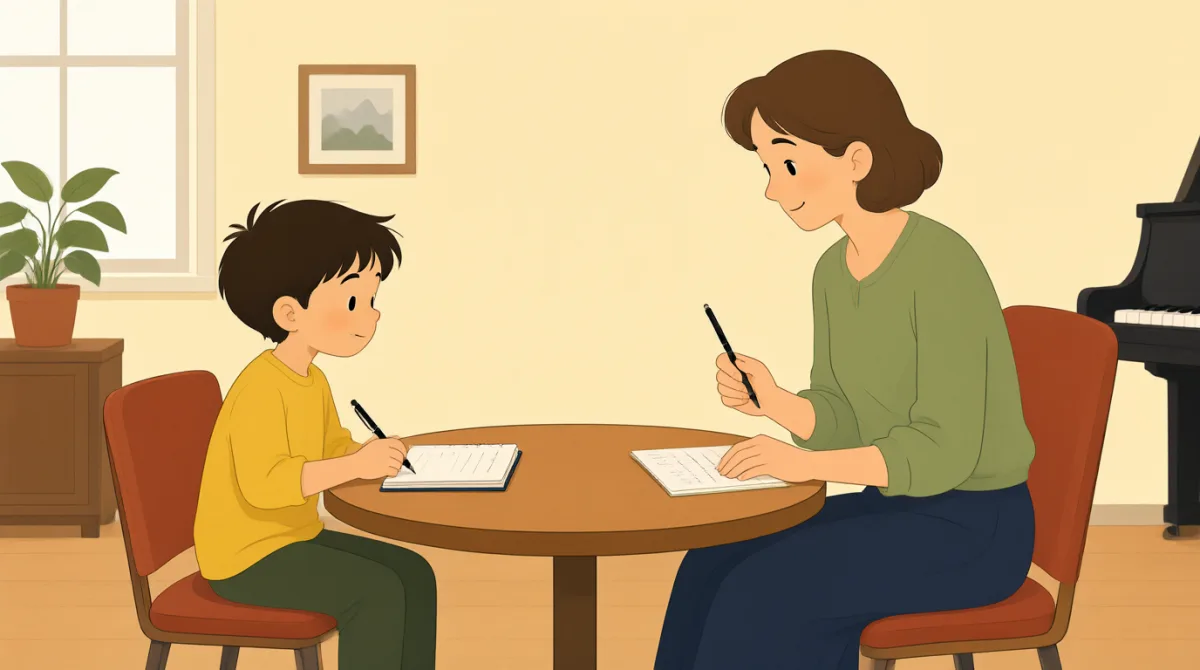

Alright Emma, let's finalize the pieces for your recital. How are you feeling about playing 'Clair de Lune' and 'Für Elise'?
ठीक है, एमा, चलो तुम्हारे समारोह के लिए गानों का चयन पक्का कर लें। ‘Clair de Lune’ और ‘Für Elise’ बजाने को लेकर तुम्हें कैसा लग रहा है?

I feel pretty confident with 'Clair de Lune' now, but 'Für Elise' still feels a bit shaky, especially the faster sections. I'm worried about hitting all the notes perfectly.
अब ‘Clair de Lune’ को लेकर मुझे काफ़ी भरोसा है, लेकिन ‘Für Elise’ अभी भी थोड़ा डगमग लग रहा है, खासकर तेज़ हिस्सों में। मुझे चिंता है कि कहीं सारे सुर बिल्कुल सही न बजा पाऊँ।
That's completely understandable. Why don't we shift 'Für Elise' to a later recital and instead, let's look at that simpler Chopin Nocturne we've been working on? It has a beautiful melody and you've got the technique down.
यह चिंता बिल्कुल समझ में आती है। क्यों न ‘Für Elise’ को अगले समारोह के लिए रख दें और इसकी जगह उस आसान चोपिन नॉक्टर्न पर विचार करें जिसका हम अभ्यास कर रहे हैं? उसकी धुन बहुत सुंदर है और तुम उसकी तकनीक भी अच्छी तरह सीख चुकी हो।
Oh, that's a great idea! I love that piece, and it would definitely ease some of my nerves. So, 'Clair de Lune' and the Chopin Nocturne?
अरे, यह तो बहुत अच्छा विचार है! मुझे वह धुन बहुत पसंद है, और इससे मेरी घबराहट भी ज़रूर कुछ कम होगी। तो, ‘Clair de Lune’ और चोपिन नॉक्टर्न?
Perfect. Now, regarding performance techniques, remember to really convey the emotion in 'Clair de Lune'. Think about the dynamic range and expressing the quiet contemplation.
बिल्कुल। अब प्रस्तुति की तकनीक की बात करें, तो ‘Clair de Lune’ में भावनाओं को सचमुच ज़ाहिर करना याद रखना। सुरों के उतार-चढ़ाव और उस शांत चिंतनशील भाव को व्यक्त करने के बारे में सोचो।
Got it. So, really focus on the softer parts and building up the crescendos naturally.
समझ गई। तो, धीमे हिस्सों पर खास ध्यान देना है और धीरे-धीरे स्वाभाविक ढंग से क्रेशेंडो बढ़ाना है।
Precisely. And for stage presence, remember to make eye contact with the audience before you start. A confident posture and a small bow at the end go a long way. It shows respect and adds to your overall presentation.
बिल्कुल। और मंच पर अपने आत्मविश्वास के लिए, शुरू करने से पहले दर्शकों से नज़रें मिलाना याद रखना। आत्मविश्वास से भरा हावभाव और आखिर में हल्का-सा झुककर अभिवादन करना बहुत अच्छा असर डालता है। इससे सम्मान झलकता है और तुम्हारी पूरी प्रस्तुति निखरती है।
Okay, eye contact and a good bow. I'll practice that. Thanks for making these adjustments, Mr. Chen. I feel much better about the recital now.
ठीक है, नज़रें मिलाना और अच्छे से झुककर अभिवादन करना। मैं इसका अभ्यास करूँगी। इन बदलावों के लिए शुक्रिया, मिस्टर चेन। अब समारोह को लेकर मैं बहुत बेहतर महसूस कर रही हूँ।
You're very welcome, Emma. This is about enjoying the music and sharing it. You'll do wonderfully. Just keep practicing those key sections.
कोई बात नहीं, एमा। संगीत का आनंद लेना और उसे दूसरों के साथ बाँटना ही तो इस सबका मकसद है। तुम बहुत अच्छा करोगी। बस उन ज़रूरी हिस्सों का अभ्यास करती रहो।
शब्दावली10
- recitalसंगीत समारोह
A recital is a public performance where a musician plays pieces of music, often in front of an audience like at a school event.
संगीत समारोह ऐसी सार्वजनिक प्रस्तुति होती है जिसमें कोई संगीतकार दर्शकों के सामने संगीत की रचनाएँ बजाता है, जैसे स्कूल के किसी कार्यक्रम में।
- confidentआत्मविश्वासी
Confident means feeling sure of your abilities and not worried about failing, like when you know you can play a song well.
“Confident” का मतलब है अपनी क्षमता पर भरोसा होना और असफल होने की चिंता न करना—जैसे, जब तुम्हें पता हो कि तुम कोई गाना अच्छी तरह बजा सकती हो।
- shakyडगमगाता हुआ
Shaky describes something that is not steady or reliable, such as a performance where you might make mistakes in fast parts.
“Shaky” ऐसी चीज़ का वर्णन करता है जो स्थिर या भरोसेमंद न हो—जैसे कोई प्रस्तुति जिसमें तेज़ हिस्सों में गलतियाँ हो सकती हैं।
- techniqueतकनीक
Technique refers to the skill and method used to play a musical instrument correctly and smoothly.
“Technique” से मतलब किसी वाद्ययंत्र को सही और सहज ढंग से बजाने के कौशल और तरीके से है।
- melodyधुन
A melody is the main tune or series of notes in a piece of music that you can easily remember and hum.
“Melody” किसी संगीत रचना की मुख्य धुन या सुरों की ऐसी शृंखला होती है जिसे आसानी से याद करके गुनगुनाया जा सकता है।
- nervesघबराहट
Nerves means feelings of anxiety or worry, especially before a big event like a performance.
“Nerves” का मतलब चिंता या घबराहट महसूस करना है, खासकर किसी बड़े आयोजन, जैसे प्रस्तुति, से पहले।
- conveyव्यक्त करना
To convey means to express or communicate a feeling or idea clearly, like showing emotion through your music.
“Convey” का मतलब किसी भावना या विचार को साफ़ तौर पर व्यक्त या संप्रेषित करना है—जैसे संगीत के ज़रिए भावनाएँ दिखाना।
- stage presenceमंच पर आत्मविश्वास से पेश आना
Stage presence is how confidently and engagingly you perform in front of an audience, including your body language and attitude.
“Stage presence” का मतलब है दर्शकों के सामने आत्मविश्वास और दिलचस्प ढंग से प्रस्तुति देना। इसमें तुम्हारी देह-भाषा और रवैया भी शामिल हैं।
- eye contactनज़रें मिलाना
Eye contact is looking directly into someone's eyes when talking or performing to show confidence and connection.
“Eye contact” का मतलब बात करते या प्रस्तुति देते समय किसी की आँखों में सीधे देखना है। इससे आत्मविश्वास और जुड़ाव दिखता है।
- postureमुद्रा
Posture is the way you hold your body when standing or sitting, like keeping your back straight for a professional look.
“Posture” का मतलब खड़े या बैठे होने पर शरीर को रखने का तरीका है—जैसे पेशेवर दिखने के लिए पीठ सीधी रखना।
मुख्य वाक्य8
- 1
How are you feeling about playing 'Clair de Lune' and 'Für Elise'?
‘Clair de Lune’ और ‘Für Elise’ बजाने को लेकर तुम्हें कैसा लग रहा है?
This sentence uses 'How are you feeling about' to ask someone's opinion or emotions on a specific task. It's useful for checking confidence in activities like lessons. Grammar: Present continuous for current feelings.
इस वाक्य में 'How are you feeling about' का इस्तेमाल किसी खास काम को लेकर किसी की राय या भावनाएँ पूछने के लिए होता है। पाठ जैसी गतिविधियों में किसी का आत्मविश्वास जानने के लिए यह उपयोगी है। व्याकरण: मौजूदा भावनाओं के लिए वर्तमान निरंतर काल।
- 2
I feel pretty confident with 'Clair de Lune' now, but 'Für Elise' still feels a bit shaky.
अब ‘Clair de Lune’ को लेकर मुझे काफ़ी भरोसा है, लेकिन ‘Für Elise’ अभी भी थोड़ा डगमग लग रहा है।
This shows contrast with 'but' to express mixed feelings. 'Pretty confident' means quite sure, and 'a bit shaky' means slightly unstable. Useful for describing progress in learning. Grammar: Adjectives like 'confident' and 'shaky' describe states.
यह वाक्य मिली-जुली भावनाएँ बताने के लिए 'but' से विरोध दिखाता है। 'Pretty confident' का मतलब है काफ़ी भरोसा होना, और 'a bit shaky' का मतलब है थोड़ा अस्थिर होना। सीखने में हुई प्रगति बताने के लिए ये उपयोगी हैं। व्याकरण: 'confident' और 'shaky' जैसे विशेषण किसी स्थिति का वर्णन करते हैं।
- 3
That's completely understandable.
यह चिंता बिल्कुल समझ में आती है।
This is a polite way to agree and show empathy. Use it to acknowledge someone's concerns without arguing. It's common in supportive conversations like teacher-student talks.
यह सहमति जताने और सहानुभूति दिखाने का विनम्र तरीका है। किसी की चिंता को बिना बहस किए स्वीकार करने के लिए इसका इस्तेमाल करें। शिक्षक और छात्र की बातचीत जैसे सहयोगपूर्ण संवादों में यह आम है।
- 4
Why don't we shift 'Für Elise' to a later recital and instead, let's look at that simpler Chopin Nocturne?
क्यों न ‘Für Elise’ को अगले समारोह के लिए रख दें और इसकी जगह उस आसान चोपिन नॉक्टर्न पर विचार करें?
This suggests a change using 'Why don't we' for proposals and 'instead' for alternatives. Helpful for making adjustments in plans. Grammar: Imperative 'let's' for suggestions.
सुझाव देने के लिए 'Why don't we' और विकल्प बताने के लिए 'instead' का इस्तेमाल करके इसमें बदलाव का प्रस्ताव दिया गया है। योजनाओं में फेरबदल सुझाने के लिए यह उपयोगी है। व्याकरण: सुझाव देने के लिए 'let's' का आदेशात्मक रूप।
- 5
It would definitely ease some of my nerves.
इससे मेरी घबराहट भी ज़रूर कुछ कम होगी।
This uses conditional 'would' to talk about future benefits and 'ease nerves' idiom for reducing anxiety. Use it when discussing ways to feel less worried before events.
इसमें भविष्य के फ़ायदे की बात करने के लिए 'would' और चिंता कम होने के अर्थ में मुहावरे 'ease nerves' का इस्तेमाल हुआ है। किसी आयोजन से पहले कम चिंतित महसूस करने के तरीकों पर बात करते समय इसका उपयोग करें।
- 6
Remember to really convey the emotion in 'Clair de Lune'.
‘Clair de Lune’ में भावनाओं को सचमुच ज़ाहिर करना याद रखना।
This is advice using 'remember to' for reminders. 'Convey the emotion' means express feelings through performance. Useful for giving tips on arts or presentations. Grammar: Infinitive after 'remember'.
यह याद दिलाने की सलाह है, जिसमें 'remember to' का इस्तेमाल हुआ है। 'Convey the emotion' का मतलब है प्रस्तुति के ज़रिए भावनाएँ व्यक्त करना। कला या प्रस्तुतियों के बारे में सुझाव देते समय यह उपयोगी है। व्याकरण: 'remember' के बाद क्रिया का infinitive रूप आता है।
- 7
Make eye contact with the audience before you start.
शुरू करने से पहले दर्शकों से नज़रें मिलाओ।
Imperative form 'Make' gives direct instructions. It's practical for performance advice, emphasizing connection with viewers. Use in contexts like public speaking or shows.
'Make' का आदेशात्मक रूप सीधे निर्देश देता है। प्रस्तुति के सुझावों में यह उपयोगी है, क्योंकि इससे दर्शकों के साथ जुड़ाव पर ज़ोर पड़ता है। सार्वजनिक भाषण या कार्यक्रमों के संदर्भ में इसका इस्तेमाल करें।
- 8
You'll do wonderfully. Just keep practicing those key sections.
तुम बहुत अच्छा करोगी। बस उन ज़रूरी हिस्सों का अभ्यास करती रहो।
This encourages with future 'You'll do' and 'wonderfully' for excellent performance. 'Keep practicing' means continue the action. Great for motivation in learning situations. Grammar: Future simple for predictions.
इसमें भविष्य के 'You'll do' और बेहतरीन प्रस्तुति के लिए 'wonderfully' का इस्तेमाल करके हौसला बढ़ाया गया है। 'Keep practicing' का मतलब है अभ्यास जारी रखना। सीखने के दौरान प्रोत्साहित करने के लिए यह बढ़िया है। व्याकरण: भविष्यवाणी के लिए सामान्य भविष्य काल।