Preparing for a Recital
Chuẩn bị cho buổi độc tấu
A student and their teacher finalize song selections and discuss performance techniques and stage presence in preparation for an upcoming music recital.
Một học sinh và giáo viên chốt các tác phẩm sẽ biểu diễn, đồng thời trao đổi về kỹ thuật biểu diễn và phong thái sân khấu để chuẩn bị cho buổi độc tấu sắp tới.
Hội thoại9
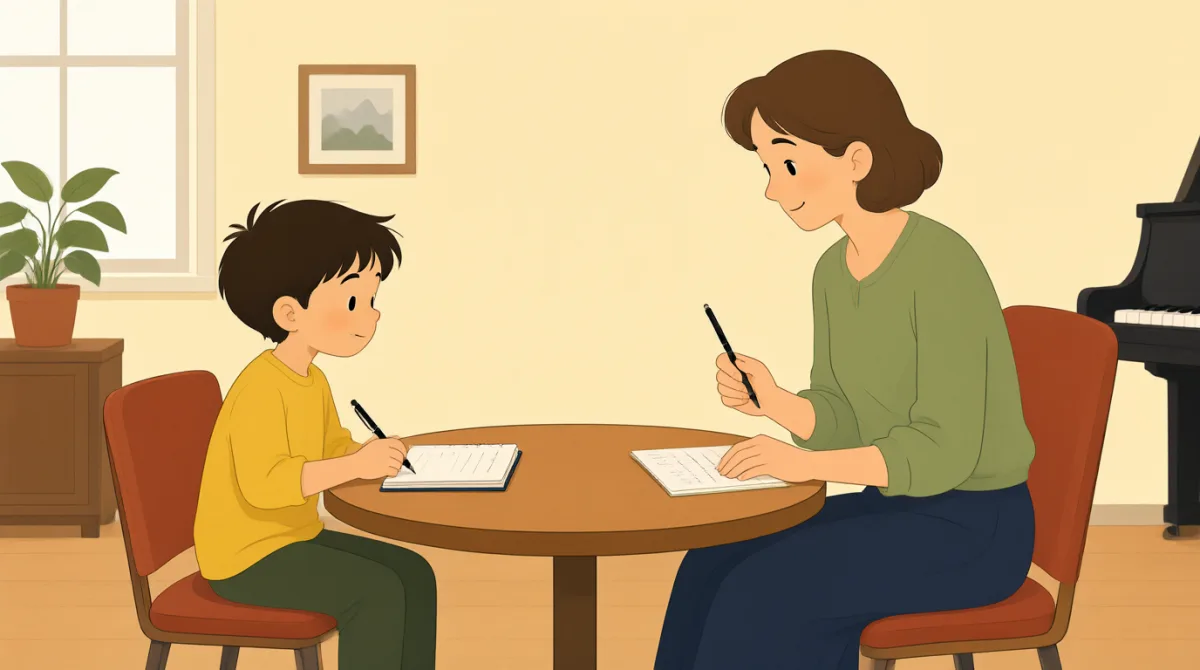

Alright Emma, let's finalize the pieces for your recital. How are you feeling about playing 'Clair de Lune' and 'Für Elise'?
Được rồi, Emma, mình chốt các tác phẩm cho buổi độc tấu của em nhé. Em thấy thế nào về việc chơi 'Clair de Lune' và 'Für Elise'?

I feel pretty confident with 'Clair de Lune' now, but 'Für Elise' still feels a bit shaky, especially the faster sections. I'm worried about hitting all the notes perfectly.
Bây giờ em khá tự tin với 'Clair de Lune', nhưng 'Für Elise' vẫn chưa thật vững, nhất là những đoạn nhanh. Em lo mình sẽ không chơi đúng hết các nốt.
That's completely understandable. Why don't we shift 'Für Elise' to a later recital and instead, let's look at that simpler Chopin Nocturne we've been working on? It has a beautiful melody and you've got the technique down.
Thầy hiểu mà. Hay mình để dành 'Für Elise' cho buổi độc tấu sau, còn bây giờ thử chọn bản Nocturne Chopin đơn giản hơn mà mình đang tập nhé? Giai điệu rất đẹp, mà em cũng đã nắm vững kỹ thuật rồi.
Oh, that's a great idea! I love that piece, and it would definitely ease some of my nerves. So, 'Clair de Lune' and the Chopin Nocturne?
Ồ, ý hay quá! Em thích bản đó lắm, mà chắc chắn chọn nó sẽ giúp em bớt hồi hộp. Vậy mình chọn 'Clair de Lune' và bản Nocturne Chopin nhé?
Perfect. Now, regarding performance techniques, remember to really convey the emotion in 'Clair de Lune'. Think about the dynamic range and expressing the quiet contemplation.
Tuyệt. Còn về kỹ thuật biểu diễn, nhớ thể hiện thật rõ cảm xúc trong 'Clair de Lune' nhé. Hãy chú ý đến độ tương phản giữa các sắc thái và thể hiện sự trầm tư nhẹ nhàng.
Got it. So, really focus on the softer parts and building up the crescendos naturally.
Em hiểu rồi. Vậy em sẽ tập trung vào những đoạn nhẹ hơn và tăng dần âm lượng tự nhiên ở những đoạn cao trào.
Precisely. And for stage presence, remember to make eye contact with the audience before you start. A confident posture and a small bow at the end go a long way. It shows respect and adds to your overall presentation.
Chính xác. Còn về phong thái sân khấu, nhớ nhìn vào khán giả trước khi bắt đầu. Giữ tư thế tự tin và cúi chào nhẹ khi kết thúc sẽ tạo ấn tượng tốt. Điều đó thể hiện sự tôn trọng và giúp phần trình diễn của em thêm chỉn chu.
Okay, eye contact and a good bow. I'll practice that. Thanks for making these adjustments, Mr. Chen. I feel much better about the recital now.
Vâng, nhìn vào khán giả và cúi chào cho đẹp. Em sẽ tập điều đó. Cảm ơn thầy đã điều chỉnh chương trình giúp em, thầy Chen. Bây giờ em thấy yên tâm hơn nhiều về buổi độc tấu rồi.
You're very welcome, Emma. This is about enjoying the music and sharing it. You'll do wonderfully. Just keep practicing those key sections.
Không có gì đâu, Emma. Quan trọng là tận hưởng âm nhạc và chia sẻ âm nhạc với mọi người. Em sẽ biểu diễn thật tốt. Cứ tiếp tục luyện những đoạn quan trọng nhé.
Từ vựng10
- recitalbuổi độc tấu
A recital is a public performance where a musician plays pieces of music, often in front of an audience like at a school event.
“Recital” là buổi biểu diễn trước công chúng, trong đó một nhạc công trình bày các tác phẩm âm nhạc, thường là trước khán giả, chẳng hạn như ở một sự kiện tại trường.
- confidenttự tin
Confident means feeling sure of your abilities and not worried about failing, like when you know you can play a song well.
“Confident” nghĩa là tin tưởng vào khả năng của mình và không lo sẽ thất bại, chẳng hạn như khi em biết mình có thể chơi tốt một bản nhạc.
- shakychưa vững; không ổn định
Shaky describes something that is not steady or reliable, such as a performance where you might make mistakes in fast parts.
“Shaky” miêu tả điều gì đó chưa vững hoặc chưa đáng tin cậy, chẳng hạn như phần trình diễn dễ mắc lỗi ở những đoạn nhanh.
- techniquekỹ thuật
Technique refers to the skill and method used to play a musical instrument correctly and smoothly.
“Technique” là kỹ năng và phương pháp cần dùng để chơi nhạc cụ chính xác và trôi chảy.
- melodygiai điệu
A melody is the main tune or series of notes in a piece of music that you can easily remember and hum.
“Melody” là giai điệu chính hay chuỗi nốt nhạc trong một bản nhạc mà em có thể dễ nhớ và ngân nga theo.
- nervessự hồi hộp; nỗi lo lắng
Nerves means feelings of anxiety or worry, especially before a big event like a performance.
“Nerves” chỉ cảm giác lo lắng hoặc bồn chồn, nhất là trước một sự kiện lớn như buổi biểu diễn.
- conveythể hiện; truyền tải
To convey means to express or communicate a feeling or idea clearly, like showing emotion through your music.
“Convey” nghĩa là thể hiện hoặc truyền đạt rõ ràng một cảm xúc hay ý tưởng, chẳng hạn như truyền tải cảm xúc qua âm nhạc.
- stage presencephong thái sân khấu
Stage presence is how confidently and engagingly you perform in front of an audience, including your body language and attitude.
“Stage presence” là cách em biểu diễn trước khán giả một cách tự tin và cuốn hút, bao gồm ngôn ngữ cơ thể và thái độ.
- eye contactgiao tiếp bằng mắt
Eye contact is looking directly into someone's eyes when talking or performing to show confidence and connection.
“Eye contact” là nhìn thẳng vào mắt người khác khi trò chuyện hoặc biểu diễn để thể hiện sự tự tin và tạo kết nối.
- posturetư thế
Posture is the way you hold your body when standing or sitting, like keeping your back straight for a professional look.
“Posture” là cách em giữ cơ thể khi đứng hoặc ngồi, chẳng hạn như giữ lưng thẳng để trông chuyên nghiệp.
Câu trọng tâm8
- 1
How are you feeling about playing 'Clair de Lune' and 'Für Elise'?
Em thấy thế nào về việc chơi 'Clair de Lune' và 'Für Elise'?
This sentence uses 'How are you feeling about' to ask someone's opinion or emotions on a specific task. It's useful for checking confidence in activities like lessons. Grammar: Present continuous for current feelings.
Câu này dùng 'How are you feeling about' để hỏi cảm nhận hoặc ý kiến của ai đó về một việc cụ thể. Cách nói này hữu ích khi muốn biết người học có tự tin với hoạt động như buổi học hay không. Ngữ pháp: Hiện tại tiếp diễn diễn tả cảm nhận ở thời điểm hiện tại.
- 2
I feel pretty confident with 'Clair de Lune' now, but 'Für Elise' still feels a bit shaky.
Bây giờ em khá tự tin với 'Clair de Lune', nhưng 'Für Elise' vẫn chưa thật vững.
This shows contrast with 'but' to express mixed feelings. 'Pretty confident' means quite sure, and 'a bit shaky' means slightly unstable. Useful for describing progress in learning. Grammar: Adjectives like 'confident' and 'shaky' describe states.
Câu này dùng 'but' để thể hiện sự tương phản giữa những cảm nhận khác nhau. 'Pretty confident' nghĩa là khá tự tin, còn 'a bit shaky' nghĩa là hơi chưa vững. Cách nói này hữu ích khi mô tả tiến bộ trong học tập. Ngữ pháp: Các tính từ như 'confident' và 'shaky' diễn tả trạng thái.
- 3
That's completely understandable.
Thầy hiểu mà.
This is a polite way to agree and show empathy. Use it to acknowledge someone's concerns without arguing. It's common in supportive conversations like teacher-student talks.
Đây là cách lịch sự để đồng tình và thể hiện sự đồng cảm. Hãy dùng câu này để ghi nhận mối bận tâm của người khác mà không tranh luận. Câu này thường dùng trong những cuộc trò chuyện mang tính động viên, chẳng hạn giữa giáo viên và học sinh.
- 4
Why don't we shift 'Für Elise' to a later recital and instead, let's look at that simpler Chopin Nocturne?
Hay mình để dành 'Für Elise' cho buổi độc tấu sau, còn bây giờ thử chọn bản Nocturne Chopin đơn giản hơn nhé?
This suggests a change using 'Why don't we' for proposals and 'instead' for alternatives. Helpful for making adjustments in plans. Grammar: Imperative 'let's' for suggestions.
Câu này gợi ý thay đổi kế hoạch bằng cách dùng 'Why don't we' để đưa ra đề xuất và 'instead' để nêu phương án thay thế. Cách nói hữu ích khi điều chỉnh kế hoạch. Ngữ pháp: Câu đề nghị với 'let's'.
- 5
It would definitely ease some of my nerves.
Chắc chắn chọn bản đó sẽ giúp em bớt hồi hộp.
This uses conditional 'would' to talk about future benefits and 'ease nerves' idiom for reducing anxiety. Use it when discussing ways to feel less worried before events.
Câu này dùng 'would' để nói về lợi ích có thể có trong tương lai, và thành ngữ 'ease nerves' với nghĩa là giúp giảm lo lắng. Hãy dùng khi nói về cách bớt lo trước một sự kiện.
- 6
Remember to really convey the emotion in 'Clair de Lune'.
Nhớ thể hiện thật rõ cảm xúc trong 'Clair de Lune' nhé.
This is advice using 'remember to' for reminders. 'Convey the emotion' means express feelings through performance. Useful for giving tips on arts or presentations. Grammar: Infinitive after 'remember'.
Đây là lời khuyên dùng 'remember to' để nhắc ai đó nhớ làm việc gì. 'Convey the emotion' nghĩa là thể hiện cảm xúc qua phần trình diễn. Cách nói này hữu ích khi góp ý về nghệ thuật hoặc thuyết trình. Ngữ pháp: Sau 'remember' dùng động từ nguyên mẫu có 'to'.
- 7
Make eye contact with the audience before you start.
Nhìn vào khán giả trước khi bắt đầu nhé.
Imperative form 'Make' gives direct instructions. It's practical for performance advice, emphasizing connection with viewers. Use in contexts like public speaking or shows.
Câu mệnh lệnh dùng 'Make' để đưa ra chỉ dẫn trực tiếp. Đây là lời khuyên thiết thực khi biểu diễn, nhấn mạnh việc tạo kết nối với khán giả. Có thể dùng trong những tình huống như diễn thuyết trước đám đông hoặc biểu diễn.
- 8
You'll do wonderfully. Just keep practicing those key sections.
Em sẽ biểu diễn thật tốt. Cứ tiếp tục luyện những đoạn quan trọng nhé.
This encourages with future 'You'll do' and 'wonderfully' for excellent performance. 'Keep practicing' means continue the action. Great for motivation in learning situations. Grammar: Future simple for predictions.
Câu này động viên người nghe bằng cách dùng 'You'll do' ở thì tương lai và 'wonderfully' để nói rằng họ sẽ biểu diễn xuất sắc. 'Keep practicing' nghĩa là tiếp tục luyện tập. Rất hữu ích để khích lệ người học. Ngữ pháp: Thì tương lai đơn dùng để đưa ra dự đoán.