Asking for Directions to a Bus Stop/Station
پرسیدن مسیر ایستگاه اتوبوس یا قطار
A passenger is lost and asks a local for directions to the nearest bus stop or train station.
مسافری راهش را گم کرده و از یک رهگذر آدرس نزدیکترین ایستگاه اتوبوس یا قطار را میپرسد.
گفتوگو8
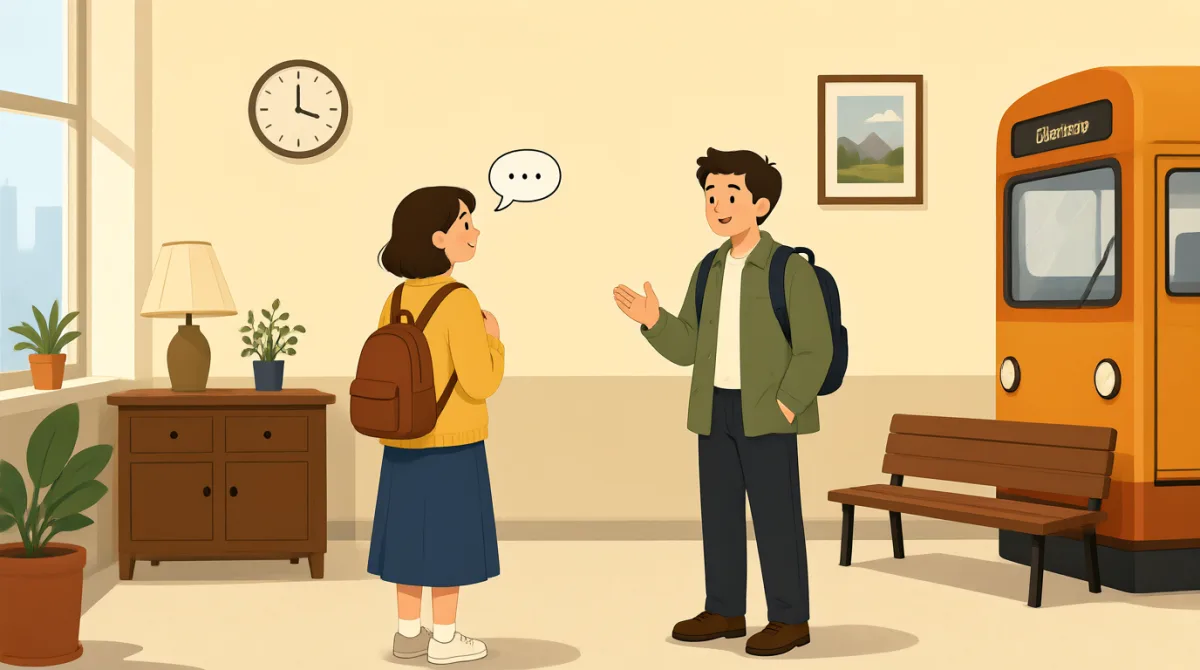

Excuse me, I'm a bit lost. Could you tell me where the nearest bus stop is?
ببخشید، یککم گم شدهام. میشود بگویید نزدیکترین ایستگاه اتوبوس کجاست؟

Of course! There's one just a short walk from here. Are you looking for a specific bus route?
حتماً! همین نزدیکیهاست و فقط کمی پیادهروی دارد. دنبال مسیر اتوبوس خاصی هستید؟
Not really, I just need to get to the city center. Any bus that goes that way would be fine.
نه، فقط میخواهم به مرکز شهر بروم. هر اتوبوسی که به آن سمت برود خوب است.
Okay, then you'll want the bus stop across the street. Go straight down this sidewalk for about fifty meters, and it'll be on your left, just past the traffic lights.
خب، پس باید سوار اتوبوس از ایستگاهی بشوید که آن طرف خیابان است. این پیادهرو را حدود پنجاه متر مستقیم بروید؛ ایستگاه سمت چپتان است، کمی بعد از چراغ راهنمایی.
Across the street, straight down, past the traffic lights... Got it. Thank you so much!
آن طرف خیابان، مستقیم، بعد از چراغ راهنمایی... فهمیدم. خیلی ممنون!
You're welcome. Buses 14 and 22 both go to the city center from that stop, so you have a couple of options.
خواهش میکنم. اتوبوسهای ۱۴ و ۲۲ هر دو از آن ایستگاه به مرکز شهر میروند، پس دو تا انتخاب دارید.
That's helpful to know. Thanks again for your help!
خوبه که میدانم. باز هم بابت کمکتان ممنونم!
No problem! Have a good day.
خواهش میکنم! روز خوبی داشته باشید.
واژگان8
- lostگمشده
When you are lost, it means you do not know where you are or how to get to your destination. Use this word when asking for help in unfamiliar places like a city.
وقتی گم شدهاید، یعنی نمیدانید کجا هستید یا چطور به مقصدتان برسید. در جاهای ناآشنا، مثلاً در یک شهر، وقتی کمک میخواهید از این واژه استفاده کنید.
- nearestنزدیکترین
Nearest means the closest in distance. It's useful for asking about the closest bus stop or station when you need quick directions.
Nearest یعنی نزدیکترین از نظر فاصله. وقتی برای راهنمایی سریع میخواهید درباره نزدیکترین ایستگاه اتوبوس یا قطار بپرسید، این واژه به کارتان میآید.
- bus stopایستگاه اتوبوس
A bus stop is a place where people wait for a bus. It's a key term in public transit conversations to find where to board.
Bus stop جایی است که مردم برای سوار شدن به اتوبوس منتظر میمانند. برای پیدا کردن محل سوار شدن، این اصطلاح در گفتوگوهای مربوط به حملونقل عمومی کاربرد زیادی دارد.
- routeمسیر
A route is the path or line that a bus or train follows. Ask about a specific route when you want to go to a certain area.
Route مسیر یا خطی است که اتوبوس یا قطار در آن حرکت میکند. وقتی میخواهید به منطقه مشخصی بروید، درباره یک مسیر خاص بپرسید.
- city centerمرکز شهر
City center refers to the main downtown area of a city with shops and offices. It's common to use when giving directions to popular spots.
City center به بخش اصلی و مرکزی شهر گفته میشود که معمولاً فروشگاهها و ادارهها در آن قرار دارند. این اصطلاح را معمولاً هنگام آدرس دادن به جاهای پرطرفدار به کار میبرند.
- sidewalkپیادهرو
A sidewalk is the path for walking beside the road, also called a pavement in some places. Use it in directions to describe safe walking areas.
Sidewalk مسیری برای عابران پیاده در کنار خیابان است. هنگام راهنمایی، برای مشخص کردن مسیر امن پیادهروی از این واژه استفاده کنید.
- traffic lightsچراغ راهنمایی
Traffic lights are signals that control vehicle and pedestrian traffic with red, yellow, and green colors. They are landmarks in urban directions.
Traffic lights چراغهایی هستند که با رنگهای قرمز، زرد و سبز، رفتوآمد خودروها و عابران پیاده را کنترل میکنند. در آدرس دادن در شهر، میتوان از آنها بهعنوان نشانه استفاده کرد.
- optionsگزینهها
Options mean choices available. In transit, it refers to different buses or routes you can take to reach your goal.
Options یعنی انتخابهای موجود. در حملونقل عمومی، به اتوبوسها یا مسیرهای مختلفی اشاره دارد که میتوانید برای رسیدن به مقصدتان انتخاب کنید.
جملات کلیدی8
- 1
Excuse me, I'm a bit lost. Could you tell me where the nearest bus stop is?
ببخشید، یککم گم شدهام. میشود بگویید نزدیکترین ایستگاه اتوبوس کجاست؟
This is a polite way to start asking for directions when you're confused about your location. 'Excuse me' gets attention, 'a bit lost' softens the request, and the question uses 'could you tell me' for courtesy. Useful for beginners in new cities.
این جمله راهی مؤدبانه برای شروع آدرس پرسیدن است، وقتی نمیدانید کجا هستید. 'Excuse me' برای جلب توجه است، 'a bit lost' درخواست را ملایمتر میکند و پرسش با 'could you tell me' مؤدبانهتر میشود. اگر تازهکارید و در شهری ناآشنا هستید، این جمله به کارتان میآید.
- 2
Of course! There's one just a short walk from here.
حتماً! همین نزدیکیهاست و فقط کمی پیادهروی دارد.
This sentence shows agreement and helpfulness. 'Of course' means 'yes, happily,' and 'a short walk' describes distance simply. Use it to respond positively when someone asks for directions nearby.
این جمله موافقت و آمادگی برای کمک را نشان میدهد. 'Of course' یعنی «حتماً، با کمال میل» و 'a short walk' فاصله کمی را توصیف میکند. وقتی کسی آدرس نزدیک را میپرسد، برای پاسخ مثبت از آن استفاده کنید.
- 3
Not really, I just need to get to the city center.
نه، فقط میخواهم به مرکز شهر بروم.
This clarifies your needs without specifics. 'Not really' means 'no, not exactly,' and 'get to' means arrive at a place. It's practical for keeping directions simple when the exact route isn't important.
با این جمله نیازتان را بدون وارد شدن به جزئیات روشن میکنید. 'Not really' یعنی «نه، دقیقاً نه» و 'get to' یعنی به جایی رسیدن. وقتی مسیر دقیق مهم نیست و میخواهید راهنمایی را ساده نگه دارید، این جمله کاربردی است.
- 4
Go straight down this sidewalk for about fifty meters, and it'll be on your left, just past the traffic lights.
این پیادهرو را حدود پنجاه متر مستقیم بروید؛ ایستگاه سمت چپتان است، کمی بعد از چراغ راهنمایی.
This gives clear step-by-step directions. 'Go straight' means continue in a direct line, 'for about fifty meters' estimates distance, and 'on your left' specifies position. Use this pattern for guiding someone in urban areas; note the imperative verb 'go' for instructions.
این جمله مسیر را مرحلهبهمرحله و روشن توضیح میدهد. 'Go straight' یعنی در یک خط مستقیم ادامه دهید، 'for about fifty meters' فاصله را حدودی بیان میکند و 'on your left' جای ایستگاه را مشخص میکند. از این الگو برای راهنمایی در شهر استفاده کنید؛ دقت کنید که در دستورها فعل 'go' به کار میرود.
- 5
Across the street, straight down, past the traffic lights... Got it.
آن طرف خیابان، مستقیم، بعد از چراغ راهنمایی... فهمیدم.
This repeats directions to confirm understanding. 'Got it' is informal for 'I understand.' It's useful to repeat and acknowledge to avoid mistakes, especially in noisy or fast conversations.
در این جمله، گوینده مسیر را برای اطمینان از فهمیدن تکرار میکند. 'Got it' شکل غیررسمیِ «فهمیدم» است. تکرار و تأیید مسیر به جلوگیری از اشتباه کمک میکند، بهخصوص وقتی گفتوگو سریع است یا سروصدا وجود دارد.
- 6
You're welcome. Buses 14 and 22 both go to the city center from that stop, so you have a couple of options.
خواهش میکنم. اتوبوسهای ۱۴ و ۲۲ هر دو از آن ایستگاه به مرکز شهر میروند، پس دو تا انتخاب دارید.
This provides more helpful info after thanks. 'You're welcome' responds to gratitude, and 'a couple of options' means two choices. Use it to add value in directions, with 'both' for shared actions.
این جمله بعد از تشکر، اطلاعات مفید بیشتری میدهد. 'You're welcome' پاسخی به تشکر است و 'a couple of options' یعنی دو انتخاب. برای کاملتر کردن راهنمایی از این عبارت استفاده کنید؛ 'both' هم نشان میدهد هر دو گزینه یک کار را انجام میدهند.
- 7
That's helpful to know. Thanks again for your help!
خوبه که میدانم. باز هم بابت کمکتان ممنونم!
This shows appreciation for extra information. 'Helpful to know' means useful information, and 'thanks again' reinforces politeness. Say this to end conversations positively after receiving advice.
این جمله قدردانی از اطلاعات بیشتر را نشان میدهد. 'Helpful to know' یعنی اطلاعاتی که دانستنش مفید است و 'thanks again' ادب و قدردانی را بیشتر نشان میدهد. بعد از دریافت راهنمایی، برای پایان دادن مثبت به گفتوگو این جمله را بگویید.
- 8
No problem! Have a good day.
خواهش میکنم! روز خوبی داشته باشید.
A friendly goodbye. 'No problem' means 'it's okay, don't worry,' similar to 'you're welcome.' 'Have a good day' is a common well-wish. Use it to close helpful interactions politely.
این یک خداحافظی دوستانه است. 'No problem' یعنی «اشکالی ندارد، نگران نباشید» و مثل 'you're welcome' در پاسخ به تشکر به کار میرود. 'Have a good day' آرزوی خوبی است که زیاد استفاده میشود. برای پایان دادن مؤدبانه به گفتوگوهای دوستانه از آن استفاده کنید.