Unpacking and Sorting - The Overwhelm
باز کردن بسته و دستهبندی قطعات؛ گیجکننده
The couple opens the IKEA box to find an overwhelming number of parts and screws, initiating the first step of sorting and identifying everything according to the instruction manual. One partner might be more methodical, while the other feels daunted by the sheer volume of pieces.
این زوج جعبهٔ ایکیا را باز میکنند و با تعداد زیادی قطعه و پیچ روبهرو میشوند. حالا باید طبق دفترچهٔ راهنما، قطعات را دستهبندی و شناسایی کنند. ممکن است یکی از آنها منظمتر و دقیقتر باشد، درحالیکه دیگری از حجم زیاد قطعات حسابی جا بخورد.
گفتوگو8
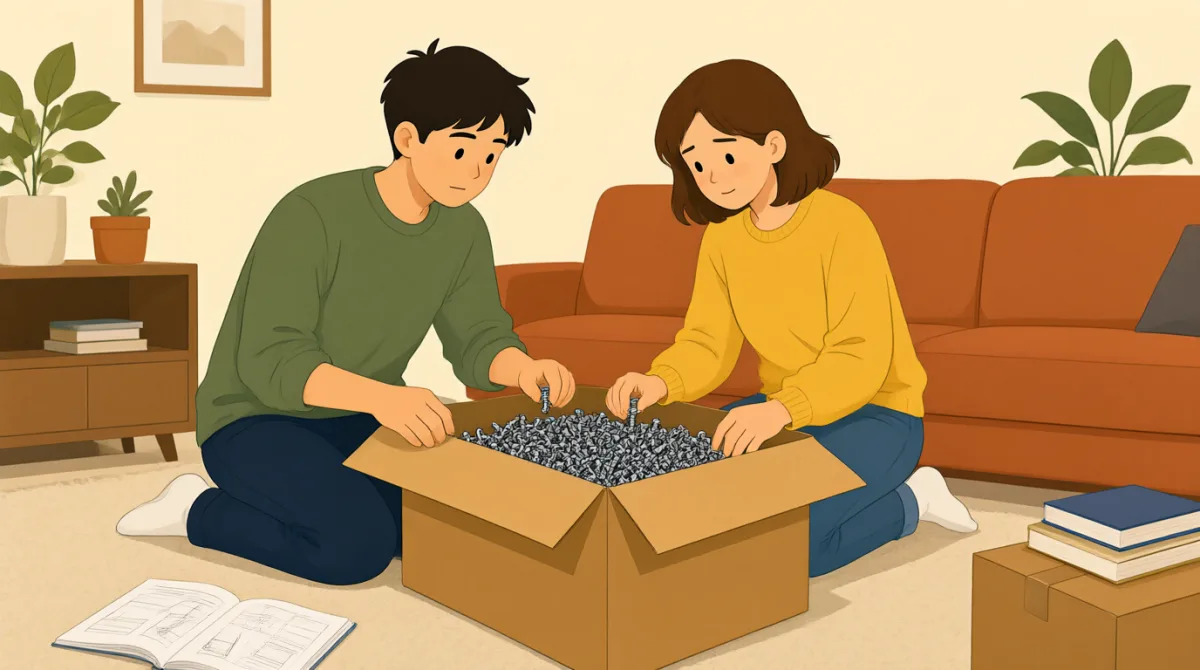

Okay, box is open! Wow… that is a lot of pieces. Where do we even begin?
خب، جعبه باز شد! وای... چقدر قطعه داره. اصلاً از کجا شروع کنیم؟

Right. Deep breaths. First things first, let's pull out the instruction manual. We need to identify all the parts and make sure nothing's missing.
درسته. یه نفس عمیق بکش. اول از همه، بیا دفترچهٔ راهنما رو دربیاریم. باید همهٔ قطعات رو شناسایی کنیم و مطمئن بشیم چیزی کم نیست.
Ugh, this looks like a puzzle. One hundred identical-looking wooden dowels. And these tiny screws… there are so many different kinds!
اَه، انگار معماست. صدتا میخ چوبی که همهشون شبیه همان. این پیچهای ریز رو هم ببین... چند جور مختلف دارن!
I know, it's a bit daunting. How about you take the large pieces and match them to the diagram on page two. I'll sort out all the hardware – the screws, nuts, and bolts – into little piles.
میدونم، یهکم ترسناک به نظر میاد. نظرت چیه تو قطعههای بزرگ رو برداری و با شکل صفحهٔ دوم تطبیق بدی؟ من هم همهٔ یراقآلات، یعنی پیچها، مهرهها و پیچهای بزرگتر رو جداجدا دستهبندی میکنم.
Sounds like a plan. So, these long ones are ‘Part A’, and the short, thin ones are ‘Part B’, got it. Wait, what about these oddly shaped ones? They're not on the first page.
خوبه، پس این بلندها «قطعهٔ A» هستن و اون کوتاه و باریکها «قطعهٔ B»، گرفتم. صبر کن، اینهای عجیبشکل چی؟ صفحهٔ اول نیستن.
Hmm, let me check. Ah, those must be for the drawers later on. The manual usually introduces parts as they're needed. See? Page three starts with the drawer components.
هوم، بذار نگاه کنم. آهان، اینها احتمالاً برای کشوها هستن که بعداً بهشون میرسیم. دفترچه معمولاً قطعات رو همون وقتی معرفی میکنه که بهشون نیاز داریم. ببین، صفحهٔ سوم با قطعات کشو شروع میشه.
Right, okay. This is going to take a while. I feel like we need a dedicated sorting area just for the screws.
آها، باشه. این کار یهکم طول میکشه. حس میکنم باید یه جای جدا فقط برای دستهبندی پیچها داشته باشیم.
Agreed. I'll grab some small bowls or cups from the kitchen. That always makes it easier. Don't worry, we'll get through this. It's always the sorting that feels the most overwhelming.
موافقم. میرم از آشپزخونه چندتا کاسه یا فنجون کوچیک میارم. اینطوری همیشه کار راحتتر میشه. نگران نباش، از پسش برمیایم. همیشه دستهبندی قطعاته که از همه بیشتر آدم رو گیج میکنه.
واژگان8
- piecesقطعهها
Small parts or components of something, like furniture. Use it when talking about assembling or building items, e.g., 'There are many pieces in the box.'
اجزای کوچک یا بخشهای تشکیلدهندهٔ چیزی، مثل یک وسیلهٔ مبلمان. وقتی دربارهٔ سرهمکردن یا ساختن چیزی حرف میزنید، از این واژه استفاده کنید؛ مثلاً: 'There are many pieces in the box.' (توی جعبه قطعههای زیادی هست.)
- instruction manualدفترچهٔ راهنما
A booklet with steps and pictures to guide how to assemble or use something. Common in DIY tasks like IKEA furniture; say 'Read the instruction manual first.'
دفترچهای که با مراحل و تصویرها، روش سرهمکردن یا استفاده از چیزی را نشان میدهد. در کارهای DIY مثل سرهمکردن مبلمان ایکیا رایج است؛ بگویید: 'Read the instruction manual first.' (اول دفترچهٔ راهنما را بخوان.)
- dauntingدلهرهآور؛ ترسناک
Something that feels scary or overwhelming because it's difficult. Useful for expressing hesitation, like 'The task looks daunting.'
چیزی که بهخاطر دشواریاش ترسناک یا طاقتفرسا به نظر میرسد. برای بیان تردید مفید است؛ مثلاً: 'The task looks daunting.' (این کار دلهرهآور به نظر میرسد.)
- hardwareیراقآلات
Metal parts like screws and bolts used in building. In this context, it means small fasteners for furniture; e.g., 'Sort the hardware into piles.'
قطعات فلزی مثل پیچ و مهره که برای ساختوساز به کار میروند. در اینجا منظور قطعات اتصالدهندهٔ کوچک مبلمان است؛ مثلاً: 'Sort the hardware into piles.' (یراقآلات را دستهدسته جدا کن.)
- diagramنقشه؛ شکل راهنما
A simple drawing or picture that shows how parts fit together. Helpful in instructions; say 'Match the parts to the diagram.'
طرح یا تصویر سادهای که نشان میدهد قطعات چطور به هم وصل میشوند. در دستورالعملها کاربرد دارد؛ بگویید: 'Match the parts to the diagram.' (قطعات را با شکل راهنما تطبیق بده.)
- componentsاجزا
Individual parts that make up a whole item. Use in technical or assembly contexts, like 'Drawer components are on page three.'
قطعات جداگانهای که یک وسیلهٔ کامل را تشکیل میدهند. در زمینههای فنی یا هنگام سرهمکردن کاربرد دارد؛ مثلاً: 'Drawer components are on page three.' (اجزای کشو در صفحهٔ سوم هستند.)
- overwhelmingطاقتفرسا؛ گیجکننده
Too much to handle easily, causing stress. Common for big tasks; e.g., 'The number of pieces is overwhelming.'
چیزی که رسیدگی به آن آسان نیست و باعث فشار و نگرانی میشود. برای کارهای بزرگ رایج است؛ مثلاً: 'The number of pieces is overwhelming.' (تعداد قطعات گیجکننده است.)
- sortingدستهبندی
Organizing items into groups or categories. Practical for tasks like this; say 'Start with sorting the screws.'
مرتبکردن چیزها و گذاشتنشان در گروهها یا دستههای مختلف. برای کارهایی مثل این کاربردی است؛ بگویید: 'Start with sorting the screws.' (با دستهبندی پیچها شروع کن.)
جملات کلیدی8
- 1
Where do we even begin?
اصلاً از کجا شروع کنیم؟
This expresses confusion or uncertainty about starting a task. Useful for collaborative situations; it's informal and shows overwhelm. Grammar: 'Even' adds emphasis for surprise.
این جمله سردرگمی یا تردید دربارهٔ شروع یک کار را نشان میدهد. برای موقعیتهایی که با دیگران همکاری میکنید مفید است؛ محاورهای است و حس دستپاچگی را میرساند. نکتهٔ دستوری: 'Even' برای نشاندادن تأکید و تعجب به کار میرود.
- 2
First things first, let's pull out the instruction manual.
اول از همه، بیا دفترچهٔ راهنما رو دربیاریم.
Prioritizes the most important step first. Great for organizing work; use when guiding others. Grammar: Imperative 'let's' suggests teamwork.
یعنی مهمترین مرحله را در اولویت قرار بدهید. برای برنامهریزی کارها خیلی مناسب است و وقتی میخواهید دیگران را راهنمایی کنید، به کار میآید. نکتهٔ دستوری: 'let's' در جملهٔ امری، پیشنهاد انجام کاری با هم را میرساند.
- 3
This looks like a puzzle.
انگار معماست.
Compares a complicated task to a puzzle, meaning it's confusing. Helpful for everyday complaints; informal and relatable in DIY scenarios.
یک کار پیچیده را به معما تشبیه میکند؛ یعنی گیجکننده است. برای گلایههای روزمره مفید است و در موقعیتهای غیررسمی و کارهای DIY طبیعی به نظر میرسد.
- 4
How about you take the large pieces and match them to the diagram?
نظرت چیه قطعههای بزرگ رو برداری و با شکل راهنما تطبیق بدی؟
Suggests dividing tasks politely. Useful for teamwork; 'How about' softens suggestions. Grammar: Imperative form with 'you' for assigning roles.
برای تقسیم مؤدبانهٔ کارها پیشنهاد میدهد. برای همکاری گروهی مفید است؛ 'How about' پیشنهاد را ملایمتر میکند. نکتهٔ دستوری: ساختار امری همراه با 'you' برای واگذارکردن نقش به طرف مقابل به کار میرود.
- 5
Sounds like a plan.
خوبه، همین کار رو میکنیم.
Agrees with a suggestion positively. Common in casual conversations to show approval; quick and efficient for moving forward.
با لحنی مثبت با یک پیشنهاد موافقت میکند. در گفتوگوهای غیررسمی برای نشاندادن تأیید رایج است و کمک میکند سریع به مرحلهٔ بعد بروید.
- 6
Those must be for the drawers later on.
اینها احتمالاً برای کشوها هستن که بعداً بهشون میرسیم.
Makes a logical guess about purpose. Useful for problem-solving; 'must be' expresses strong inference based on context.
با توجه به موقعیت، دربارهٔ کاربرد چیزی حدس منطقی میزند. برای حل مسئله مفید است؛ 'must be' نتیجهگیری قوی بر اساس شواهد و موقعیت را میرساند.
- 7
This is going to take a while.
این کار یهکم طول میکشه.
Predicts that something will require time. Practical for setting expectations; future continuous 'is going to take' shows ongoing action.
پیشبینی میکند که کاری به زمان نیاز دارد. برای مشخصکردن انتظارات کاربردی است؛ ساختار آیندهٔ 'is going to take' نشان میدهد انجام کار ادامهدار خواهد بود.
- 8
Don't worry, we'll get through this.
نگران نباش، از پسش برمیایم.
Reassures someone during a challenge. Encouraging and supportive; use in tough situations. Grammar: 'We'll' is short for 'we will,' future simple for promise.
هنگام روبهروشدن با چالشی به کسی دلگرمی میدهد. لحنی حمایتگر و تشویقکننده دارد و در موقعیتهای دشوار به کار میرود. نکتهٔ دستوری: 'We'll' شکل کوتاه 'we will' است و از آیندهٔ ساده برای قولدادن استفاده میکند.