Telling Someone You Feel Better
Decirle a alguien que te sientes mejor
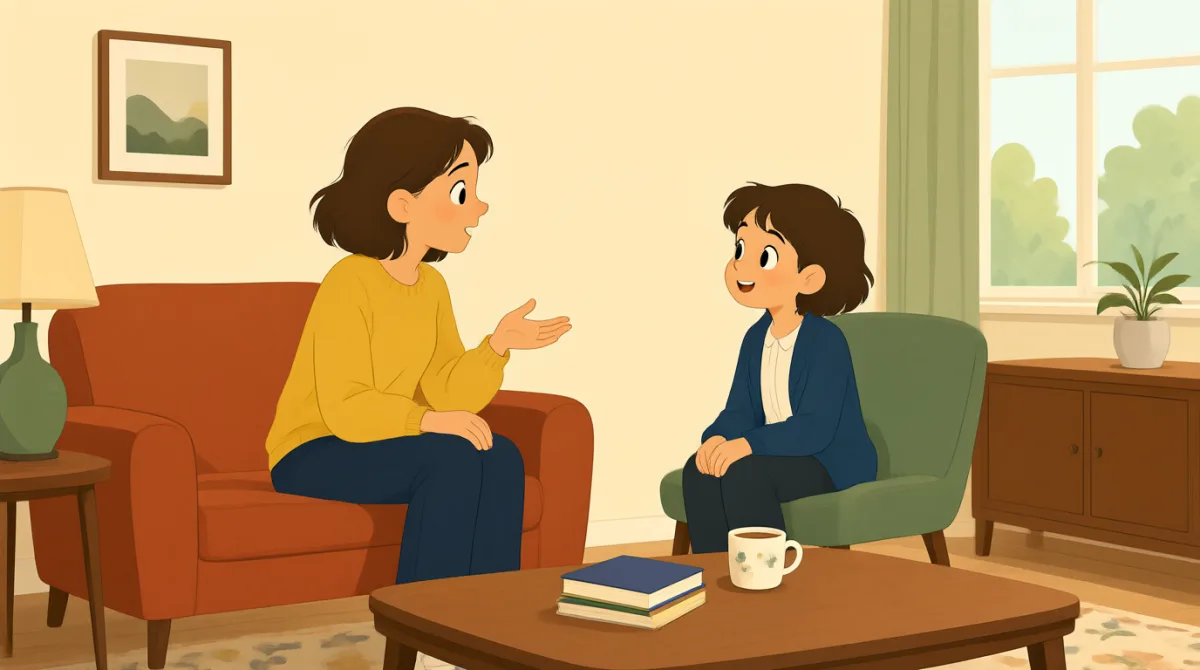
Emma tells Mia that she feels better today. Mia is glad and asks if Emma is ready to go out.
Emma le cuenta a Mia que hoy se siente mejor. Mia se alegra y le pregunta si está lista para salir.
Diálogo7

I feel better today.
Hoy me siento mejor.

I'm glad. Do you still have a headache?
Me alegro. ¿Todavía te duele la cabeza?
No, my head feels fine now.
No, ahora ya no me duele la cabeza.
Great! Are you ready to go out?
¡Genial! ¿Estás lista para salir?
Yes, but let's take it easy.
Sí, pero vayamos con calma.
Sure. We can walk to the park.
Claro. Podemos ir caminando al parque.
That sounds nice. Thank you for asking.
Qué bien. Gracias por preguntar.
Vocabulario7
- feel bettersentirse mejor
To feel healthier than before. You can say this when you are recovering from being sick.
Significa estar más saludable que antes. Puedes decirlo cuando te estás recuperando de una enfermedad.
- I'm gladme alegro
This means you are happy about something. You can use it to show you are pleased for someone.
Significa que algo te pone contento. Puedes decirlo para mostrar que te alegra que a alguien le haya pasado algo bueno.
- headachedolor de cabeza
A pain in your head. You can use this word to describe a common health problem.
Es un dolor en la cabeza. Puedes usar esta expresión para hablar de un problema de salud común.
- go outsalir
To leave home to do something, such as visit a place. You can ask, “Are you ready to go out?”
Significa salir de casa para hacer algo, como visitar un lugar. Puedes preguntar: “Are you ready to go out?” (¿Estás lista para salir?).
- take it easytomárselo con calma
To do things slowly and not use too much energy. You can say this when someone is recovering or needs to rest.
Significa hacer las cosas despacio y sin gastar demasiada energía. Puedes decirlo cuando alguien se está recuperando o necesita descansar.
- That sounds nice.Qué bien.
A friendly way to say that you like an idea. You can use it when someone suggests an activity.
Es una forma amistosa de decir que te gusta una idea. Puedes usarla cuando alguien propone hacer algo.
- Thank you for asking.Gracias por preguntar.
A polite way to show you appreciate someone's question or invitation.
Es una forma amable de mostrar que agradeces que alguien te pregunte o te invite.
Frases clave8
- 1
I feel better today.
Hoy me siento mejor.
Use this to tell someone that you are healthier now. You can change “today” to another time, such as “this morning.”
Usa esta frase para decirle a alguien que ahora tienes mejor salud. Puedes cambiar “today” por otro momento, como “this morning”.
- 2
I'm glad.
Me alegro.
This is a short, friendly way to show you are happy about something. You can say it after hearing good news.
Es una forma breve y amistosa de mostrar que algo te pone contento. Puedes decirla después de recibir buenas noticias.
- 3
Do you still have a headache?
¿Todavía te duele la cabeza?
Use this to ask if someone continues to have head pain. You can replace “a headache” with another health problem.
Usa esta pregunta para saber si a alguien todavía le duele la cabeza. Puedes reemplazar “a headache” por otro problema de salud.
- 4
No, my head feels fine now.
No, ahora ya no me duele la cabeza.
This tells someone that your head does not hurt anymore. You can use “I feel fine now” to talk about feeling well in general.
Con esta frase le dices a alguien que ya no te duele la cabeza. Puedes usar “I feel fine now” para decir que en general ya te sientes bien.
- 5
Are you ready to go out?
¿Estás lista para salir?
Use this to ask if someone is ready to leave home. You can replace “go out” with a place or activity.
Usa esta pregunta para saber si alguien está listo para salir de casa. Puedes reemplazar “go out” por un lugar o una actividad.
- 6
Yes, but let's take it easy.
Sí, pero vayamos con calma.
This means you agree, but want to do things slowly. Use “let's” to make a gentle suggestion for a group.
Significa que aceptas, pero quieres hacer las cosas despacio. Usa “let's” para hacer una sugerencia amable para el grupo.
- 7
We can walk to the park.
Podemos ir caminando al parque.
Use this to suggest walking to a place together. You can replace “the park” with another destination.
Usa esta frase para proponer ir caminando juntos a un lugar. Puedes reemplazar “the park” por otro destino.
- 8
That sounds nice. Thank you for asking.
Qué bien. Gracias por preguntar.
These sentences show that you like an idea and appreciate the invitation. You can use them to respond warmly to a suggestion.
Estas frases muestran que te gusta la idea y agradeces la invitación. Puedes usarlas para responder con calidez a una sugerencia.