Telling Someone You Feel Better
Emma tells Mia that she feels better today. Mia is glad and asks if Emma is ready to go out.
Dialogue7
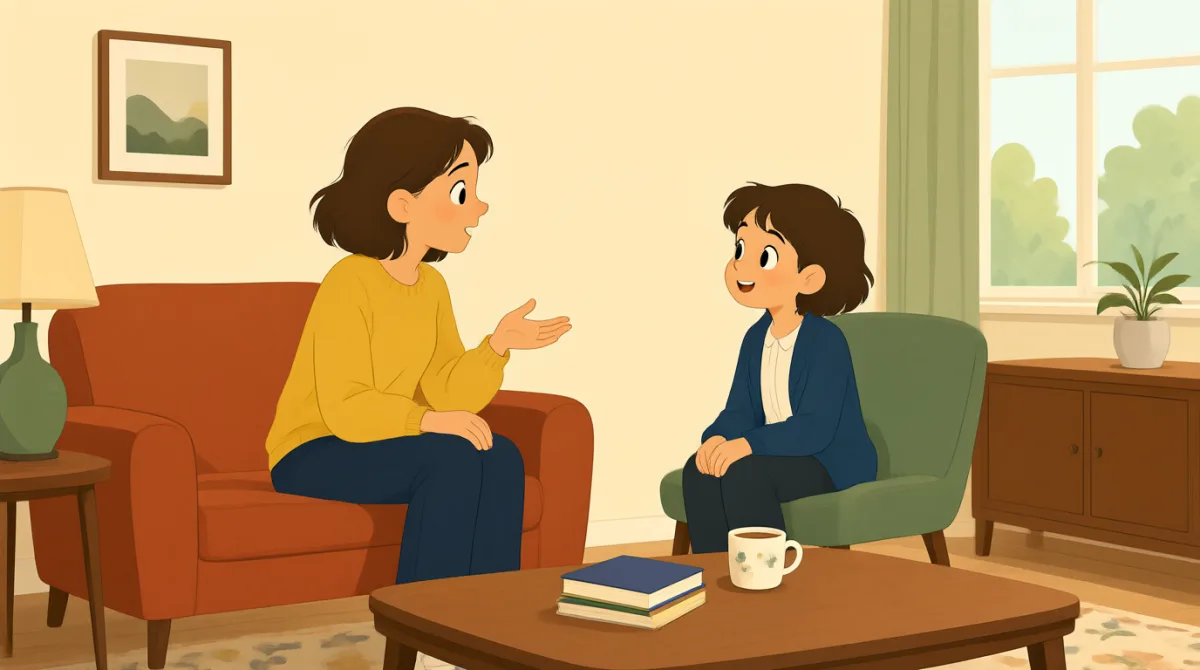

I feel better today.

I'm glad. Do you still have a headache?
No, my head feels fine now.
Great! Are you ready to go out?
Yes, but let's take it easy.
Sure. We can walk to the park.
That sounds nice. Thank you for asking.
Vocabulary7
- feel better
To feel healthier than before. You can say this when you are recovering from being sick.
- I'm glad
This means you are happy about something. You can use it to show you are pleased for someone.
- headache
A pain in your head. You can use this word to describe a common health problem.
- go out
To leave home to do something, such as visit a place. You can ask, “Are you ready to go out?”
- take it easy
To do things slowly and not use too much energy. You can say this when someone is recovering or needs to rest.
- That sounds nice.
A friendly way to say that you like an idea. You can use it when someone suggests an activity.
- Thank you for asking.
A polite way to show you appreciate someone's question or invitation.
Key Sentences8
- 1
I feel better today.
Use this to tell someone that you are healthier now. You can change “today” to another time, such as “this morning.”
- 2
I'm glad.
This is a short, friendly way to show you are happy about something. You can say it after hearing good news.
- 3
Do you still have a headache?
Use this to ask if someone continues to have head pain. You can replace “a headache” with another health problem.
- 4
No, my head feels fine now.
This tells someone that your head does not hurt anymore. You can use “I feel fine now” to talk about feeling well in general.
- 5
Are you ready to go out?
Use this to ask if someone is ready to leave home. You can replace “go out” with a place or activity.
- 6
Yes, but let's take it easy.
This means you agree, but want to do things slowly. Use “let's” to make a gentle suggestion for a group.
- 7
We can walk to the park.
Use this to suggest walking to a place together. You can replace “the park” with another destination.
- 8
That sounds nice. Thank you for asking.
These sentences show that you like an idea and appreciate the invitation. You can use them to respond warmly to a suggestion.