Telling Someone You Feel Better
몸이 나아졌다고 말하기
Emma tells Mia that she feels better today. Mia is glad and asks if Emma is ready to go out.
에마는 오늘 몸이 나아졌다고 미아에게 말해요. 미아는 기뻐하며 에마에게 외출할 준비가 됐는지 물어요.
대화7
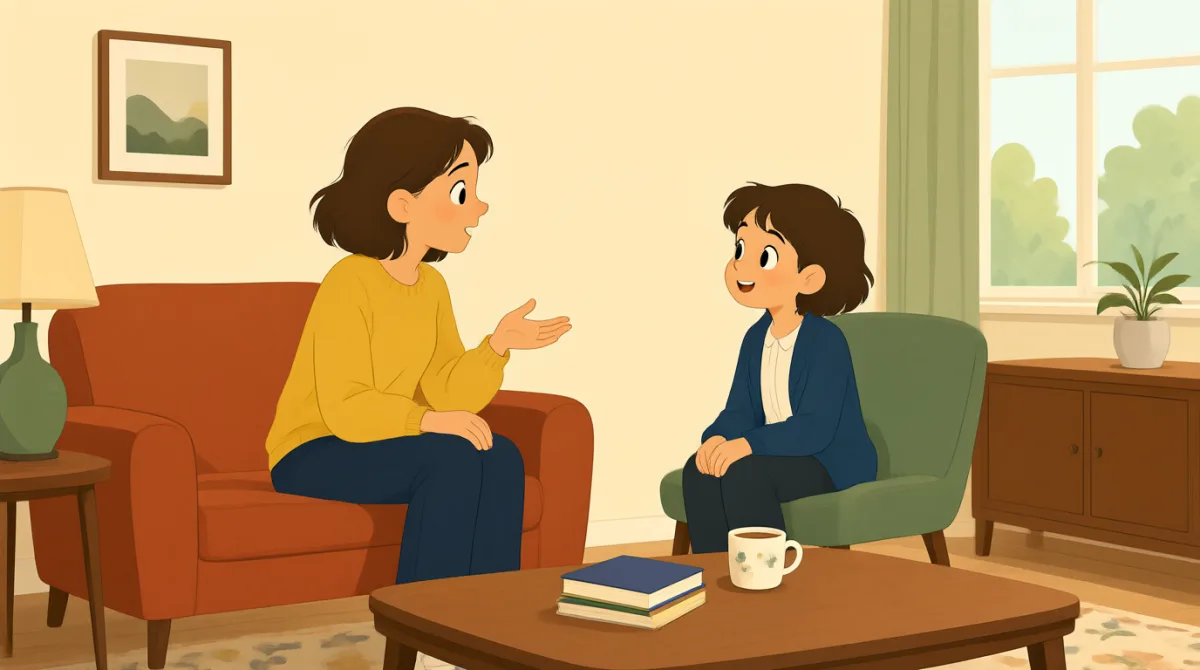

I feel better today.
오늘은 몸이 좀 나아졌어.

I'm glad. Do you still have a headache?
다행이다. 아직도 머리가 아파?
No, my head feels fine now.
아니, 이제 머리는 괜찮아.
Great! Are you ready to go out?
잘됐다! 이제 나갈 준비 됐어?
Yes, but let's take it easy.
응, 그래도 무리하지는 말자.
Sure. We can walk to the park.
좋아. 공원까지 걸어가도 되겠다.
That sounds nice. Thank you for asking.
좋은 생각이야. 물어봐 줘서 고마워.
어휘7
- feel better몸이 나아지다
To feel healthier than before. You can say this when you are recovering from being sick.
전보다 건강해졌다는 뜻이에요. 아팠다가 회복 중일 때 이렇게 말할 수 있어요.
- I'm glad다행이다
This means you are happy about something. You can use it to show you are pleased for someone.
어떤 일에 기쁘다는 뜻이에요. 누군가에게 좋은 일이 생겨서 기쁠 때 쓸 수 있어요.
- headache두통
A pain in your head. You can use this word to describe a common health problem.
머리가 아픈 증상이에요. 흔한 건강 문제를 설명할 때 쓰는 단어예요.
- go out외출하다
To leave home to do something, such as visit a place. You can ask, “Are you ready to go out?”
어딘가에 가는 등 무언가를 하려고 집을 나서는 거예요. “Are you ready to go out?”(나갈 준비 됐어?)처럼 물어볼 수 있어요.
- take it easy무리하지 않다
To do things slowly and not use too much energy. You can say this when someone is recovering or needs to rest.
천천히 하고 너무 많은 기운을 쓰지 않는다는 뜻이에요. 누군가가 회복 중이거나 쉬어야 할 때 쓸 수 있어요.
- That sounds nice.좋은 생각이야.
A friendly way to say that you like an idea. You can use it when someone suggests an activity.
상대방의 생각이 마음에 든다고 친근하게 말하는 표현이에요. 누군가 무언가를 제안했을 때 쓸 수 있어요.
- Thank you for asking.물어봐 줘서 고마워.
A polite way to show you appreciate someone's question or invitation.
상대방이 질문하거나 초대해 준 것에 고마움을 전하는 정중한 표현이에요.
핵심 문장8
- 1
I feel better today.
오늘은 몸이 좀 나아졌어.
Use this to tell someone that you are healthier now. You can change “today” to another time, such as “this morning.”
이 문장은 이제 몸이 나아졌다고 말할 때 써요. “today” 대신 “this morning”처럼 다른 시간을 넣을 수도 있어요.
- 2
I'm glad.
다행이다.
This is a short, friendly way to show you are happy about something. You can say it after hearing good news.
어떤 일에 기쁘다는 걸 짧고 친근하게 표현하는 말이에요. 좋은 소식을 들은 뒤에 쓸 수 있어요.
- 3
Do you still have a headache?
아직도 머리가 아파?
Use this to ask if someone continues to have head pain. You can replace “a headache” with another health problem.
상대방이 계속 머리가 아픈지 물을 때 써요. “a headache” 대신 다른 건강 문제를 넣을 수 있어요.
- 4
No, my head feels fine now.
아니, 이제 머리는 괜찮아.
This tells someone that your head does not hurt anymore. You can use “I feel fine now” to talk about feeling well in general.
이제 머리가 더는 아프지 않다고 말하는 문장이에요. 전반적으로 몸이 괜찮다고 말할 때는 “I feel fine now”라고 할 수 있어요.
- 5
Are you ready to go out?
나갈 준비 됐어?
Use this to ask if someone is ready to leave home. You can replace “go out” with a place or activity.
집을 나설 준비가 됐는지 물을 때 써요. “go out” 대신 장소나 활동을 넣을 수도 있어요.
- 6
Yes, but let's take it easy.
응, 그래도 무리하지는 말자.
This means you agree, but want to do things slowly. Use “let's” to make a gentle suggestion for a group.
동의하지만 천천히 하자는 뜻이에요. “let's”를 사용하면 함께하는 사람들에게 부드럽게 제안할 수 있어요.
- 7
We can walk to the park.
공원까지 걸어가도 되겠다.
Use this to suggest walking to a place together. You can replace “the park” with another destination.
함께 걸어서 어딘가에 가자고 제안할 때 써요. “the park” 대신 다른 목적지를 넣을 수 있어요.
- 8
That sounds nice. Thank you for asking.
좋은 생각이야. 물어봐 줘서 고마워.
These sentences show that you like an idea and appreciate the invitation. You can use them to respond warmly to a suggestion.
이 문장들은 제안이 마음에 들고 초대해 줘서 고맙다는 걸 보여 줘요. 상대방의 제안에 따뜻하게 답할 때 쓸 수 있어요.