A Typical Weekend Day
Un día típico de fin de semana
Emma and David talk about their weekends. They share what time they get up and what they like to do.
Emma y David hablan de sus fines de semana. Cuentan a qué hora se levantan y qué les gusta hacer.
Diálogo8
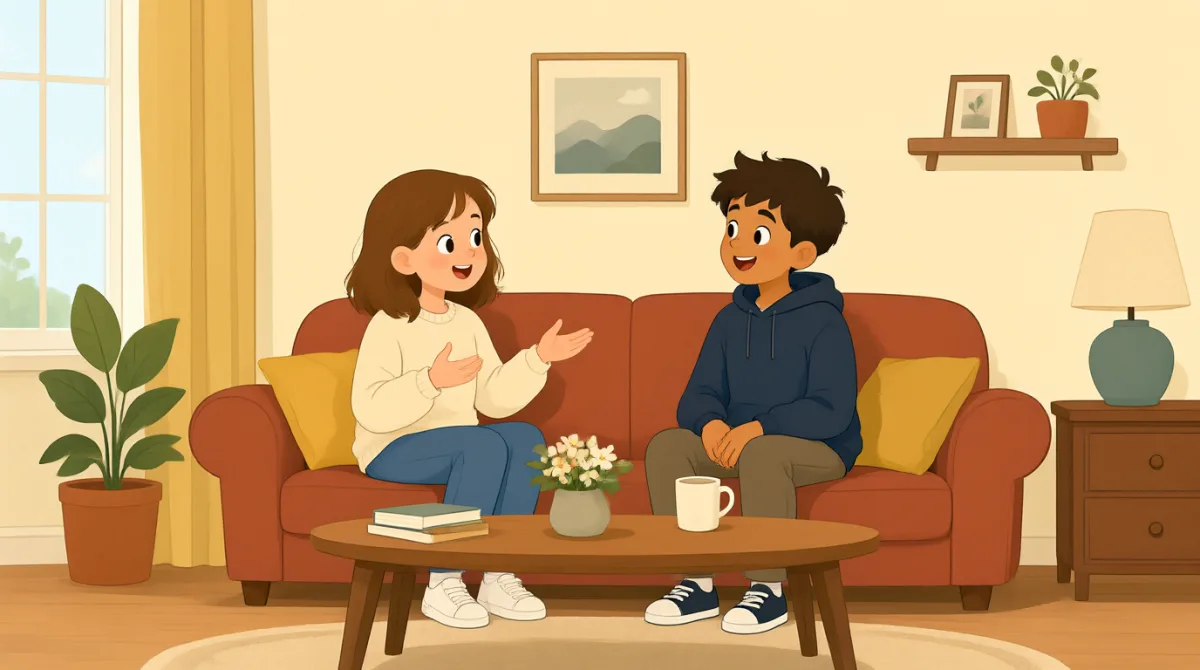

David, what time do you get up on weekends?
David, ¿a qué hora te levantas los fines de semana?

I get up at eight. I sleep late.
Me levanto a las ocho. Me despierto tarde.
That sounds nice. What do you do in the morning?
Qué bien. ¿Qué haces por la mañana?
I make coffee and eat breakfast at home.
Preparo café y desayuno en casa.
Do you go out or stay home?
¿Sales o te quedas en casa?
I take a walk. Then I read a book.
Salgo a caminar. Después leo un libro.
I like weekends too. I visit a park.
A mí también me gustan los fines de semana. Voy a un parque.
That sounds good. Weekends are for relaxing.
Qué bien. Los fines de semana son para relajarse.
Vocabulario8
- get uplevantarse
To get out of bed and start your day. You can say, “I get up at eight.”
Salir de la cama y empezar el día. Puedes decir: “I get up at eight.”
- on weekendslos fines de semana
This means on Saturday and Sunday. Use it to talk about what you usually do at that time.
Significa los sábados y domingos. Usa esta expresión para hablar de lo que sueles hacer esos días.
- sleep latedespertarse tarde
To wake up later than usual. You can say, “I sleep late on weekends.”
Despertarse más tarde de lo habitual. Puedes decir: “I sleep late on weekends.”
- in the morningpor la mañana
This means during the early part of the day. Use it to ask or talk about morning activities.
Significa durante las primeras horas del día. Usa esta expresión para preguntar o hablar sobre las actividades de la mañana.
- make coffeepreparar café
To prepare coffee to drink. You can say, “I make coffee in the morning.”
Preparar café para tomarlo. Puedes decir: “I make coffee in the morning.”
- go outsalir
To leave home and go somewhere. Use it to ask whether someone leaves home or stays there.
Salir de casa e ir a algún sitio. Usa esta expresión para preguntar si alguien sale de casa o se queda allí.
- take a walksalir a caminar
To go outside and walk for fun or exercise. You can say, “I take a walk after breakfast.”
Salir a caminar por diversión o para hacer ejercicio. Puedes decir: “I take a walk after breakfast.”
- stay homequedarse en casa
To remain at home instead of going somewhere. You can say, “I stay home on weekends.”
Permanecer en casa en vez de ir a algún sitio. Puedes decir: “I stay home on weekends.”
Frases clave8
- 1
David, what time do you get up on weekends?
David, ¿a qué hora te levantas los fines de semana?
Use this question to ask when someone wakes up and gets out of bed. You can change “on weekends” to another day or time.
Usa esta pregunta para preguntar a qué hora alguien se despierta y sale de la cama. Puedes cambiar “on weekends” por otro día o momento.
- 2
I get up at eight.
Me levanto a las ocho.
This is a simple way to say when you start your day. Change “eight” to your usual time.
Esta es una forma sencilla de decir a qué hora empiezas el día. Cambia “eight” por la hora a la que sueles levantarte.
- 3
What do you do in the morning?
¿Qué haces por la mañana?
Use this question to ask about someone’s morning activities. You can replace “in the morning” with “after work” or another time.
Usa esta pregunta para preguntar qué actividades hace alguien por la mañana. Puedes reemplazar “in the morning” por “after work” u otro momento.
- 4
I make coffee and eat breakfast at home.
Preparo café y desayuno en casa.
This sentence describes two everyday activities. You can use “and” to list things you do.
Esta frase describe dos actividades cotidianas. Puedes usar “and” para enumerar cosas que haces.
- 5
Do you go out or stay home?
¿Sales o te quedas en casa?
Use this question to ask whether someone leaves home or remains there. Answer with “I go out” or “I stay home.”
Usa esta pregunta para saber si alguien sale de casa o se queda allí. Puedes responder “I go out” o “I stay home.”
- 6
I take a walk.
Salgo a caminar.
This is a simple way to talk about walking for fun or exercise. You can add a time or place, such as “I take a walk in the morning.”
Esta es una forma sencilla de hablar de caminar por diversión o para hacer ejercicio. Puedes añadir una hora o un lugar, como en “I take a walk in the morning.”
- 7
I visit a park.
Voy a un parque.
Use this sentence to say that you go to a park. You can replace “a park” with another place.
Usa esta frase para decir que vas a un parque. Puedes reemplazar “a park” por otro lugar.
- 8
Weekends are for relaxing.
Los fines de semana son para relajarse.
This sentence shares the idea that weekends are a good time to rest. You can use “X is for relaxing” to talk about another free time.
Esta frase expresa que los fines de semana son un buen momento para descansar. Puedes usar “X is for relaxing” para hablar de otro tiempo libre.