A Typical Weekend Day
週末のいつもの過ごし方
Emma and David talk about their weekends. They share what time they get up and what they like to do.
エマとデイビッドが週末について話します。何時に起きるか、何をするのが好きかを話し合います。
会話8
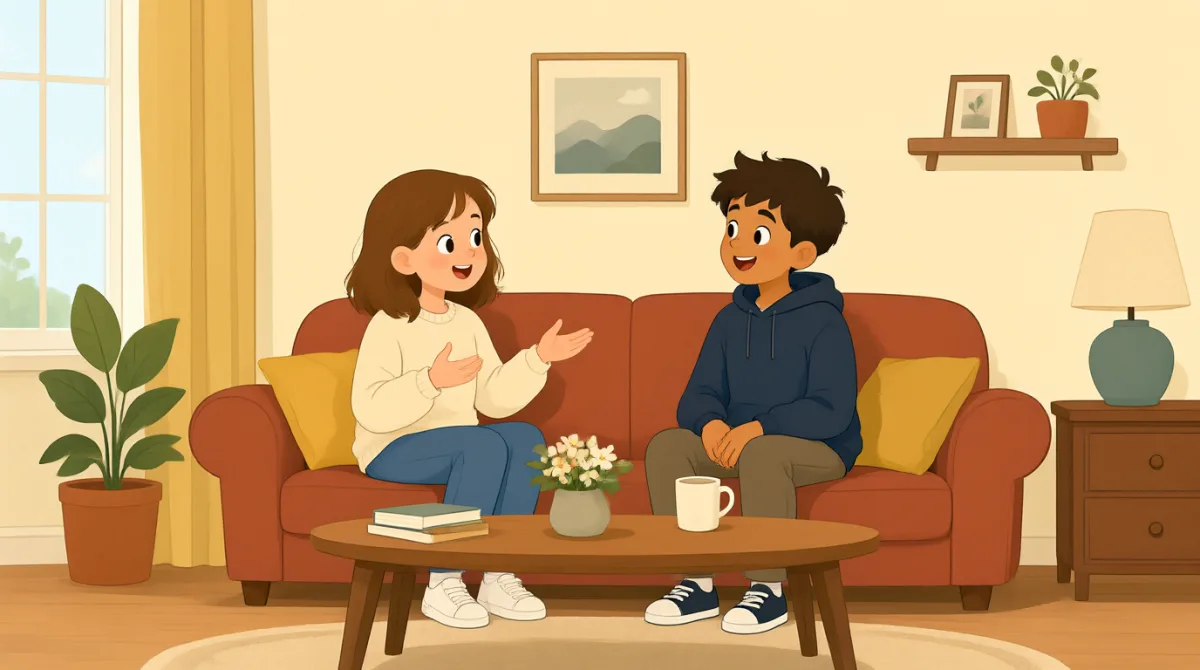

David, what time do you get up on weekends?
デイビッド、週末は何時に起きるの?

I get up at eight. I sleep late.
8時に起きるよ。ゆっくり寝るんだ。
That sounds nice. What do you do in the morning?
いいね。朝は何をするの?
I make coffee and eat breakfast at home.
コーヒーをいれて、家で朝ごはんを食べるよ。
Do you go out or stay home?
出かけるの?それとも家にいるの?
I take a walk. Then I read a book.
散歩に行くよ。そのあと本を読むんだ。
I like weekends too. I visit a park.
私も週末が好き。公園に行くよ。
That sounds good. Weekends are for relaxing.
いいね。週末はのんびりするためにあるんだよ。
語彙8
- get up起きる
To get out of bed and start your day. You can say, “I get up at eight.”
ベッドから出て、一日を始めることです。“I get up at eight.”(8時に起きます。)と言えます。
- on weekends週末に
This means on Saturday and Sunday. Use it to talk about what you usually do at that time.
土曜日と日曜日に、という意味です。そのときにいつもすることについて話すときに使います。
- sleep late遅くまで寝る
To wake up later than usual. You can say, “I sleep late on weekends.”
いつもより遅く起きることです。“I sleep late on weekends.”(週末は遅くまで寝ます。)と言えます。
- in the morning朝に
This means during the early part of the day. Use it to ask or talk about morning activities.
一日の早い時間に、という意味です。朝の活動について尋ねたり話したりするときに使います。
- make coffeeコーヒーをいれる
To prepare coffee to drink. You can say, “I make coffee in the morning.”
飲むためのコーヒーを用意することです。“I make coffee in the morning.”(朝にコーヒーをいれます。)と言えます。
- go out出かける
To leave home and go somewhere. Use it to ask whether someone leaves home or stays there.
家を出て、どこかへ行くことです。家を出るのか、それとも家にいるのかを尋ねるときに使います。
- take a walk散歩する
To go outside and walk for fun or exercise. You can say, “I take a walk after breakfast.”
楽しみや運動のために外を歩くことです。“I take a walk after breakfast.”(朝ごはんのあとに散歩します。)と言えます。
- stay home家にいる
To remain at home instead of going somewhere. You can say, “I stay home on weekends.”
どこかへ出かけずに、家にいることです。“I stay home on weekends.”(週末は家にいます。)と言えます。
重要な文8
- 1
David, what time do you get up on weekends?
デイビッド、週末は何時に起きるの?
Use this question to ask when someone wakes up and gets out of bed. You can change “on weekends” to another day or time.
相手が何時に目を覚ましてベッドから出るのかを尋ねる質問です。“on weekends”を別の曜日や時間に変えて使えます。
- 2
I get up at eight.
8時に起きるよ。
This is a simple way to say when you start your day. Change “eight” to your usual time.
一日を何時に始めるかを簡単に伝える表現です。“eight”を自分がいつも起きる時間に変えてみましょう。
- 3
What do you do in the morning?
朝は何をするの?
Use this question to ask about someone’s morning activities. You can replace “in the morning” with “after work” or another time.
相手が朝にすることを尋ねる質問です。“in the morning”を“after work”や別の時間に置き換えられます。
- 4
I make coffee and eat breakfast at home.
コーヒーをいれて、家で朝ごはんを食べるよ。
This sentence describes two everyday activities. You can use “and” to list things you do.
日常ですることを二つ説明する文です。“and”を使って、自分がすることを並べられます。
- 5
Do you go out or stay home?
出かけるの?それとも家にいるの?
Use this question to ask whether someone leaves home or remains there. Answer with “I go out” or “I stay home.”
相手が家を出るのか、それとも家にいるのかを尋ねる質問です。“I go out”または“I stay home”と答えられます。
- 6
I take a walk.
散歩に行くよ。
This is a simple way to talk about walking for fun or exercise. You can add a time or place, such as “I take a walk in the morning.”
楽しみや運動のために歩くことを簡単に伝える表現です。“I take a walk in the morning.”のように、時間や場所を付け加えられます。
- 7
I visit a park.
公園に行くよ。
Use this sentence to say that you go to a park. You can replace “a park” with another place.
公園に行くことを伝える文です。“a park”を別の場所に置き換えられます。
- 8
Weekends are for relaxing.
週末はのんびりするためにあるんだよ。
This sentence shares the idea that weekends are a good time to rest. You can use “X is for relaxing” to talk about another free time.
週末は休むのにちょうどいい時間だ、という考えを伝える文です。“X is for relaxing”を使うと、別の自由時間についても話せます。