A Typical Weekend Day
วันหยุดสุดสัปดาห์ทั่วไป
Emma and David talk about their weekends. They share what time they get up and what they like to do.
เอ็มมากับเดวิดคุยกันเรื่องวันหยุดสุดสัปดาห์ ทั้งคู่เล่าว่าตื่นกี่โมงและชอบทำอะไร
บทสนทนา8
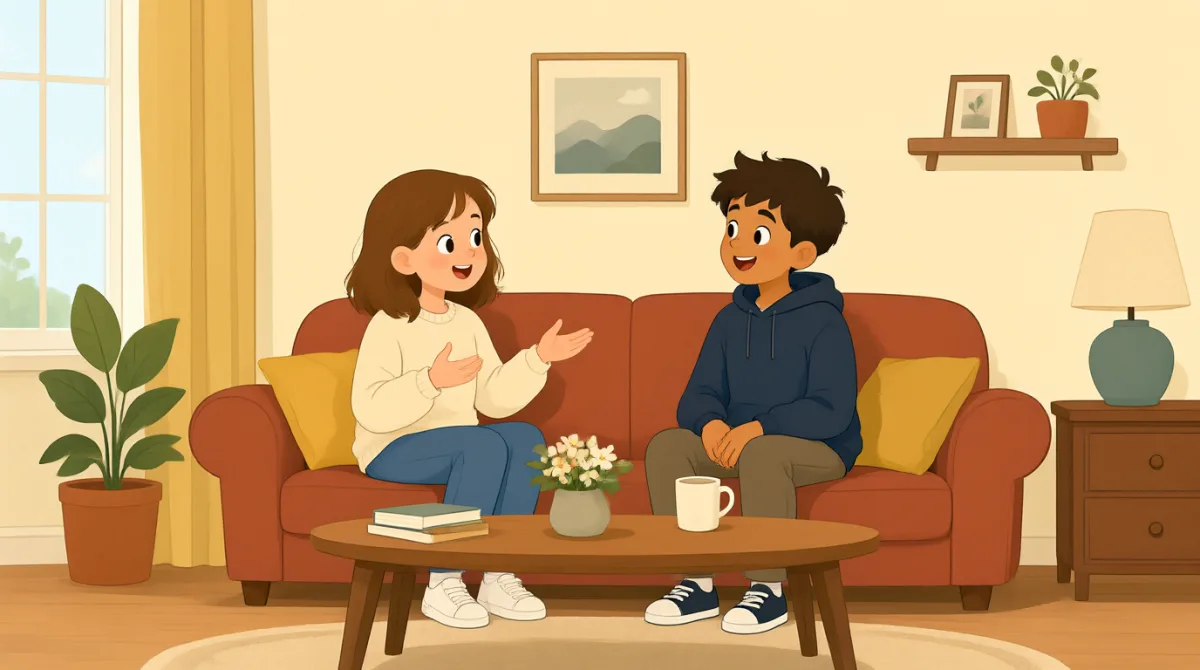

David, what time do you get up on weekends?
เดวิด ปกติเธอตื่นกี่โมงตอนวันหยุดสุดสัปดาห์?

I get up at eight. I sleep late.
ฉันตื่นแปดโมง ฉันตื่นสาย
That sounds nice. What do you do in the morning?
ฟังดูดีนะ แล้วตอนเช้าเธอทำอะไรบ้าง?
I make coffee and eat breakfast at home.
ฉันชงกาแฟแล้วก็กินอาหารเช้าที่บ้าน
Do you go out or stay home?
เธอออกไปข้างนอกหรืออยู่บ้านล่ะ?
I take a walk. Then I read a book.
ฉันไปเดินเล่น แล้วก็อ่านหนังสือ
I like weekends too. I visit a park.
ฉันก็ชอบวันหยุดสุดสัปดาห์เหมือนกัน ฉันไปสวนสาธารณะ
That sounds good. Weekends are for relaxing.
ฟังดูดีนะ วันหยุดสุดสัปดาห์มีไว้พักผ่อน
คำศัพท์8
- get upตื่นนอน
To get out of bed and start your day. You can say, “I get up at eight.”
หมายถึงลุกจากเตียงเพื่อเริ่มต้นวันใหม่ พูดได้ว่า “I get up at eight.” (ฉันตื่นตอนแปดโมง)
- on weekendsในวันหยุดสุดสัปดาห์
This means on Saturday and Sunday. Use it to talk about what you usually do at that time.
หมายถึงวันเสาร์และวันอาทิตย์ ใช้พูดถึงสิ่งที่คุณมักทำในช่วงวันเหล่านี้
- sleep lateตื่นสาย
To wake up later than usual. You can say, “I sleep late on weekends.”
หมายถึงตื่นช้ากว่าปกติ พูดได้ว่า “I sleep late on weekends.” (ฉันตื่นสายในวันหยุดสุดสัปดาห์)
- in the morningตอนเช้า
This means during the early part of the day. Use it to ask or talk about morning activities.
หมายถึงช่วงต้นของวัน ใช้ถามหรือพูดถึงกิจกรรมที่ทำในตอนเช้า
- make coffeeชงกาแฟ
To prepare coffee to drink. You can say, “I make coffee in the morning.”
หมายถึงเตรียมกาแฟไว้ดื่ม พูดได้ว่า “I make coffee in the morning.” (ฉันชงกาแฟตอนเช้า)
- go outออกไปข้างนอก
To leave home and go somewhere. Use it to ask whether someone leaves home or stays there.
หมายถึงออกจากบ้านไปที่ไหนสักแห่ง ใช้ถามว่าใครบางคนออกจากบ้านหรืออยู่บ้าน
- take a walkไปเดินเล่น
To go outside and walk for fun or exercise. You can say, “I take a walk after breakfast.”
หมายถึงออกไปเดินข้างนอกเพื่อความเพลิดเพลินหรือออกกำลังกาย พูดได้ว่า “I take a walk after breakfast.” (ฉันไปเดินเล่นหลังกินอาหารเช้า)
- stay homeอยู่บ้าน
To remain at home instead of going somewhere. You can say, “I stay home on weekends.”
หมายถึงอยู่ที่บ้านแทนที่จะออกไปที่อื่น พูดได้ว่า “I stay home on weekends.” (ฉันอยู่บ้านในวันหยุดสุดสัปดาห์)
ประโยคสำคัญ8
- 1
David, what time do you get up on weekends?
เดวิด ปกติเธอตื่นกี่โมงตอนวันหยุดสุดสัปดาห์?
Use this question to ask when someone wakes up and gets out of bed. You can change “on weekends” to another day or time.
ใช้คำถามนี้ถามว่าใครบางคนตื่นและลุกจากเตียงเมื่อไหร่ คุณเปลี่ยน “on weekends” เป็นวันหรือเวลาอื่นได้
- 2
I get up at eight.
ฉันตื่นแปดโมง
This is a simple way to say when you start your day. Change “eight” to your usual time.
ประโยคนี้เป็นวิธีง่าย ๆ ในการบอกว่าคุณเริ่มต้นวันตอนกี่โมง เปลี่ยน “eight” เป็นเวลาที่คุณตื่นเป็นประจำได้
- 3
What do you do in the morning?
ตอนเช้าเธอทำอะไรบ้าง?
Use this question to ask about someone’s morning activities. You can replace “in the morning” with “after work” or another time.
ใช้คำถามนี้ถามถึงกิจกรรมที่ใครบางคนทำในตอนเช้า คุณเปลี่ยน “in the morning” เป็น “after work” หรือช่วงเวลาอื่นได้
- 4
I make coffee and eat breakfast at home.
ฉันชงกาแฟแล้วก็กินอาหารเช้าที่บ้าน
This sentence describes two everyday activities. You can use “and” to list things you do.
ประโยคนี้บอกถึงกิจวัตรสองอย่าง คุณใช้ “and” เพื่อบอกสิ่งที่ทำหลายอย่างต่อกันได้
- 5
Do you go out or stay home?
เธอออกไปข้างนอกหรืออยู่บ้านล่ะ?
Use this question to ask whether someone leaves home or remains there. Answer with “I go out” or “I stay home.”
ใช้คำถามนี้ถามว่าใครบางคนออกจากบ้านหรืออยู่บ้าน ตอบได้ว่า “I go out” (ฉันออกไปข้างนอก) หรือ “I stay home” (ฉันอยู่บ้าน)
- 6
I take a walk.
ฉันไปเดินเล่น
This is a simple way to talk about walking for fun or exercise. You can add a time or place, such as “I take a walk in the morning.”
นี่เป็นวิธีง่าย ๆ ในการพูดถึงการเดินเล่นหรือเดินออกกำลังกาย คุณเพิ่มเวลา或สถานที่ได้ เช่น “I take a walk in the morning.” (ฉันไปเดินเล่นตอนเช้า)
- 7
I visit a park.
ฉันไปสวนสาธารณะ
Use this sentence to say that you go to a park. You can replace “a park” with another place.
ใช้ประโยคนี้บอกว่าคุณไปสวนสาธารณะ คุณเปลี่ยน “a park” เป็นสถานที่อื่นได้
- 8
Weekends are for relaxing.
วันหยุดสุดสัปดาห์มีไว้พักผ่อน
This sentence shares the idea that weekends are a good time to rest. You can use “X is for relaxing” to talk about another free time.
ประโยคนี้สื่อว่าวันหยุดสุดสัปดาห์เป็นช่วงเวลาที่ดีสำหรับการพักผ่อน คุณใช้ “X is for relaxing” เพื่อพูดถึงเวลาว่างช่วงอื่นได้