Talking About Your Morning
Hablando de tu mañana
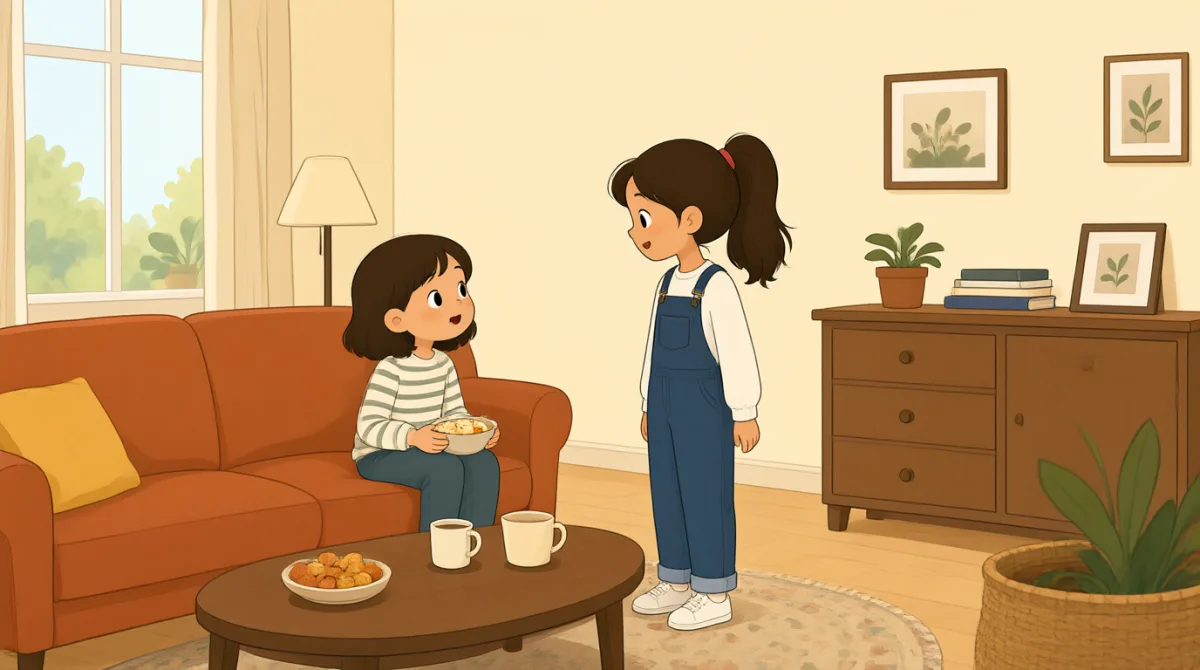
Emma asks Mia about her morning routine. Mia talks about when she gets up and what she eats for breakfast.
Emma le pregunta a Mia sobre su rutina matutina. Mia cuenta a qué hora se levanta y qué desayuna.
Diálogo8

What time do you get up, Mia?
¿A qué hora te levantas, Mia?

I get up at seven every morning.
Me levanto a las siete todas las mañanas.
Do you eat breakfast at home?
¿Desayunas en casa?
Yes, I eat breakfast in the kitchen.
Sí, desayuno en la cocina.
What do you have for breakfast?
¿Qué desayunas?
I have eggs and toast. I drink tea.
Como huevos y tostadas. Tomo té.
That sounds nice. Do you eat early?
Qué bien. ¿Desayunas temprano?
Yes, I eat at seven thirty.
Sí, desayuno a las siete y media.
Vocabulario8
- get uplevantarse
To get up means to leave your bed and start your day. You can say, “I get up at seven.”
“Get up” significa salir de la cama y empezar el día. Puedes decir: “I get up at seven.” (Me levanto a las siete).
- every morningtodas las mañanas
This means something happens each morning. Use it to talk about a daily routine.
Significa que algo ocurre cada mañana. Úsalo para hablar de una rutina diaria.
- eat breakfastdesayunar
This means to have the first meal of the day. You can say where or when you eat breakfast.
Significa tomar la primera comida del día. Puedes decir dónde o cuándo desayunas.
- at homeen casa
This means in your own house. Use it to say where you do something.
Significa dentro de tu propia casa. Úsalo para decir dónde haces algo.
- in the kitchenen la cocina
This means inside the room where you cook and eat. Use “in” to say where an activity happens.
Significa dentro de la habitación donde cocinas y comes. Usa “in” para decir dónde ocurre una actividad.
- have for breakfastdesayunar / tomar para desayunar
This asks or tells what food someone eats in the morning. For example, “I have eggs for breakfast.”
Esta expresión sirve para preguntar o decir qué come alguien por la mañana. Por ejemplo: “I have eggs for breakfast.” (Desayuno huevos).
- toasttostada
Toast is bread that is cooked until it is warm and crisp. It is often eaten for breakfast.
“Toast” es pan calentado hasta quedar crujiente. A menudo se come en el desayuno.
- earlytemprano
Early means before the usual or expected time. You can use it to talk about when you eat or get up.
“Early” significa antes de la hora habitual o prevista. Puedes usarlo para hablar de cuándo comes o te levantas.
Frases clave8
- 1
What time do you get up, Mia?
¿A qué hora te levantas, Mia?
Use this question to ask when someone gets out of bed. Replace “Mia” with the person’s name or use “you” alone.
Usa esta pregunta para preguntar a qué hora se levanta alguien. Cambia “Mia” por el nombre de la persona o usa solo “you”.
- 2
I get up at seven every morning.
Me levanto a las siete todas las mañanas.
This is a simple way to describe a daily routine. Change the time to say when you get up.
Esta es una forma sencilla de describir una rutina diaria. Cambia la hora para decir cuándo te levantas.
- 3
Do you eat breakfast at home?
¿Desayunas en casa?
Use this yes-or-no question to ask where someone eats breakfast. Change “at home” to another place if needed.
Usa esta pregunta de sí o no para preguntar dónde desayuna alguien. Si hace falta, cambia “at home” por otro lugar.
- 4
Yes, I eat breakfast in the kitchen.
Sí, desayuno en la cocina.
This answers a question about where you eat breakfast. You can replace “in the kitchen” with another place.
Esta respuesta contesta una pregunta sobre dónde desayunas. Puedes cambiar “in the kitchen” por otro lugar.
- 5
What do you have for breakfast?
¿Qué desayunas?
Use this question to ask what food someone eats in the morning. You can answer with “I have” and the food.
Usa esta pregunta para preguntar qué come alguien por la mañana. Puedes responder con “I have” y el nombre de la comida.
- 6
I have eggs and toast.
Como huevos y tostadas.
This is a simple way to name foods you eat. Replace “eggs and toast” with your own breakfast foods.
Esta es una forma sencilla de nombrar los alimentos que comes. Cambia “eggs and toast” por lo que sueles desayunar.
- 7
I drink tea.
Tomo té.
Use this sentence to say what you drink. Replace “tea” with another drink, such as “coffee” or “water.”
Usa esta oración para decir qué bebes. Cambia “tea” por otra bebida, como “coffee” o “water.”
- 8
Yes, I eat at seven thirty.
Sí, desayuno a las siete y media.
This gives the time you eat. Replace “seven thirty” with another time.
Esta respuesta indica a qué hora comes. Cambia “seven thirty” por otra hora.