A Typical Weekend Day
Emma and David talk about their weekends. They share what time they get up and what they like to do.
Dialogue8
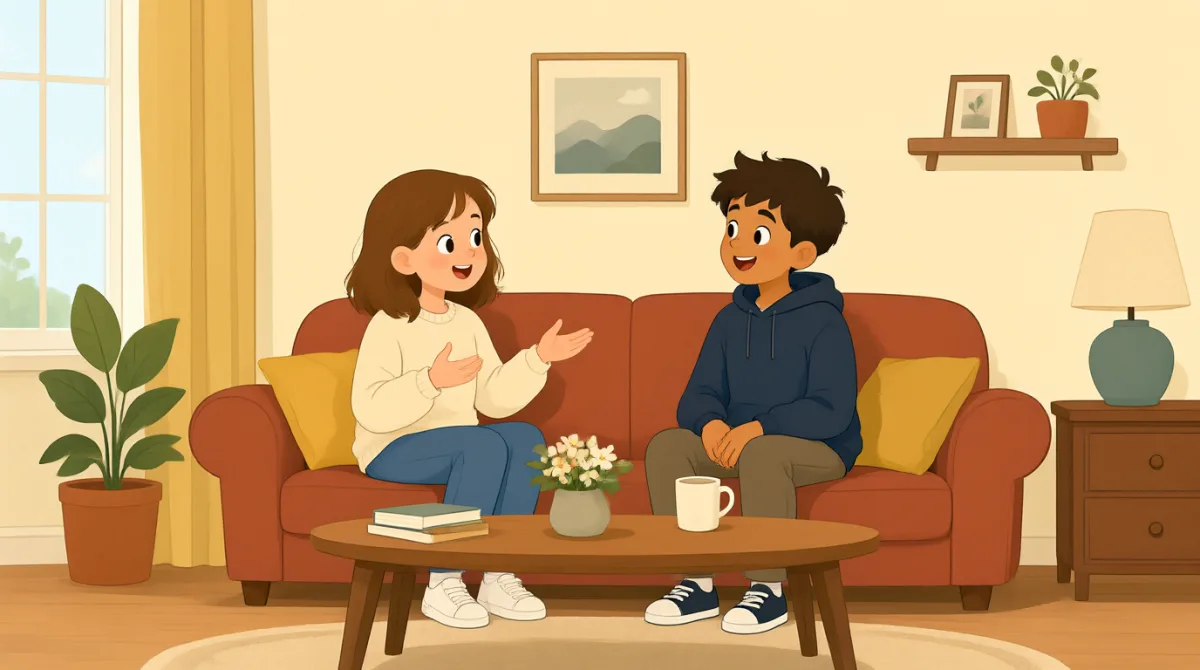

David, what time do you get up on weekends?

I get up at eight. I sleep late.
That sounds nice. What do you do in the morning?
I make coffee and eat breakfast at home.
Do you go out or stay home?
I take a walk. Then I read a book.
I like weekends too. I visit a park.
That sounds good. Weekends are for relaxing.
Vocabulary8
- get up
To get out of bed and start your day. You can say, “I get up at eight.”
- on weekends
This means on Saturday and Sunday. Use it to talk about what you usually do at that time.
- sleep late
To wake up later than usual. You can say, “I sleep late on weekends.”
- in the morning
This means during the early part of the day. Use it to ask or talk about morning activities.
- make coffee
To prepare coffee to drink. You can say, “I make coffee in the morning.”
- go out
To leave home and go somewhere. Use it to ask whether someone leaves home or stays there.
- take a walk
To go outside and walk for fun or exercise. You can say, “I take a walk after breakfast.”
- stay home
To remain at home instead of going somewhere. You can say, “I stay home on weekends.”
Key Sentences8
- 1
David, what time do you get up on weekends?
Use this question to ask when someone wakes up and gets out of bed. You can change “on weekends” to another day or time.
- 2
I get up at eight.
This is a simple way to say when you start your day. Change “eight” to your usual time.
- 3
What do you do in the morning?
Use this question to ask about someone’s morning activities. You can replace “in the morning” with “after work” or another time.
- 4
I make coffee and eat breakfast at home.
This sentence describes two everyday activities. You can use “and” to list things you do.
- 5
Do you go out or stay home?
Use this question to ask whether someone leaves home or remains there. Answer with “I go out” or “I stay home.”
- 6
I take a walk.
This is a simple way to talk about walking for fun or exercise. You can add a time or place, such as “I take a walk in the morning.”
- 7
I visit a park.
Use this sentence to say that you go to a park. You can replace “a park” with another place.
- 8
Weekends are for relaxing.
This sentence shares the idea that weekends are a good time to rest. You can use “X is for relaxing” to talk about another free time.