A Typical Weekend Day
平常的週末一天
Emma and David talk about their weekends. They share what time they get up and what they like to do.
Emma和David聊聊週末。他們分享自己幾點起床,以及喜歡做些什麼。
對話8
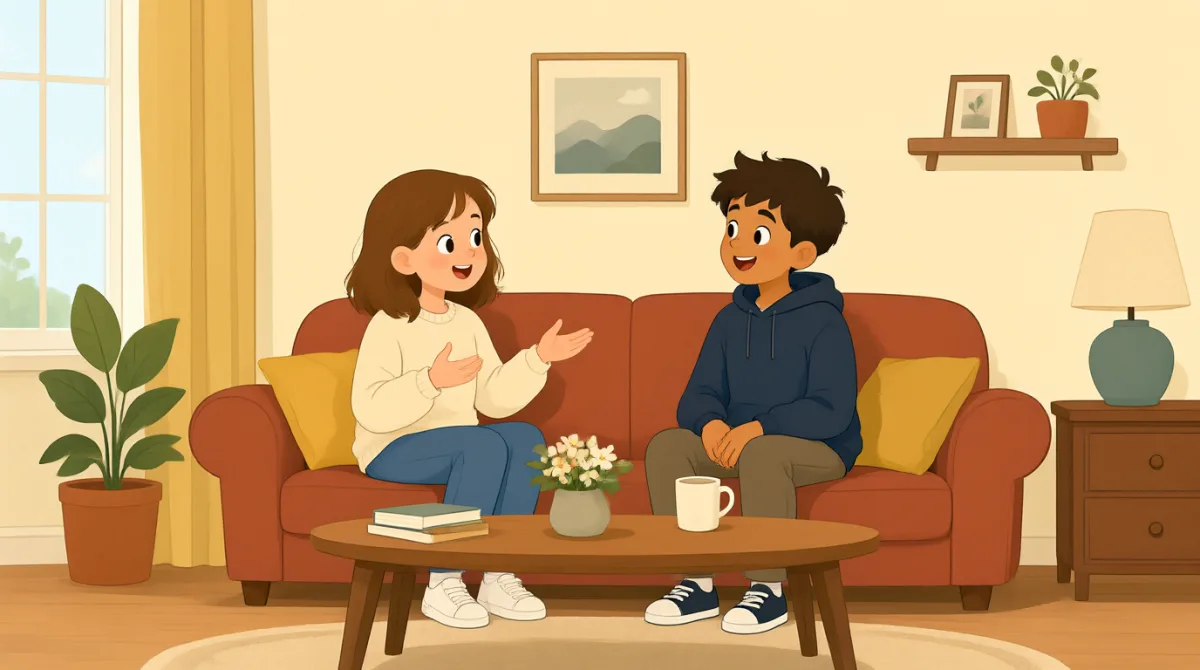

David, what time do you get up on weekends?
David,你週末幾點起床?

I get up at eight. I sleep late.
我八點起床。我會睡個懶覺。
That sounds nice. What do you do in the morning?
聽起來不錯。你早上做什麼?
I make coffee and eat breakfast at home.
我在家煮咖啡、吃早餐。
Do you go out or stay home?
你會出門還是待在家裡?
I take a walk. Then I read a book.
我會去散步,然後看書。
I like weekends too. I visit a park.
我也喜歡週末。我會去公園。
That sounds good. Weekends are for relaxing.
聽起來不錯。週末就是用來放鬆的。
詞彙8
- get up起床
To get out of bed and start your day. You can say, “I get up at eight.”
從床上起來,開始新的一天。你可以說:“I get up at eight.”(我八點起床。)
- on weekends週末
This means on Saturday and Sunday. Use it to talk about what you usually do at that time.
意思是星期六和星期天。你可以用它來談談自己通常在週末做什麼。
- sleep late睡懶覺
To wake up later than usual. You can say, “I sleep late on weekends.”
比平時晚起床。你可以說:“I sleep late on weekends.”(我週末會睡懶覺。)
- in the morning早上
This means during the early part of the day. Use it to ask or talk about morning activities.
指一天中較早的時段。你可以用它來詢問或談論早上做的事情。
- make coffee煮咖啡
To prepare coffee to drink. You can say, “I make coffee in the morning.”
準備咖啡來喝。你可以說:“I make coffee in the morning.”(我早上煮咖啡。)
- go out出門
To leave home and go somewhere. Use it to ask whether someone leaves home or stays there.
離開家去別的地方。你可以用它來問別人是出門還是待在家裡。
- take a walk散步
To go outside and walk for fun or exercise. You can say, “I take a walk after breakfast.”
出門走走,作為消遣或鍛鍊。你可以說:“I take a walk after breakfast.”(我吃完早飯後散步。)
- stay home待在家裡
To remain at home instead of going somewhere. You can say, “I stay home on weekends.”
不出門,留在家裡。你可以說:“I stay home on weekends.”(我週末待在家裡。)
關鍵句8
- 1
David, what time do you get up on weekends?
大衛,你週末幾點起床?
Use this question to ask when someone wakes up and gets out of bed. You can change “on weekends” to another day or time.
用這個問句詢問別人什麼時候醒來並起床。你可以把“on weekends”換成其他日期或時間。
- 2
I get up at eight.
我八點起床。
This is a simple way to say when you start your day. Change “eight” to your usual time.
這是簡單說明自己幾點開始一天的說法。你可以把“eight”換成自己通常起床的時間。
- 3
What do you do in the morning?
你早上做什麼?
Use this question to ask about someone’s morning activities. You can replace “in the morning” with “after work” or another time.
用這個問句詢問別人早上會做些什麼。你可以把“in the morning”換成“after work”或其他時間。
- 4
I make coffee and eat breakfast at home.
我在家煮咖啡、吃早餐。
This sentence describes two everyday activities. You can use “and” to list things you do.
這個句子描述了兩件日常活動。你可以用“and”連線自己會做的事情。
- 5
Do you go out or stay home?
你會出門還是待在家裡?
Use this question to ask whether someone leaves home or remains there. Answer with “I go out” or “I stay home.”
用這個問句詢問別人是出門還是留在家裡。可以回答“I go out”或“I stay home.”
- 6
I take a walk.
我會去散步。
This is a simple way to talk about walking for fun or exercise. You can add a time or place, such as “I take a walk in the morning.”
這是簡單談論散步消遣或鍛鍊的說法。你可以加上時間或地點,比如“I take a walk in the morning.”
- 7
I visit a park.
我會去公園。
Use this sentence to say that you go to a park. You can replace “a park” with another place.
用這個句子表達自己會去公園。你可以把“a park”換成其他地點。
- 8
Weekends are for relaxing.
週末就是用來放鬆的。
This sentence shares the idea that weekends are a good time to rest. You can use “X is for relaxing” to talk about another free time.
這個句子表達了週末適合休息的想法。你可以用“X is for relaxing”來談論其他空閒時間。