Asking for Directions to a Local Landmark
詢問前往當地地標的路線
A traveler is lost or unsure of the way and asks a local person for clear directions to a well-known landmark, clarifying landmarks and street names.
旅行者迷路或不確定方向,向當地人詢問前往著名地標的明確路線,並澄清地標和街道名稱。
對話10
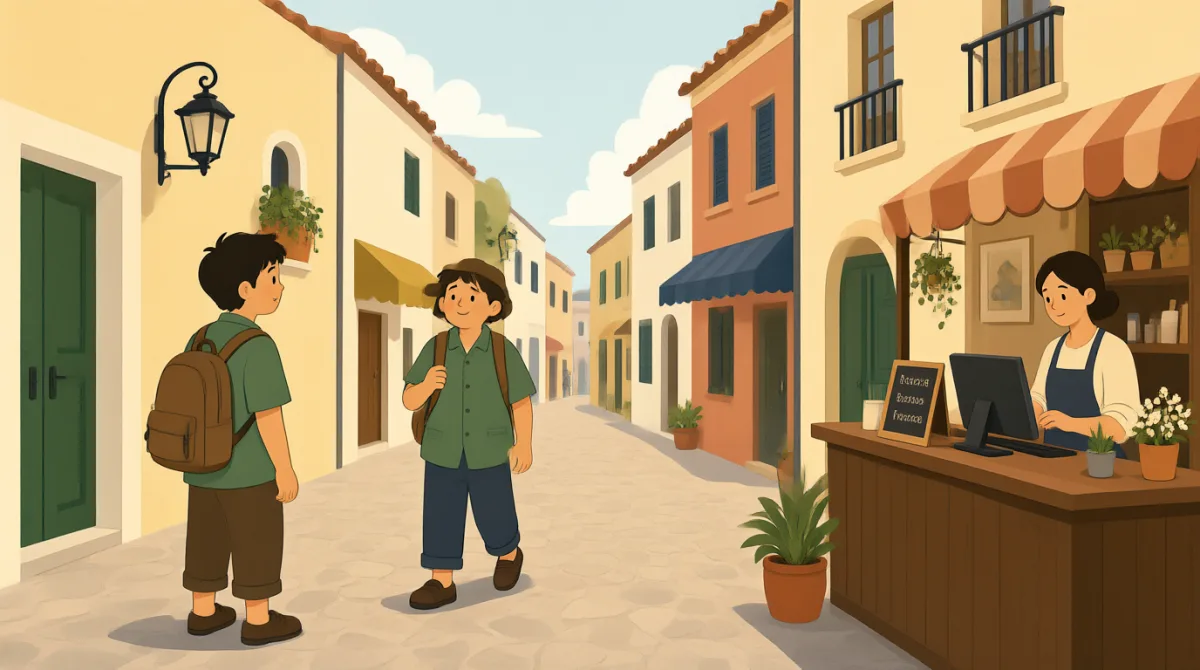

Excuse me, I'm a bit lost. Could you tell me how to get to the Old Town Square?
打擾一下,我有點迷路了。請問去老城廣場怎麼走?

Of course! Old Town Square is pretty easy to find from here. Are you walking?
當然可以!老城廣場從這裡走挺容易的。您是步行嗎?
Yes, I am. I think I might have taken a wrong turn somewhere.
是的,我是步行。我想我可能在某個地方拐錯了彎。
No worries! So, from here, just walk straight down this street, Main Street. You'll pass a large bookstore on your right.
沒關係!從這裡,沿著這條街,也就是主街,一直往前走。您會路過一家大的書店,在您的右手邊。
Okay, Main Street. And a bookstore.
好的,主街。還有一家書店。
Exactly. Keep going straight until you reach a big intersection with traffic lights. That's Liberty Avenue. Turn left there.
沒錯。一直往前走,直到你看到一個有紅綠燈的大十字路口。那是自由大道。在那裡左轉。
Turn left at Liberty Avenue. Got it. How far is it after that?
在自由大道左轉。明白了。那之後大概有多遠?
It's not far at all. You'll see the Old Town Square just a couple of blocks down Liberty Avenue on your right. You can't miss it, there's a big clock tower.
一點也不遠。沿著自由大道走幾個街區,您就會在右手邊看到老城廣場。您不會錯過的,那裡有一個大鐘樓。
A clock tower, perfect! Thank you so much for your help, Mia. You've been a lifesaver!
一個鐘樓,太好了!非常感謝您的幫助,米婭。您真是幫了大忙!
You're very welcome, Leo! Enjoy the Old Town Square!
不客氣,利奧!祝您在老城廣場玩得愉快!
詞彙8
- lost迷路的
When you don't know where you are or which way to go, you can say you are 'lost'. It's common in travel situations to ask for help.
不知道自己身處何處或該往哪走時,可以說自己“lost”。在旅行時向別人求助,這種說法很常見。
- walking步行
This means traveling on foot, not by car or bus. Use it when confirming how you plan to get somewhere, like 'Are you walking?'
這個詞表示走路前往,而不是開車或乘公交。確認你打算怎麼去某個地方時可以用它,比如“Are you walking?”(您是步行嗎?)
- wrong turn拐錯彎
A mistake in direction, like turning left instead of right. Say 'I took a wrong turn' when explaining why you're lost.
指走錯了方向,比如該右轉時卻左轉了。解釋自己為什麼迷路時,可以說“I took a wrong turn”(我拐錯彎了)。
- no worries沒關係
A friendly way to say 'don't worry' or 'it's okay'. It's casual and reassuring, often used to comfort someone.
這是表示“不用擔心”或“沒關係”的友好說法,語氣隨和、讓人安心,常用來安慰別人。
- straight直走
Going directly ahead without turning. In directions, say 'go straight' to mean continue in the same direction.
表示不轉彎,徑直向前走。指路時說“go straight”,意思是沿著當前方向繼續走。
- intersection十字路口
A place where two or more roads cross. It's useful for giving directions, like 'turn at the intersection'.
兩條或更多道路交匯的地方。指路時很實用,比如“turn at the intersection”(在十字路口轉彎)。
- blocks幾個街區
Short distances between streets in a city, like city blocks. Use it to describe short walks, e.g., 'a couple of blocks'.
指城市裡一條街到另一條街之間的短距離。可以用來描述一小段步行路程,比如“a couple of blocks”(幾個街區)。
- lifesaver大救星
Someone who helps you a lot in a difficult situation. It's an idiom to thank someone sincerely, like after getting directions.
指在困難時刻給了你很大幫助的人。這是一個習語,比如別人幫你指路後,你可以用它真誠地表示感謝。
關鍵句8
- 1
Excuse me, I'm a bit lost. Could you tell me how to get to the Old Town Square?
打擾一下,我有點迷路了。請問去老城廣場怎麼走?
This is a polite way to ask for directions when you're unsure of your location. 'Excuse me' gets attention, 'I'm a bit lost' explains the problem, and 'how to get to' asks for the route. Use it at the start of travel conversations.
當你不確定自己在哪裡時,可以用這句話禮貌地問路。“Excuse me”用來引起對方注意,“I'm a bit lost”說明遇到的問題,而“how to get to”則是在詢問路線。旅行時開啟對話可以這樣說。
- 2
Of course! Old Town Square is pretty easy to find from here. Are you walking?
當然可以!老城廣場從這裡走挺容易的。您是步行嗎?
A helpful response offering assistance. 'Of course' means 'yes, happily', and the question 'Are you walking?' clarifies the travel method to give better directions. It's useful for locals helping tourists.
這是主動提供幫助的友好回應。“Of course”表示“當然可以”,“Are you walking?”則是確認出行方式,以便更準確地指路。當地人幫助遊客時可以這樣問。
- 3
Yes, I am. I think I might have taken a wrong turn somewhere.
是的,我是步行。我想我可能在某個地方拐錯了彎。
This confirms the method of travel and explains the mistake. 'Yes, I am' is a full answer to a yes/no question. Use it to provide more details when asking for help.
這句話先確認了出行方式,再說明自己走錯了路。“Yes, I am”是對一般疑問句的完整回答。求助時可以用它補充說明情況。
- 4
No worries! So, from here, just walk straight down this street, Main Street. You'll pass a large bookstore on your right.
沒關係!從這裡沿著這條街,也就是主街,一直往前走。您會路過一家大的書店,在您的右手邊。
Reassures the person and starts giving directions. 'Walk straight down' means go ahead without turning, and 'you'll pass' predicts what they'll see. This pattern is key for clear step-by-step instructions.
這句話先讓對方放心,然後開始指路。“Walk straight down”表示沿著道路直走、不轉彎,“you'll pass”則用來說明沿途會經過什麼。這個句型是清楚地分步驟指路時很實用的表達。
- 5
Keep going straight until you reach a big intersection with traffic lights. That's Liberty Avenue. Turn left there.
一直往前走,直到你到達一個有紅綠燈的大十字路口。那是自由大道。在那裡左轉。
Continues directions with a condition: 'until you reach' means go ahead until a point. 'Turn left' is a basic direction command. Use this structure for sequential steps in navigation.
這句話接著說明路線。“until you reach”表示一直走到某個地點為止,“Turn left”則是一個基本的指路指令。按順序說明路線時可以用這個句型。
- 6
It's not far at all. You'll see the Old Town Square just a couple of blocks down Liberty Avenue on your right. You can't miss it, there's a big clock tower.
一點也不遠。沿著自由大道往前走幾個街區,您就會在右手邊看到老城廣場。您不會錯過的,那裡有一座大鐘樓。
Describes distance and landmarks to help. 'Not far at all' reassures it's close, 'a couple of blocks' means short distance, and 'you can't miss it' means it's obvious. Great for ending directions positively.
這句話用距離和地標來幫助對方找到目的地。“Not far at all”表示一點也不遠,讓人放心;“a couple of blocks”表示幾個街區的距離;“you can't miss it”則表示目的地很顯眼。用這些表達收尾,指路會更清楚、更讓人安心。
- 7
Thank you so much for your help, Mia. You've been a lifesaver!
非常感謝您的幫助,米婭。您真是幫了大忙!
A grateful closing. 'Thank you so much' emphasizes thanks, and 'lifesaver' is idiomatic for big help. Use it to politely end a helpful conversation.
這是表示感謝並結束對話的說法。“Thank you so much”加強了感謝的語氣,“lifesaver”是習語,表示對方幫了大忙。得到幫助後,可以這樣禮貌地結束對話。
- 8
You're very welcome, Leo! Enjoy the Old Town Square!
不客氣,利奧!祝您在老城廣場玩得愉快!
Polite response to thanks. 'You're very welcome' is standard, and 'Enjoy...' wishes well. It's a friendly way to end interactions in tourism scenarios.
這是回應感謝的禮貌說法。“You're very welcome”是常見的“不客氣”,“Enjoy...”則是祝對方玩得愉快。在旅遊場景中,可以用這種友好的表達結束對話。