Asking for Directions to a Local Landmark
ถามทางไปยังสถานที่สำคัญในท้องถิ่น
A traveler is lost or unsure of the way and asks a local person for clear directions to a well-known landmark, clarifying landmarks and street names.
นักเดินทางหลงทางหรือไม่แน่ใจว่าจะไปทางไหน จึงถามคนในท้องถิ่นให้บอกทางไปยังสถานที่สำคัญที่มีชื่อเสียงอย่างชัดเจน พร้อมสอบถามจุดสังเกตและชื่อถนน
บทสนทนา10
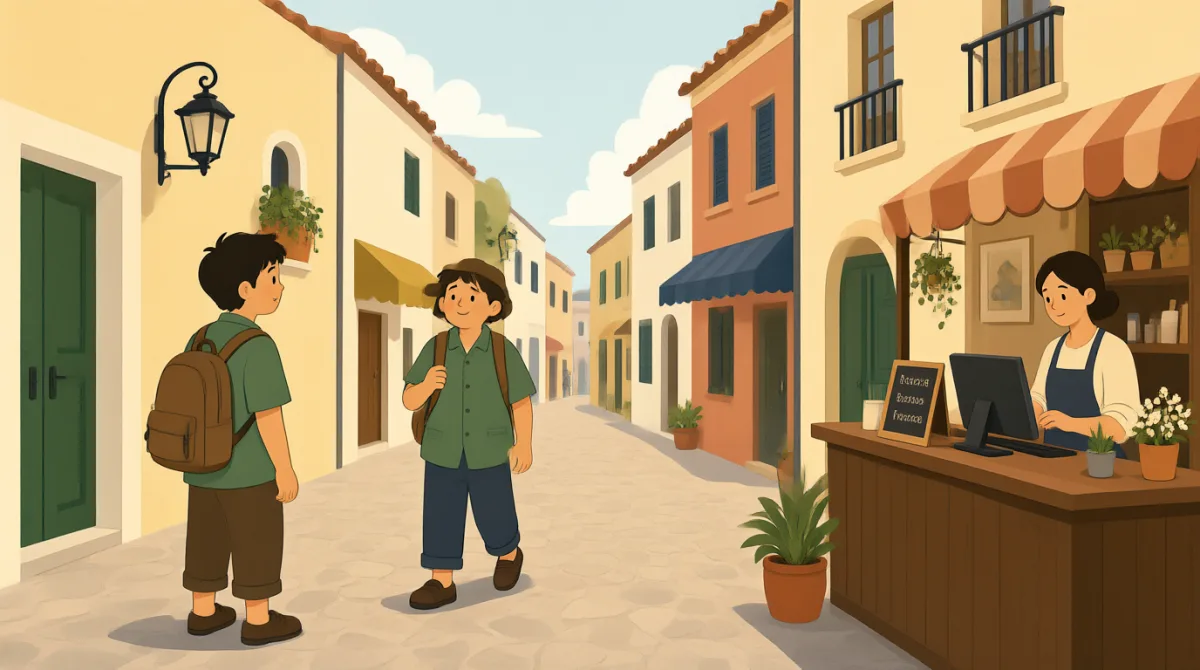

Excuse me, I'm a bit lost. Could you tell me how to get to the Old Town Square?
ขอโทษนะครับ ผมหลงทางนิดหน่อย ช่วยบอกทางไปจัตุรัสเมืองเก่าได้ไหมครับ

Of course! Old Town Square is pretty easy to find from here. Are you walking?
ได้เลยค่ะ จากตรงนี้ไปจัตุรัสเมืองเก่าค่อนข้างง่ายนะคะ คุณเดินไปหรือเปล่าคะ
Yes, I am. I think I might have taken a wrong turn somewhere.
ครับ ผมเดินมา ผมคิดว่าผมน่าจะเลี้ยวผิดตรงไหนสักแห่งครับ
No worries! So, from here, just walk straight down this street, Main Street. You'll pass a large bookstore on your right.
ไม่เป็นไรค่ะ จากตรงนี้ก็เดินตรงไปตามถนนสายนี้เลยนะคะ ถนนเมนสตรีต คุณจะผ่านร้านหนังสือใหญ่ทางขวามือค่ะ
Okay, Main Street. And a bookstore.
โอเคครับ ถนนเมนสตรีต แล้วก็ร้านหนังสือครับ
Exactly. Keep going straight until you reach a big intersection with traffic lights. That's Liberty Avenue. Turn left there.
ใช่ค่ะ เดินตรงต่อไปเรื่อย ๆ จนถึงสี่แยกใหญ่ที่มีสัญญาณไฟจราจร ตรงนั้นคือถนนลิเบอร์ตีค่ะ เลี้ยวซ้ายตรงนั้นนะคะ
Turn left at Liberty Avenue. Got it. How far is it after that?
เลี้ยวซ้ายที่ถนนลิเบอร์ตี เข้าใจแล้วครับ จากนั้นอีกไกลไหมครับ
It's not far at all. You'll see the Old Town Square just a couple of blocks down Liberty Avenue on your right. You can't miss it, there's a big clock tower.
ไม่ไกลเลยค่ะ เดินไปตามถนนลิเบอร์ตีอีกแค่สองสามช่วงตึก คุณก็จะเห็นจัตุรัสเมืองเก่าอยู่ทางขวามือค่ะ สังเกตได้ไม่ยาก มีหอนาฬิกาใหญ่ ๆ อยู่ค่ะ
A clock tower, perfect! Thank you so much for your help, Mia. You've been a lifesaver!
หอนาฬิกา เยี่ยมเลยครับ ขอบคุณมากนะครับที่ช่วยผม มีพระคุณมากเลยครับ!
You're very welcome, Leo! Enjoy the Old Town Square!
ยินดีมากค่ะ ลีโอ! ขอให้เที่ยวจัตุรัสเมืองเก่าให้สนุกนะคะ!
คำศัพท์8
- lostหลงทาง
When you don't know where you are or which way to go, you can say you are 'lost'. It's common in travel situations to ask for help.
เวลาที่คุณไม่รู้ว่าตัวเองอยู่ที่ไหนหรือควรไปทางไหน คุณพูดได้ว่าคุณ 'lost' (หลงทาง) คำนี้ใช้บ่อยเวลาเดินทางและต้องการขอความช่วยเหลือค่ะ
- walkingเดิน
This means traveling on foot, not by car or bus. Use it when confirming how you plan to get somewhere, like 'Are you walking?'
คำนี้หมายถึงการเดินทางด้วยเท้า ไม่ใช่รถยนต์หรือรถโดยสาร ใช้เมื่อต้องการยืนยันว่าจะไปที่ไหนอย่างไร เช่น 'Are you walking?' (คุณเดินไปหรือเปล่า) ค่ะ
- wrong turnเลี้ยวผิด
A mistake in direction, like turning left instead of right. Say 'I took a wrong turn' when explaining why you're lost.
หมายถึงการเลี้ยวผิดทิศทาง เช่น เลี้ยวซ้ายแทนที่จะเลี้ยวขวา คุณพูดว่า 'I took a wrong turn' (ฉันเลี้ยวผิด) เพื่ออธิบายว่าทำไมถึงหลงทางได้ค่ะ
- no worriesไม่เป็นไร
A friendly way to say 'don't worry' or 'it's okay'. It's casual and reassuring, often used to comfort someone.
เป็นวิธีพูดอย่างเป็นกันเองว่า 'ไม่ต้องกังวล' หรือ 'ไม่เป็นไร' ฟังดูสบาย ๆ และช่วยให้อีกฝ่ายอุ่นใจ มักใช้เพื่อปลอบใจค่ะ
- straightตรงไป
Going directly ahead without turning. In directions, say 'go straight' to mean continue in the same direction.
หมายถึงไปข้างหน้าโดยไม่เลี้ยว เวลาบอกทางให้พูดว่า 'go straight' (ตรงไป) เพื่อบอกให้เดินต่อไปในทิศทางเดิมค่ะ
- intersectionสี่แยก
A place where two or more roads cross. It's useful for giving directions, like 'turn at the intersection'.
สถานที่ที่ถนนตั้งแต่สองสายขึ้นไปตัดกัน คำนี้มีประโยชน์เวลาบอกทาง เช่น 'turn at the intersection' (เลี้ยวตรงสี่แยก) ค่ะ
- blocksช่วงตึก
Short distances between streets in a city, like city blocks. Use it to describe short walks, e.g., 'a couple of blocks'.
ระยะทางสั้น ๆ ระหว่างถนนแต่ละสายภายในเมือง ใช้บอกระยะเดินใกล้ ๆ เช่น 'a couple of blocks' (สองสามช่วงตึก) ค่ะ
- lifesaverผู้ช่วยชีวิต
Someone who helps you a lot in a difficult situation. It's an idiom to thank someone sincerely, like after getting directions.
หมายถึงคนที่ช่วยคุณได้มากในสถานการณ์ลำบาก เป็นสำนวนที่ใช้ขอบคุณใครสักคนอย่างจริงใจ เช่น หลังจากเขาช่วยบอกทางค่ะ
ประโยคสำคัญ8
- 1
Excuse me, I'm a bit lost. Could you tell me how to get to the Old Town Square?
ขอโทษนะครับ ผมหลงทางนิดหน่อย ช่วยบอกทางไปจัตุรัสเมืองเก่าได้ไหมครับ
This is a polite way to ask for directions when you're unsure of your location. 'Excuse me' gets attention, 'I'm a bit lost' explains the problem, and 'how to get to' asks for the route. Use it at the start of travel conversations.
ประโยคนี้เป็นวิธีสุภาพในการถามทางเมื่อคุณไม่แน่ใจว่าตัวเองอยู่ที่ไหน 'Excuse me' ใช้เรียกความสนใจ 'I'm a bit lost' อธิบายปัญหา และ 'how to get to' ใช้ถามเส้นทาง คุณใช้ประโยคนี้ขึ้นต้นบทสนทนาระหว่างเดินทางได้ค่ะ
- 2
Of course! Old Town Square is pretty easy to find from here. Are you walking?
ได้เลยค่ะ จากตรงนี้ไปจัตุรัสเมืองเก่าค่อนข้างง่ายนะคะ คุณเดินไปหรือเปล่าคะ
A helpful response offering assistance. 'Of course' means 'yes, happily', and the question 'Are you walking?' clarifies the travel method to give better directions. It's useful for locals helping tourists.
เป็นคำตอบที่แสดงความเต็มใจช่วยเหลือ 'Of course' หมายถึง 'ได้เลย' หรือ 'ยินดีค่ะ' ส่วนคำถาม 'Are you walking?' ใช้ถามวิธีเดินทางเพื่อจะได้บอกทางให้เหมาะสม ประโยคนี้มีประโยชน์สำหรับคนในท้องถิ่นที่กำลังช่วยนักท่องเที่ยวค่ะ
- 3
Yes, I am. I think I might have taken a wrong turn somewhere.
ครับ ผมเดินมา ผมคิดว่าผมน่าจะเลี้ยวผิดตรงไหนสักแห่งครับ
This confirms the method of travel and explains the mistake. 'Yes, I am' is a full answer to a yes/no question. Use it to provide more details when asking for help.
ประโยคนี้ยืนยันวิธีเดินทางและอธิบายว่าเกิดข้อผิดพลาดอะไร 'Yes, I am' เป็นคำตอบแบบเต็มสำหรับคำถามที่ตอบว่าใช่หรือไม่ ใช้ประโยคนี้เพื่อให้รายละเอียดเพิ่มเติมเมื่อขอความช่วยเหลือได้ค่ะ
- 4
No worries! So, from here, just walk straight down this street, Main Street. You'll pass a large bookstore on your right.
ไม่เป็นไรค่ะ จากตรงนี้ก็เดินตรงไปตามถนนสายนี้เลยนะคะ ถนนเมนสตรีต คุณจะผ่านร้านหนังสือใหญ่ทางขวามือค่ะ
Reassures the person and starts giving directions. 'Walk straight down' means go ahead without turning, and 'you'll pass' predicts what they'll see. This pattern is key for clear step-by-step instructions.
ใช้ปลอบใจอีกฝ่ายและเริ่มบอกทาง 'Walk straight down' หมายถึงเดินตรงไปโดยไม่เลี้ยว และ 'you'll pass' ใช้บอกสิ่งที่อีกฝ่ายจะเห็นระหว่างทาง รูปแบบนี้สำคัญสำหรับการบอกทางเป็นขั้นตอนอย่างชัดเจนค่ะ
- 5
Keep going straight until you reach a big intersection with traffic lights. That's Liberty Avenue. Turn left there.
เดินตรงต่อไปเรื่อย ๆ จนถึงสี่แยกใหญ่ที่มีสัญญาณไฟจราจร ตรงนั้นคือถนนลิเบอร์ตีค่ะ เลี้ยวซ้ายตรงนั้นนะคะ
Continues directions with a condition: 'until you reach' means go ahead until a point. 'Turn left' is a basic direction command. Use this structure for sequential steps in navigation.
ประโยคนี้บอกทางต่อโดยระบุจุดหมายของการเดินทาง 'until you reach' หมายถึงเดินต่อไปจนถึงจุดหนึ่ง ส่วน 'Turn left' เป็นคำสั่งพื้นฐานในการบอกทาง คุณใช้โครงสร้างนี้เพื่อบอกเส้นทางทีละขั้นตอนได้ค่ะ
- 6
It's not far at all. You'll see the Old Town Square just a couple of blocks down Liberty Avenue on your right. You can't miss it, there's a big clock tower.
ไม่ไกลเลยค่ะ เดินไปตามถนนลิเบอร์ตีอีกแค่สองสามช่วงตึก คุณก็จะเห็นจัตุรัสเมืองเก่าอยู่ทางขวามือค่ะ สังเกตได้ไม่ยาก มีหอนาฬิกาใหญ่ ๆ อยู่ค่ะ
Describes distance and landmarks to help. 'Not far at all' reassures it's close, 'a couple of blocks' means short distance, and 'you can't miss it' means it's obvious. Great for ending directions positively.
ประโยคนี้บอกระยะทางและจุดสังเกตเพื่อช่วยนำทาง 'Not far at all' ช่วยให้อีกฝ่ายสบายใจว่าที่นั่นอยู่ใกล้ 'a couple of blocks' หมายถึงระยะทางสั้น ๆ และ 'you can't miss it' หมายถึงเห็นได้ชัดเจน ใช้ปิดท้ายการบอกทางในแง่ดีได้ค่ะ
- 7
Thank you so much for your help, Mia. You've been a lifesaver!
ขอบคุณมากนะครับที่ช่วยผม มีพระคุณมากเลยครับ!
A grateful closing. 'Thank you so much' emphasizes thanks, and 'lifesaver' is idiomatic for big help. Use it to politely end a helpful conversation.
เป็นคำพูดขอบคุณเพื่อปิดท้ายบทสนทนา 'Thank you so much' เน้นย้ำความขอบคุณ ส่วน 'lifesaver' เป็นสำนวนที่หมายถึงคนที่ช่วยได้มาก ใช้ปิดบทสนทนาอย่างสุภาพหลังจากได้รับความช่วยเหลือได้ค่ะ
- 8
You're very welcome, Leo! Enjoy the Old Town Square!
ยินดีมากค่ะ ลีโอ! ขอให้เที่ยวจัตุรัสเมืองเก่าให้สนุกนะคะ!
Polite response to thanks. 'You're very welcome' is standard, and 'Enjoy...' wishes well. It's a friendly way to end interactions in tourism scenarios.
เป็นคำตอบสุภาพเมื่อมีคนขอบคุณ 'You're very welcome' เป็นคำตอบมาตรฐาน และ 'Enjoy...' ใช้กล่าวอวยพรให้อีกฝ่ายมีความสุข เป็นวิธีปิดท้ายบทสนทนาอย่างเป็นมิตรในสถานการณ์ท่องเที่ยวค่ะ