Troubleshooting a Cooking Disaster
解決烹飪失敗問題
Someone has attempted to cook a new dish but it didn't turn out as expected (e.g., too salty, burnt, wrong texture). They are asking for advice from a more experienced cook on how to fix it or what went wrong.
有人嘗試做一道新菜,但結果不盡如人意(例如,太鹹、燒焦、質地不對)。他們正在向更有經驗的廚師請教如何補救或出了什麼問題。
對話9
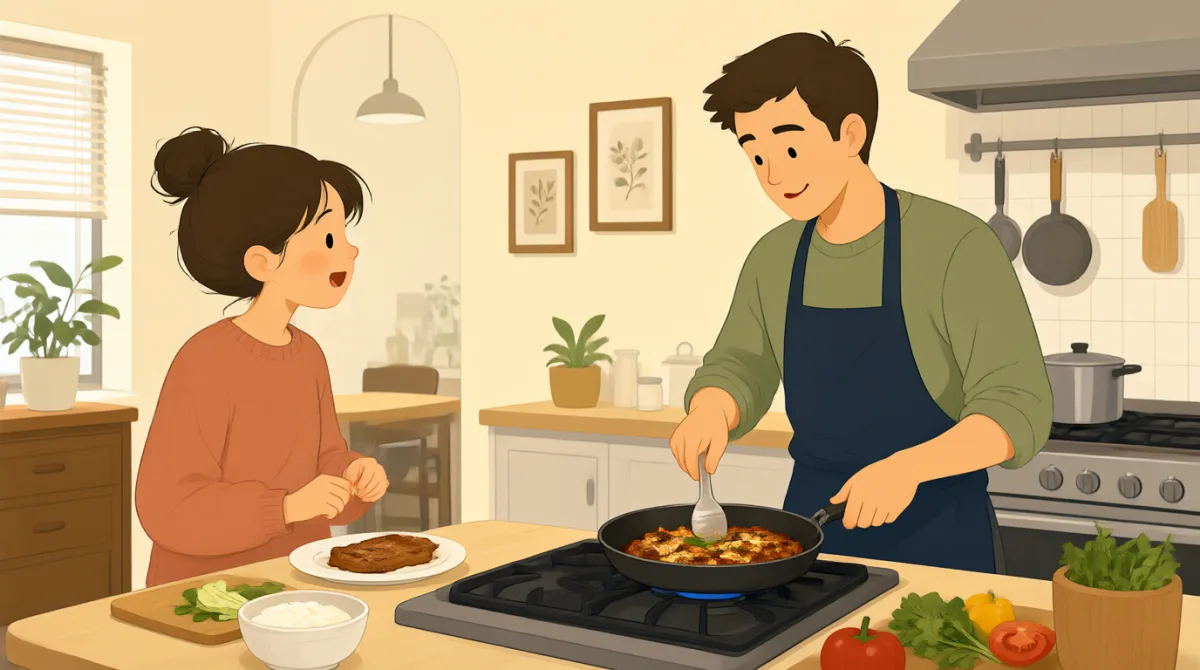

Grace, I need your expert advice. I just tried to make that new lentil soup recipe, and I think I've completely ruined it.
格蕾絲,我需要你的專業建議。我剛試著做那個新的扁豆湯食譜,我想我徹底搞砸了。

Oh no, Emma! What happened? Don't worry, most cooking disasters are fixable. Tell me the details.
哦不,艾瑪!怎麼了?別擔心,大多數烹飪災難都能補救。告訴我詳細情況。
It's so unbelievably salty! I must have misread the amount of broth or something. It's practically inedible.
它鹹得不可思議!我肯定是看錯了高湯的量或者什麼的。簡直沒法吃。
Ah, too salty, that's a common one. Okay, first, do you have any extra plain water or unsalted broth you can add? That's usually the easiest way to dilute it.
啊,太鹹了,這是常見的問題。好的,首先,你有沒有額外的白開水或不加鹽的高湯可以加進去?這通常是稀釋它最簡單的方法。
I can add some water. How much do you think? It's a pretty big pot.
我可以加點水。你覺得加多少?這是個很大的鍋。
Start with about half a cup, stir it in, and taste it again. You can always add more. Another trick is to add starchy vegetables like a peeled potato or a piece of bread to absorb some of the saltiness. Just remove it before serving.
先加大約半杯,攪拌均勻,再嘗一下。不夠可以再加。另一個訣竅是加入澱粉類蔬菜,比如去皮的土豆或一塊麵包,來吸收一些鹹味。上菜前把它們拿出來就行。
A potato? That's brilliant! I never would have thought of that. So just put it in whole?
土豆?這太棒了!我從來沒想過。就整個放進去嗎?
Yes, just peel a medium-sized potato and drop it in. Let it simmer for 15-20 minutes, then take it out. It works wonders! Let me know how it goes.
是的,只要削一箇中等大小的土豆皮放進去。讓它燉煮15-20分鐘,然後拿出來。效果驚人!告訴我結果如何。
Will do! Thanks so much, Grace. You're a lifesaver!
會的!太感謝你了,格蕾絲。你真是救星!
詞彙8
- ruined搞砸了
Means something is spoiled or made unusable, often used when a cooking attempt fails badly. In cooking, say 'I ruined the cake' if it burns.
指某樣東西壞了或變得無法使用,常用於形容烹飪徹底失敗。做飯時,如果蛋糕烤焦了,可以說 'I ruined the cake'(我把蛋糕做砸了)。
- disasters災難;慘敗
Refers to big failures or problems, like a cooking mistake. 'Cooking disasters' is common for recipes that go wrong.
指嚴重的失敗或問題,比如烹飪時出了差錯。'Cooking disasters' 常用來形容做菜時出了岔子的情況。
- fixable可以補救的
Means something can be repaired or corrected. Useful in advice: 'The problem is fixable' to reassure someone.
指某件事可以修復或糾正。安慰別人時可以說 'The problem is fixable'(這個問題可以補救)。
- inedible難以下嚥的;不能吃的
Describes food that is too bad to eat, like overly salty soup. Say 'This is inedible' when something tastes awful.
形容食物糟糕到無法入口,比如湯鹹得過頭時。覺得某樣東西難吃得沒法吃,可以說 'This is inedible'。
- dilute稀釋
To make something weaker by adding water or liquid, especially for salty food. 'Dilute the sauce' means add water to reduce salt.
透過加水或其他液體來減淡某種東西,尤其適用於食物太鹹的情況。'Dilute the sauce' 意思是加水稀釋醬汁,讓它沒那麼鹹。
- absorb吸收
When something takes in liquid or flavor, like a potato soaking up salt. In cooking, 'absorb the excess salt' helps fix mistakes.
指某樣東西吸進液體或味道,比如土豆吸收湯裡的鹽分。做飯時,'absorb the excess salt'(吸收多餘的鹽分)可以用來補救失誤。
- simmer用小火燉;微沸
To cook food gently in liquid just below boiling. 'Let it simmer' is a common instruction for soups.
指讓食物在液體中以略低於沸騰的狀態慢慢煮。'Let it simmer' 是煮湯時常見的指示。
- lifesaver救星
An informal way to thank someone for great help, like saving a bad situation. 'You're a lifesaver!' shows big appreciation.
非正式的說法,用來感謝別人幫了大忙,就像幫你挽救了糟糕的局面。說 'You're a lifesaver!' 表示非常感激。
關鍵句7
- 1
I think I've completely ruined it.
我覺得我把它徹底搞砸了。
This expresses regret over a failure, using 'think I've' for uncertainty and 'completely' for emphasis. Useful when admitting a cooking mistake to ask for help.
這句話表達了對失敗的懊惱。'think I've' 表示不太確定,'completely' 用來加強語氣。做菜失誤、想向別人求助時,可以這樣承認自己搞砸了。
- 2
Don't worry, most cooking disasters are fixable.
別擔心,大多數烹飪災難都能補救。
A reassuring response with 'don't worry' to calm someone, and 'are fixable' shows problems can be solved. Use this to give comfort in advice situations.
這是一句安慰人的話:'Don't worry' 用來讓對方別擔心,'are fixable' 則表示問題可以解決。在給別人建議時,可以用這句話安慰對方。
- 3
It's so unbelievably salty!
鹹得簡直難以置信!
Describes extreme taste with 'so unbelievably' for strong emphasis. 'Salty' means too much salt. Great for complaining about food flavor casually.
'so unbelievably' 用來強烈強調程度,'salty' 指太鹹了。這句話很適合在日常聊天中抱怨食物的味道。
- 4
That's usually the easiest way to dilute it.
這通常是稀釋它最簡單的方法。
Gives practical advice using 'usually' for common methods and infinitive 'to dilute' for purpose. Useful in explaining simple fixes for cooking errors.
這句話用 'usually' 表示這是常見的做法,並用 'to dilute' 說明這樣做的目的。解釋如何簡單補救烹飪失誤時,可以用這個句型。
- 5
Start with about half a cup, stir it in, and taste it again.
先加大約半杯,攪拌均勻,再嘗一下。
Imperative instructions with 'start with' for beginning steps, and 'and' to connect actions. This pattern is key for recipe advice; use when guiding someone step-by-step.
這是用祈使句給出操作步驟:'start with' 表示從某一步開始,'and' 用來連線接下來的動作。給別人一步步講解食譜或烹飪建議時,這種句型很實用。
- 6
A potato? That's brilliant!
土豆?這主意太棒了!
Shows surprise and praise with a question for reaction and 'that's brilliant' as slang for 'great idea.' Use this to express admiration for helpful tips.
這句話用疑問句表達驚訝,再用 'that's brilliant' 表示這個主意很棒。別人給了你有用的建議時,可以用它來表達讚賞。
- 7
You're a lifesaver!
你真是我的救星!
An idiomatic thank you for saving a bad situation, like fixing a recipe. Informal and enthusiastic; say it after receiving useful advice.
這是一個習語,用來感謝別人幫你挽救了糟糕的局面,比如幫你補救一道菜。語氣隨意又熱情,收到實用建議後可以這樣說。