Collaborative Conflict - Who Does What?
協作衝突——誰來做啥?
During a step that requires two people, there's a misunderstanding or disagreement about how to hold a piece, who should screw what, or the proper technique, leading to minor frustrations or a momentary breakdown in teamwork.
在需要兩人協作的步驟中,對於如何拿住部件、誰來擰哪個螺絲或正確的操作方法產生了誤解或分歧,導致輕微的挫敗感或團隊合作的暫時中斷。
對話8
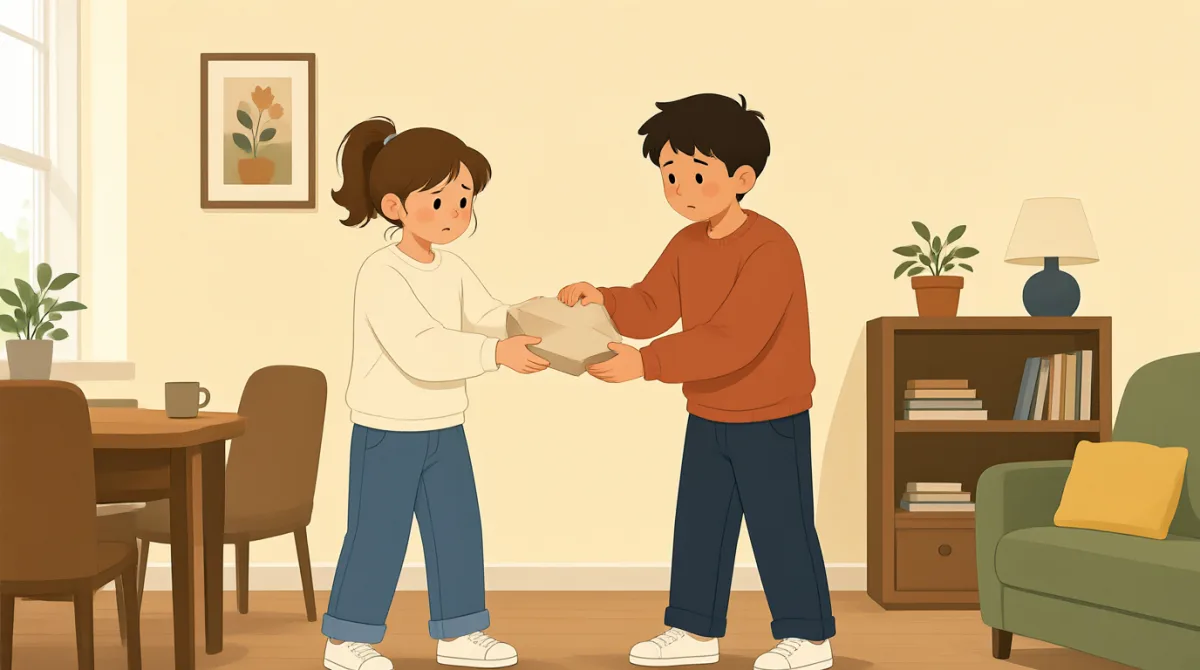

Alright, next step says we need to attach the side panel. Can you hold this end steady while I try to line up the holes?
好的,下一步說我們需要安裝側板。我來對齊孔洞,你能幫我扶穩這一端嗎?

Sure, I've got it. Just tell me if you need me to push it up or down a bit. Wait, should I be holding it like this, or more from the bottom?
好的,我拿住了。需要上提還是下壓時告訴我。等等,我應該這樣扶著嗎,還是從底部扶著?
Uh, no, more from the bottom, so it doesn't tilt. And push it slightly towards you, I think. Hard to tell from my angle.
嗯,不,更應該從底部扶著,這樣它才不會傾斜。我覺得你需要稍微推向你那邊一點。我這個角度很難判斷。
Okay, like this? I'm pushing. Are you getting it? It feels a bit wobbly.
好的,這樣嗎?我在推了。你裝上去了嗎?感覺有點晃動。
No, not quite. It's still not lining up perfectly. Maybe if you lift your side just a tiny bit? And don't push, just hold it steady.
不,還差一點。還是沒完全對齊。也許你把你的那側稍微抬高一點點?還有別推,穩穩地扶著就行。
Oh, you said push earlier! Okay, lifting a tiny bit and holding. How about now?
哦,你剛才說要推的!好的,稍微抬高一點並扶穩。現在怎麼樣?
My bad, sorry! Yes, that's it! Perfect. Now, hold it exactly like that while I try to get this screw in. Don't let go!
我的錯,抱歉!是的,就是這樣!完美。現在,就這樣扶著,我來把這個螺絲擰進去。別鬆手!
Got it. See, teamwork! Even if we have a little moment of confusion.
知道了。看,這就是團隊合作!即使我們有時會有點小混亂。
詞彙9
- attach連線;安裝
To join or fasten one part to another, like connecting a panel in furniture assembly. Useful when giving instructions for building or fixing things.
指把一個部件連線或固定到另一個部件上,比如在組裝傢俱時連線面板。這個詞在說明如何組裝或修理東西時很實用。
- steady穩住的;穩定的
Firm and not moving or shaking. In teamwork, you might say 'hold it steady' to keep something stable while working together.
表示牢固、不移動或不晃動。在團隊協作中,你可以說“hold it steady”,讓對方在你們一起操作時把東西穩住。
- line up對齊
To align things in a straight line, often used for matching holes or parts. Practical for DIY tasks like assembling furniture.
指把東西排成一條直線,常用於對準孔洞或部件。在組裝傢俱等自己動手的任務中很實用。
- tilt傾斜
To lean or slope to one side. In this context, it means the piece might fall over if not held properly; common in physical tasks.
指向一側歪斜或形成斜面。在這裡,它表示如果沒有扶好,部件可能會倒下;這個詞在描述需要動手操作的任務時很常見。
- wobbly搖晃的;不穩的
Unsteady or shaking, like something that's not secure. Useful to describe unstable objects during assembly or building.
表示不穩定或在晃動,比如某個東西沒有固定好。組裝或搭建東西時,可以用它來描述不穩的物體。
- lift抬起
To raise something up. In collaboration, it's a simple command like 'lift your side' to adjust position while working.
指把某物向上抬。在協作時,可以用“lift your side”這樣的簡單指令,讓對方調整自己這一側的位置。
- screw in擰入
To turn a screw clockwise to tighten it into place. Essential vocabulary for tools and assembly instructions.
指順時針轉動螺絲,把它擰緊並固定到位。這是工具和組裝說明中非常重要的詞彙。
- my bad我的錯
Informal slang for 'my mistake' or 'I was wrong.' Used to apologize casually in everyday conversations, especially in teamwork.
“my bad”是“my mistake”或“I was wrong”的非正式說法,表示“是我的錯”。它常用於日常對話中輕鬆地道歉,尤其適合團隊協作時使用。
- teamwork團隊合作
Working together cooperatively to achieve a goal. Highlights collaboration, perfect for situations involving partners or groups.
指為了實現某個目標而互相合作。這個詞強調協作,非常適合用於涉及搭檔或小組的情境。
關鍵句8
- 1
Can you hold this end steady while I try to line up the holes?
你能在我試著對齊孔洞時幫我把這一端扶穩嗎?
This is a polite request for help using 'can you' for suggestions. Useful in teamwork to ask someone to assist with a specific action; note the use of 'while' to show simultaneous actions.
這是用“Can you hold this end steady while I try to line up the holes?”禮貌地請求幫助。這裡用“can you”提出請求;“while”表示兩個動作同時進行。
- 2
Just tell me if you need me to push it up or down a bit.
如果你需要我把它往上推或往下壓一點,告訴我就行。
Offers flexibility in helping with 'if you need me to' and alternatives like 'up or down.' Great for collaborative tasks; 'a bit' softens the action to mean 'slightly.'
“Just tell me if you need me to push it up or down a bit.”用“if you need me to”表示願意靈活配合,並用“up or down”提供兩種選擇。“a bit”表示“稍微”,能讓動作聽起來更柔和。
- 3
More from the bottom, so it doesn't tilt.
從底部多扶一些,這樣它就不會傾斜了。
Gives correction with 'more from' for position and 'so' for reason (purpose clause). Practical for adjusting during physical work; teaches cause-effect in instructions.
“More from the bottom, so it doesn't tilt.”用“more from”說明調整位置,用“so”引出目的或結果。在進行實際操作時,這種表達很適合說明因果關係。
- 4
It feels a bit wobbly.
感覺有點晃。
Describes a sensation using 'feels' in present tense. Useful to report problems in real-time during assembly; 'a bit' means 'slightly' to avoid sounding too negative.
“It feels a bit wobbly.”用一般現在時的“feels”描述當下的感覺,適合在組裝過程中及時報告問題。“a bit”表示“有一點”,聽起來不會太負面。
- 5
Maybe if you lift your side just a tiny bit?
要不你把你那一側稍微抬高一點點?
Suggests a small adjustment with 'maybe if' for possibility and 'just a tiny bit' for minimal change. Ideal for gentle suggestions in teamwork; rising intonation for questions.
“Maybe if you lift your side just a tiny bit?”用“maybe if”提出可能的調整建議,用“just a tiny bit”表示只需要很小的變化。團隊協作中,這種說法比較委婉,句末通常用升調。
- 6
Oh, you said push earlier!
哦,你剛才說要推的!
Points out a contradiction using 'oh' for realization and 'earlier' for past time. Helpful in resolving misunderstandings; exclamatory tone shows surprise.
“Oh, you said push earlier!”用“oh”表示剛意識到某件事,用“earlier”說明之前的時間。這個表達可以指出前後不一致,感嘆號則體現出驚訝的語氣。
- 7
My bad, sorry! Yes, that's it! Perfect.
我的錯,抱歉!對,就是這樣!太完美了。
Apologizes casually with 'my bad' and confirms success with short affirmations like 'that's it' and 'perfect.' Common in informal English for quick error correction and praise.
“My bad, sorry! Yes, that's it! Perfect.”用“my bad”輕鬆地道歉,再用“that's it”和“perfect”等簡短肯定語來確認做對了。這些表達在非正式英語中很常見,適合快速糾正錯誤並給予鼓勵。
- 8
See, teamwork! Even if we have a little moment of confusion.
你看,這就是團隊合作!即使我們偶爾會有點小混亂。
Celebrates cooperation with 'see' to point out evidence and 'even if' for concession (despite something). Useful to end positively; teaches handling minor conflicts in groups.
“See, teamwork! Even if we have a little moment of confusion.”用“see”指出眼前的證據,用“even if”表示讓步,即“即使……也……”。這個表達適合以積極的方式結束對話,也能幫助你學習如何處理團隊中的小衝突。