Collaborative Conflict - Who Does What?
मिलकर काम करने में मतभेद—कौन क्या करेगा?
During a step that requires two people, there's a misunderstanding or disagreement about how to hold a piece, who should screw what, or the proper technique, leading to minor frustrations or a momentary breakdown in teamwork.
ऐसे चरण में, जिसमें दो लोगों की ज़रूरत होती है, इस बात पर गलतफ़हमी या असहमति हो जाती है कि किसी हिस्से को कैसे पकड़ा जाए, कौन किस चीज़ में पेंच लगाए या सही तरीका क्या है। इससे थोड़ी झुंझलाहट होती है या कुछ पल के लिए तालमेल बिगड़ जाता है।
संवाद8
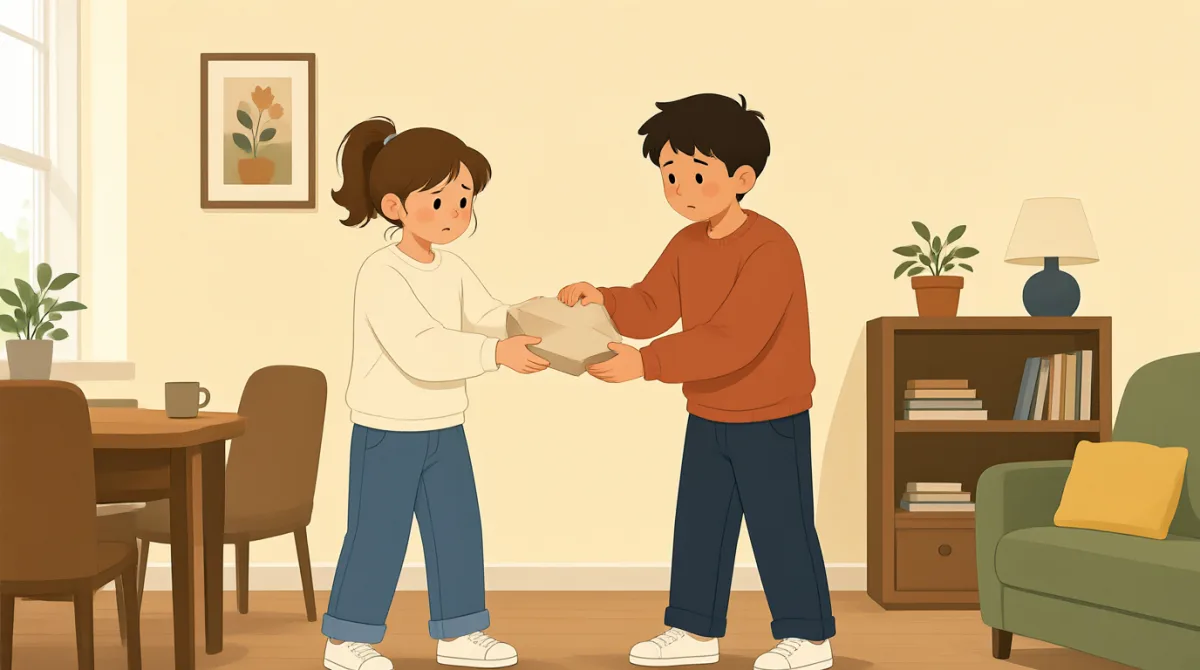

Alright, next step says we need to attach the side panel. Can you hold this end steady while I try to line up the holes?
अच्छा, अगले चरण में लिखा है कि हमें साइड पैनल लगाना है। जब तक मैं छेदों को मिलाने की कोशिश करता हूँ, क्या तुम इसका यह सिरा स्थिर पकड़ोगी?

Sure, I've got it. Just tell me if you need me to push it up or down a bit. Wait, should I be holding it like this, or more from the bottom?
हाँ, मैंने पकड़ लिया है। बस बताना, अगर तुम्हें इसे थोड़ा ऊपर या नीचे करवाना हो। रुको, क्या मुझे इसे ऐसे पकड़ना चाहिए या नीचे की तरफ़ से?
Uh, no, more from the bottom, so it doesn't tilt. And push it slightly towards you, I think. Hard to tell from my angle.
अरे, नहीं, नीचे की तरफ़ से पकड़ो, ताकि यह तिरछा न हो। और इसे थोड़ा अपनी तरफ़ खिसकाओ, शायद। इस तरफ़ से ठीक से समझ नहीं आ रहा।
Okay, like this? I'm pushing. Are you getting it? It feels a bit wobbly.
ठीक है, ऐसे? मैं धकेल रही हूँ। मिल रहा है? यह थोड़ा डगमगा रहा है।
No, not quite. It's still not lining up perfectly. Maybe if you lift your side just a tiny bit? And don't push, just hold it steady.
नहीं, अभी ठीक नहीं। यह अब भी पूरी तरह सीध में नहीं आ रहा। शायद तुम अपनी तरफ़ को बस थोड़ा-सा ऊपर उठाओ? और धकेलो मत, बस स्थिर पकड़ो।
Oh, you said push earlier! Okay, lifting a tiny bit and holding. How about now?
अरे, तुमने पहले धकेलने को कहा था! अच्छा, थोड़ा-सा ऊपर उठाकर पकड़े हुए हूँ। अब ठीक है?
My bad, sorry! Yes, that's it! Perfect. Now, hold it exactly like that while I try to get this screw in. Don't let go!
मेरी गलती, माफ़ करना! हाँ, बस यही! एकदम सही। अब इसे बिल्कुल ऐसे ही पकड़े रहना, जब तक मैं यह पेंच लगाने की कोशिश करता हूँ। छोड़ना मत!
Got it. See, teamwork! Even if we have a little moment of confusion.
समझ गई। देखा, यही है मिलकर काम करना! भले ही थोड़ी देर के लिए हम उलझ गए थे।
शब्दावली9
- attachजोड़ना
To join or fasten one part to another, like connecting a panel in furniture assembly. Useful when giving instructions for building or fixing things.
एक हिस्से को दूसरे हिस्से से जोड़ना या कसकर लगाना, जैसे फ़र्नीचर जोड़ते समय पैनल लगाना। चीज़ें बनाने या ठीक करने के निर्देश देते समय यह शब्द काम आता है।
- steadyस्थिर
Firm and not moving or shaking. In teamwork, you might say 'hold it steady' to keep something stable while working together.
जो मज़बूती से टिका हो और हिल या काँप न रहा हो। साथ मिलकर काम करते समय किसी चीज़ को स्थिर रखने के लिए आप कह सकते हैं 'hold it steady'।
- line upसीध में लाना
To align things in a straight line, often used for matching holes or parts. Practical for DIY tasks like assembling furniture.
चीज़ों को एक सीध में मिलाना। इसका इस्तेमाल अक्सर छेदों या हिस्सों को एक-दूसरे के सामने लाने के लिए होता है। फ़र्नीचर जोड़ने जैसे ख़ुद से किए जाने वाले कामों में यह बहुत उपयोगी है।
- tiltतिरछा होना
To lean or slope to one side. In this context, it means the piece might fall over if not held properly; common in physical tasks.
एक तरफ़ झुकना या ढलना। यहाँ इसका मतलब है कि अगर हिस्से को ठीक से न पकड़ा जाए तो वह गिर सकता है। यह शब्द शारीरिक मेहनत वाले कामों में आम है।
- wobblyडगमगाता हुआ
Unsteady or shaking, like something that's not secure. Useful to describe unstable objects during assembly or building.
अस्थिर या हिलता-काँपता हुआ, जैसे कोई चीज़ ठीक से कसी न हो। जोड़ने या बनाने के दौरान अस्थिर चीज़ों का वर्णन करने के लिए यह उपयोगी शब्द है।
- liftउठाना
To raise something up. In collaboration, it's a simple command like 'lift your side' to adjust position while working.
किसी चीज़ को ऊपर करना। साथ मिलकर काम करते समय, जगह बदलने के लिए 'lift your side' जैसा सरल निर्देश दिया जा सकता है।
- screw inपेंच कसना
To turn a screw clockwise to tighten it into place. Essential vocabulary for tools and assembly instructions.
पेंच को घड़ी की दिशा में घुमाकर उसकी जगह पर कसना। औज़ारों और जोड़ने के निर्देशों के लिए यह ज़रूरी शब्द है।
- my badमेरी गलती
Informal slang for 'my mistake' or 'I was wrong.' Used to apologize casually in everyday conversations, especially in teamwork.
'my mistake' या 'I was wrong' कहने का अनौपचारिक तरीका। रोज़मर्रा की बातचीत में, ख़ासकर साथ काम करते समय, अपनी गलती के लिए सहज ढंग से माफ़ी माँगने के लिए इसका इस्तेमाल होता है।
- teamworkमिलकर काम करना
Working together cooperatively to achieve a goal. Highlights collaboration, perfect for situations involving partners or groups.
किसी लक्ष्य को पाने के लिए सहयोग से काम करना। यह साथ मिलकर काम करने पर ज़ोर देता है और जोड़ी या समूह में किए जाने वाले कामों के लिए बिल्कुल उपयुक्त है।
मुख्य वाक्य8
- 1
Can you hold this end steady while I try to line up the holes?
जब तक मैं छेदों को सीध में लाने की कोशिश करता हूँ, क्या तुम इसका यह सिरा स्थिर पकड़ोगी?
This is a polite request for help using 'can you' for suggestions. Useful in teamwork to ask someone to assist with a specific action; note the use of 'while' to show simultaneous actions.
'Can you' का इस्तेमाल करके मदद माँगने का यह एक विनम्र तरीका है। साथ मिलकर काम करते समय किसी से कोई खास काम करने में मदद माँगने के लिए यह उपयोगी है। ध्यान दें कि 'while' दो कामों के एक ही समय पर होने को दिखाता है।
- 2
Just tell me if you need me to push it up or down a bit.
बस बताना, अगर तुम्हें इसे थोड़ा ऊपर या नीचे करवाना हो।
Offers flexibility in helping with 'if you need me to' and alternatives like 'up or down.' Great for collaborative tasks; 'a bit' softens the action to mean 'slightly.'
'if you need me to' के ज़रिए मदद के लिए तैयार रहने और 'up or down' जैसे विकल्प देने का तरीका। साथ मिलकर किए जाने वाले कामों के लिए बढ़िया है। 'a bit' का मतलब 'थोड़ा-सा' है और इससे निर्देश नरम लगता है।
- 3
More from the bottom, so it doesn't tilt.
नीचे की तरफ़ से थोड़ा ज़्यादा पकड़ो, ताकि यह तिरछा न हो।
Gives correction with 'more from' for position and 'so' for reason (purpose clause). Practical for adjusting during physical work; teaches cause-effect in instructions.
यहाँ 'more from' से जगह के बारे में सुधार बताया गया है और 'so' से वजह या उद्देश्य। शारीरिक काम करते समय चीज़ों की जगह ठीक करने के लिए यह व्यावहारिक वाक्य है। यह निर्देशों में कारण और परिणाम बताना भी सिखाता है।
- 4
It feels a bit wobbly.
यह थोड़ा डगमगा रहा है।
Describes a sensation using 'feels' in present tense. Useful to report problems in real-time during assembly; 'a bit' means 'slightly' to avoid sounding too negative.
'feels' का इस्तेमाल करके वर्तमान में महसूस हो रही बात बताई गई है। चीज़ें जोड़ते समय किसी समस्या को उसी समय बताने के लिए यह उपयोगी है। 'a bit' का मतलब 'थोड़ा-सा' है और इससे बात बहुत नकारात्मक नहीं लगती।
- 5
Maybe if you lift your side just a tiny bit?
शायद तुम अपनी तरफ़ को बस थोड़ा-सा ऊपर उठाओ?
Suggests a small adjustment with 'maybe if' for possibility and 'just a tiny bit' for minimal change. Ideal for gentle suggestions in teamwork; rising intonation for questions.
'maybe if' से संभावना जताई गई है और 'just a tiny bit' से बहुत छोटा बदलाव करने का सुझाव दिया गया है। साथ मिलकर काम करते समय नरमी से सुझाव देने के लिए यह बढ़िया है। सवालिया लहजे में बोलें।
- 6
Oh, you said push earlier!
अरे, तुमने पहले तो धकेलने को कहा था!
Points out a contradiction using 'oh' for realization and 'earlier' for past time. Helpful in resolving misunderstandings; exclamatory tone shows surprise.
'oh' से अचानक बात समझ में आने का भाव आता है और 'earlier' बीते समय की बात करता है। गलतफ़हमी सुलझाते समय यह उपयोगी है; विस्मयादिबोधक लहजा हैरानी दिखाता है।
- 7
My bad, sorry! Yes, that's it! Perfect.
मेरी गलती, माफ़ करना! हाँ, बस यही! एकदम सही।
Apologizes casually with 'my bad' and confirms success with short affirmations like 'that's it' and 'perfect.' Common in informal English for quick error correction and praise.
'my bad' कहकर अनौपचारिक ढंग से माफ़ी माँगी जाती है और 'that's it' तथा 'perfect' जैसे छोटे वाक्यांशों से सफलता की पुष्टि की जाती है। गलती जल्दी सुधारने और तारीफ़ करने के लिए अनौपचारिक अंग्रेज़ी में ये आम हैं।
- 8
See, teamwork! Even if we have a little moment of confusion.
देखा, यही है मिलकर काम करना! भले ही हम थोड़ी देर के लिए उलझ गए थे।
Celebrates cooperation with 'see' to point out evidence and 'even if' for concession (despite something). Useful to end positively; teaches handling minor conflicts in groups.
'see' से किसी बात का सबूत दिखाया जाता है और 'even if' का मतलब है कि किसी बात के बावजूद ऐसा है। सहयोग की तारीफ़ करते हुए बात को सकारात्मक ढंग से ख़त्म करने के लिए यह उपयोगी है। यह समूह में छोटे-मोटे मतभेद सँभालना भी सिखाता है।