Walking Her to the Door
เดินไปส่งเธอที่ประตู
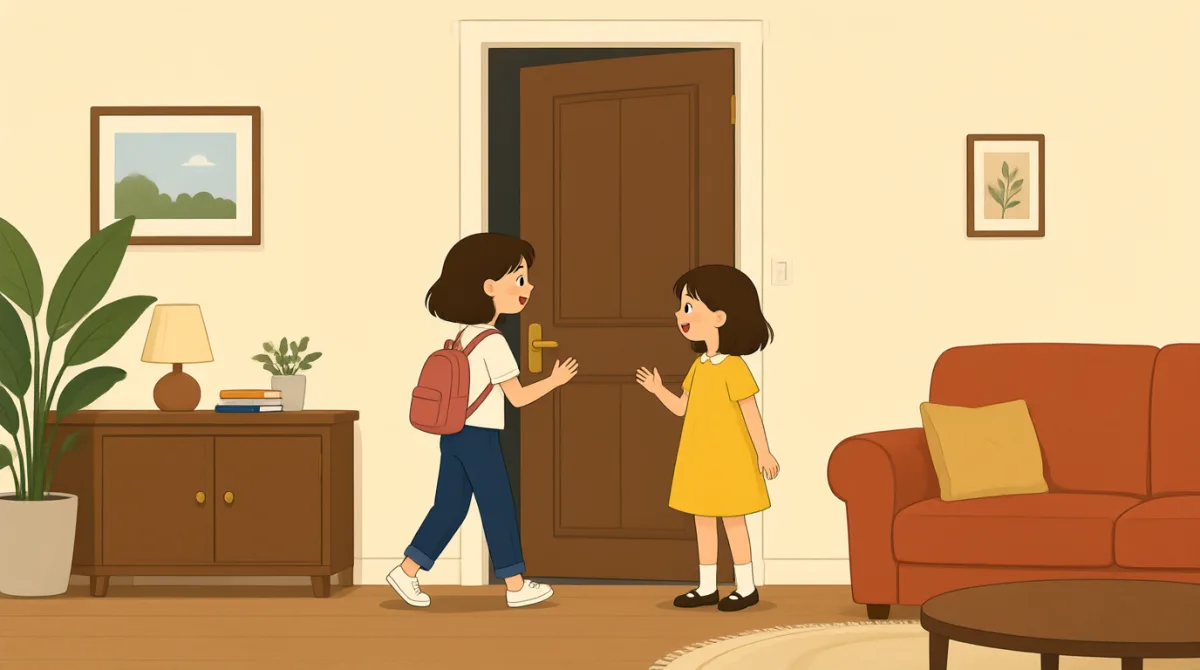
After their visit, Emma walks Mia to the door. They say goodbye and make plans to meet again.
หลังจากมาเยี่ยมกัน เอมมาเดินไปส่งมีอาที่ประตู ทั้งคู่บอกลากันและนัดพบกันอีกครั้ง
บทสนทนา7

It was nice having you here, Mia.
ดีใจนะที่เธอมา เอมมา

Thank you. I had a lovely time.
ขอบคุณนะ ฉันสนุกมากเลย
Let me walk you to the door.
เดี๋ยวฉันเดินไปส่งเธอที่ประตูนะ
Thanks. I’ll see you soon.
ขอบใจนะ แล้วเจอกันเร็ว ๆ นี้
How about next Saturday?
เสาร์หน้าเป็นไง?
That sounds great. See you then!
ดีเลย! แล้วเจอกันตอนนั้นนะ
Goodbye, Mia. Have a safe trip home.
ลาก่อนนะ มีอา เดินทางกลับบ้านดี ๆ นะ
คำศัพท์7
- It was nice having you here.ดีใจที่เธอมา
Say this to show that you enjoyed having someone visit your home.
พูดประโยคนี้เพื่อบอกว่าเราดีใจที่มีคนมาเยี่ยมบ้าน
- I had a lovely time.ฉันสนุกมากเลย
Say this to tell someone you enjoyed your visit.
พูดประโยคนี้เพื่อบอกใครสักคนว่าเราสนุกกับการมาเยี่ยม
- walk you to the doorเดินไปส่งที่ประตู
This means to go with someone to the door when they leave.
walk you to the door หมายถึงเดินไปกับใครสักคนจนถึงประตูตอนที่เขากำลังจะกลับ
- I’ll see you soon.แล้วเจอกันเร็ว ๆ นี้
Say this when you expect to meet someone again soon.
พูดประโยคนี้เมื่อคิดว่าจะได้เจออีกฝ่ายอีกในเร็ว ๆ นี้
- How about next Saturday?เสาร์หน้าเป็นไง?
Use this to suggest meeting on a particular day.
ใช้ประโยคนี้เพื่อชวนให้นัดพบกันในวันใดวันหนึ่ง
- That sounds great.ฟังดูดีเลย
Say this to show that you like someone’s idea or plan.
พูดประโยคนี้เพื่อแสดงว่าชอบความคิดหรือแผนของอีกฝ่าย
- Have a safe trip home.เดินทางกลับบ้านดี ๆ นะ
Say this to wish someone a safe journey home.
พูดประโยคนี้เพื่ออวยพรให้อีกฝ่ายเดินทางกลับบ้านอย่างปลอดภัย
ประโยคสำคัญ7
- 1
It was nice having you here, Mia.
ดีใจนะที่เธอมา เอมมา
Use this to warmly thank a guest as they leave. You can change the name to speak to someone else.
ใช้ประโยคนี้กล่าวขอบคุณแขกอย่างอบอุ่นตอนที่เขากำลังจะกลับ เปลี่ยนชื่อเป็นชื่อของคนที่เรากำลังพูดด้วยได้
- 2
Thank you. I had a lovely time.
ขอบคุณนะ ฉันสนุกมากเลย
Use this to thank your host and say you enjoyed your visit. You can say, “I had a lovely time” after a meal or event, too.
ใช้ประโยคนี้ขอบคุณเจ้าบ้านและบอกว่าเราสนุกกับการมาเยี่ยม นอกจากนี้ยังพูด “I had a lovely time” หลังมื้ออาหารหรือกิจกรรมต่าง ๆ ได้ด้วย
- 3
Let me walk you to the door.
เดี๋ยวฉันเดินไปส่งเธอที่ประตูนะ
Use this when you want to go with a guest as they leave. You can also say, “Let me walk you to the car.”
ใช้ประโยคนี้เมื่ออยากเดินไปส่งแขกตอนที่เขากำลังจะกลับ อีกประโยคที่ใช้ได้คือ “Let me walk you to the car.”
- 4
Thanks. I’ll see you soon.
ขอบใจนะ แล้วเจอกันเร็ว ๆ นี้
Use this to thank someone and say goodbye when you expect to meet again. Change “soon” to a time, such as “tomorrow.”
ใช้ประโยคนี้ขอบคุณและบอกลาเมื่อคิดว่าจะได้เจอกันอีก เปลี่ยน “soon” เป็นช่วงเวลาอื่นได้ เช่น “tomorrow.”
- 5
How about next Saturday?
เสาร์หน้าเป็นไง?
Use this to suggest a day to meet. Replace “next Saturday” with another day or time.
ใช้ประโยคนี้เพื่อเสนอวันนัดพบ เปลี่ยน “next Saturday” เป็นวันหรือเวลาอื่นได้
- 6
That sounds great.
ดีเลย!
Use this to accept an idea or plan in a friendly way. You can also say, “That sounds good.”
ใช้ประโยคนี้ตอบรับความคิดหรือแผนอย่างเป็นกันเอง อีกประโยคที่ใช้ได้คือ “That sounds good.”
- 7
Goodbye, Mia. Have a safe trip home.
ลาก่อนนะ มีอา เดินทางกลับบ้านดี ๆ นะ
Use this to say goodbye and wish someone well on the way home. Change the name to match the person you are speaking to.
ใช้ประโยคนี้เพื่อบอกลาและอวยพรให้อีกฝ่ายเดินทางกลับบ้านอย่างปลอดภัย เปลี่ยนชื่อให้ตรงกับคนที่เรากำลังพูดด้วย