Walking Her to the Door
문까지 배웅하기
After their visit, Emma walks Mia to the door. They say goodbye and make plans to meet again.
방문이 끝난 뒤, 에마가 미아를 문까지 배웅해요. 두 사람은 작별 인사를 나누고 다음에 다시 만날 약속을 해요.
대화7
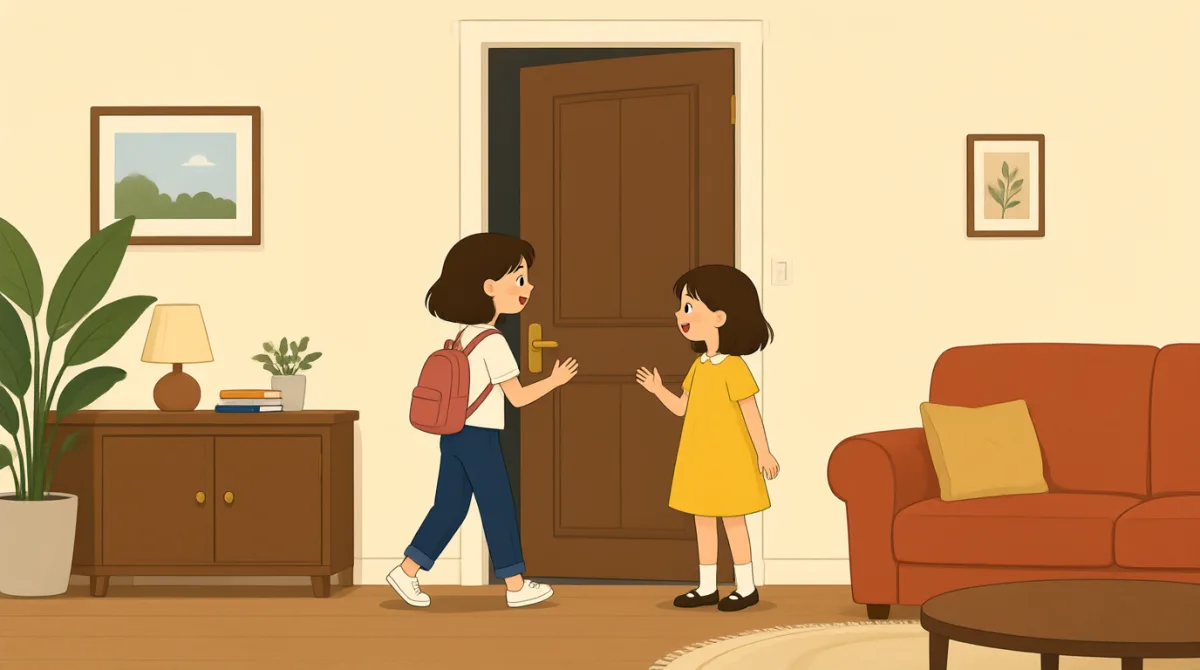

It was nice having you here, Mia.
미아, 와 줘서 정말 좋았어.

Thank you. I had a lovely time.
고마워. 정말 즐거웠어.
Let me walk you to the door.
문까지 배웅해 줄게.
Thanks. I’ll see you soon.
고마워. 곧 보자.
How about next Saturday?
다음 주 토요일은 어때?
That sounds great. See you then!
좋아! 그때 보자!
Goodbye, Mia. Have a safe trip home.
잘 가, 미아. 집에 조심히 가.
어휘7
- It was nice having you here.와 줘서 정말 좋았어.
Say this to show that you enjoyed having someone visit your home.
누군가가 집에 방문한 게 즐거웠다고 말할 때 써요.
- I had a lovely time.정말 즐거웠어.
Say this to tell someone you enjoyed your visit.
방문이 즐거웠다고 말할 때 써요.
- walk you to the door문까지 배웅하다
This means to go with someone to the door when they leave.
누군가가 떠날 때 문까지 함께 가 준다는 뜻이에요.
- I’ll see you soon.곧 보자.
Say this when you expect to meet someone again soon.
누군가를 곧 다시 만날 것 같을 때 이렇게 말해요.
- How about next Saturday?다음 주 토요일은 어때?
Use this to suggest meeting on a particular day.
특정한 날에 만나자고 제안할 때 써요.
- That sounds great.좋아.
Say this to show that you like someone’s idea or plan.
상대방의 생각이나 계획이 마음에 든다고 말할 때 써요.
- Have a safe trip home.집에 조심히 가.
Say this to wish someone a safe journey home.
누군가가 집에 안전하게 가길 바랄 때 하는 말이에요.
핵심 문장7
- 1
It was nice having you here, Mia.
미아, 와 줘서 정말 좋았어.
Use this to warmly thank a guest as they leave. You can change the name to speak to someone else.
손님이 떠날 때 따뜻하게 고마움을 전하는 표현이에요. 다른 사람에게 말할 때는 이름을 바꾸면 돼요.
- 2
Thank you. I had a lovely time.
고마워. 정말 즐거웠어.
Use this to thank your host and say you enjoyed your visit. You can say, “I had a lovely time” after a meal or event, too.
초대한 사람에게 고맙다고 하고 방문이 즐거웠다고 말할 때 써요. 식사나 행사 후에도 “I had a lovely time”이라고 할 수 있어요.
- 3
Let me walk you to the door.
문까지 배웅해 줄게.
Use this when you want to go with a guest as they leave. You can also say, “Let me walk you to the car.”
손님이 떠날 때 함께 나가고 싶다면 이 표현을 써요. “Let me walk you to the car”라고도 할 수 있어요.
- 4
Thanks. I’ll see you soon.
고마워. 곧 보자.
Use this to thank someone and say goodbye when you expect to meet again. Change “soon” to a time, such as “tomorrow.”
다시 만날 예정인 사람에게 고맙다고 하고 작별 인사를 할 때 써요. “soon” 대신 “tomorrow”처럼 시간을 넣어도 돼요.
- 5
How about next Saturday?
다음 주 토요일은 어때?
Use this to suggest a day to meet. Replace “next Saturday” with another day or time.
만날 날짜를 제안할 때 써요. “next Saturday” 대신 다른 요일이나 시간을 넣으면 돼요.
- 6
That sounds great.
좋아.
Use this to accept an idea or plan in a friendly way. You can also say, “That sounds good.”
상대방의 제안이나 계획을 친근하게 받아들일 때 써요. “That sounds good”이라고 해도 돼요.
- 7
Goodbye, Mia. Have a safe trip home.
잘 가, 미아. 집에 조심히 가.
Use this to say goodbye and wish someone well on the way home. Change the name to match the person you are speaking to.
작별 인사를 하며 집에 가는 길이 안전하길 바랄 때 써요. 말하는 상대에 맞춰 이름을 바꾸면 돼요.