Arriving at the Door
มาถึงหน้าประตู
Emma arrives at Mia's new apartment. Mia welcomes her inside.
เอ็มมามาถึงอพาร์ตเมนต์ใหม่ของมีอา มีอาเชิญเธอเข้ามาข้างใน
บทสนทนา8
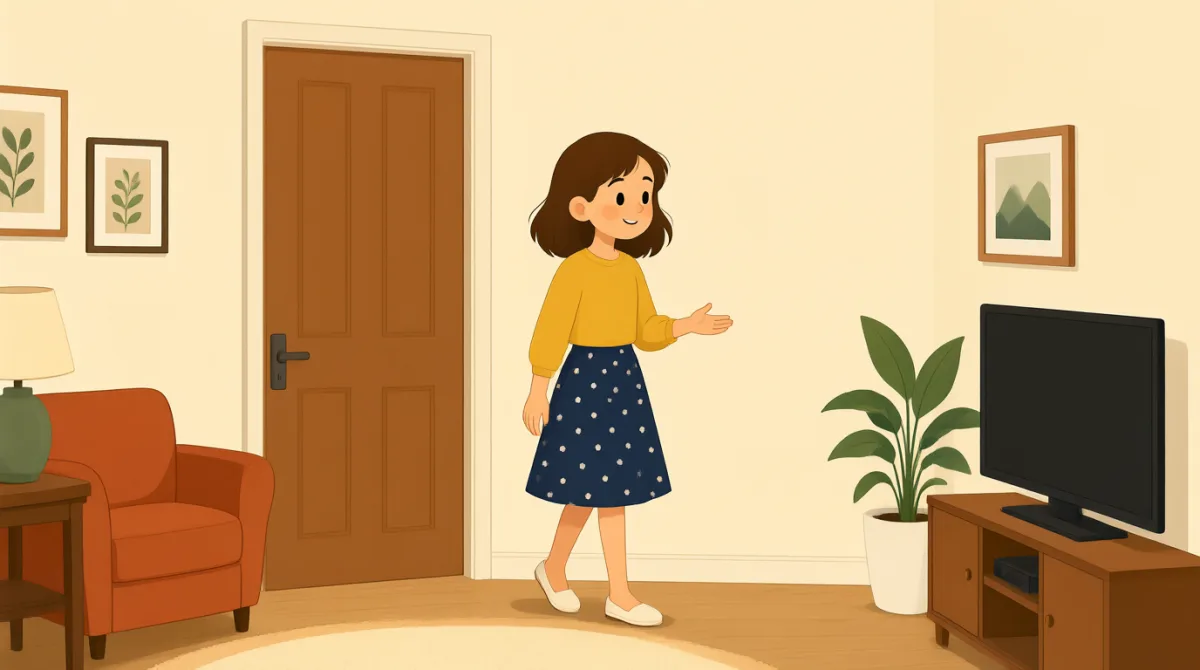

Hi, Mia! I'm here.
หวัดดี มีอา! เรามาถึงแล้วนะ

Hi, Emma! Welcome to my new home.
หวัดดี เอ็มมา! ยินดีต้อนรับสู่บ้านใหม่ของเรานะ
Thanks! Your building is nice.
ขอบใจนะ ตึกของเธอสวยดีจัง
Thanks. Come on in.
ขอบใจ เข้ามาเลย
Wow, it looks great!
ว้าว ดูดีมากเลย!
I'm glad you like it. How was your trip?
ดีใจนะที่เธอชอบ แล้วเดินทางมาเป็นยังไงบ้าง
It was good. Is this the front door?
ก็ดีนะ นี่คือประตูหน้าบ้านใช่ไหม
Yes, it is. Please take off your shoes.
ใช่ ถอดรองเท้าก่อนนะ
คำศัพท์7
- I'm here.มาถึงแล้ว
Say this when you arrive at a place. You can use it to let someone know you have arrived.
พูดประโยคนี้เมื่อมาถึงสถานที่แห่งหนึ่ง ใช้บอกให้อีกคนรู้ว่าเรามาถึงแล้ว
- Welcome to my new home.ยินดีต้อนรับสู่บ้านใหม่ของฉัน
Say this to greet someone at your home. You can use “Welcome to my new [place]” for a new apartment or house.
ใช้ประโยค “Welcome to my new home” (ยินดีต้อนรับสู่บ้านใหม่ของฉัน) ทักทายคนที่มาบ้านได้ ส่วน “Welcome to my new [place]” ใช้ต้อนรับคนสู่ที่อยู่ใหม่ เช่น อพาร์ตเมนต์หรือบ้าน
- Come on in.เข้ามาเลย
This is a friendly way to invite someone inside. You can say it when a guest arrives at your door.
นี่เป็นวิธีชวนใครสักคนเข้ามาข้างในอย่างเป็นกันเอง พูดได้เมื่อแขกมาถึงหน้าประตู
- It looks great!ดูดีมากเลย!
Use this to say that something looks very nice. You can use it to compliment a home, room, or building.
ใช้พูดว่าสิ่งหนึ่งดูสวยหรือดีมาก ใช้ชมบ้าน ห้อง หรือตึกก็ได้
- I'm glad you like it.ดีใจนะที่เธอชอบ
Say this when someone likes something that belongs to you. You can use “I'm glad you like [it/them]” to respond to a compliment.
พูดประโยคนี้เมื่อมีคนชอบสิ่งของของเรา ใช้ “I'm glad you like [it/them]” ตอบรับคำชมได้
- How was your trip?เดินทางมาเป็นยังไงบ้าง
Use this to ask someone if their journey was good. You can ask it when a guest arrives after traveling.
ใช้ถามว่าอีกฝ่ายเดินทางมาเป็นอย่างไรบ้าง พูดได้เมื่อแขกมาถึงหลังจากเดินทางมา
- take off your shoesถอดรองเท้า
This means to remove your shoes. You can use it when asking someone to remove their shoes indoors.
หมายถึงเอารองเท้าออก ใช้ขอให้ใครสักคนถอดรองเท้าเมื่อเข้ามาในบ้านได้
ประโยคสำคัญ8
- 1
Hi, Mia! I'm here.
หวัดดี มีอา! เรามาถึงแล้วนะ
This is a simple way to greet someone and say you have arrived. Replace “Mia” with the person's name.
ประโยคนี้ใช้ทักทายและบอกว่ามาถึงแล้ว เปลี่ยน “Mia” เป็นชื่อของคนที่เราทักได้
- 2
Welcome to my new home.
ยินดีต้อนรับสู่บ้านใหม่ของฉัน
Use this to welcome a guest into your home. You can say “Welcome to my new apartment” to name the place.
ใช้ต้อนรับแขกเข้าบ้าน จะพูดว่า “Welcome to my new apartment” เพื่อระบุสถานที่ก็ได้
- 3
Your building is nice.
ตึกของเธอสวยดีจัง
This is a simple compliment about someone's building. You can replace “building” with “home,” “room,” or another place.
ประโยคนี้ใช้ชมตึกของใครสักคน เปลี่ยน “building” เป็น “home,” “room” หรือสถานที่อื่นได้
- 4
Come on in.
เข้ามาเลย
This is a friendly invitation to enter. Say it when someone is standing at your door.
เป็นคำชวนให้เข้ามาข้างในอย่างเป็นกันเอง พูดได้เมื่อมีคนยืนอยู่หน้าประตูบ้าน
- 5
Wow, it looks great!
ว้าว ดูดีมากเลย!
Use this to show that you like how a place looks. You can also use it to compliment an object or a room.
ใช้แสดงว่าชอบรูปลักษณ์ของสถานที่ จะใช้ชมสิ่งของหรือห้องก็ได้
- 6
How was your trip?
เดินทางมาเป็นยังไงบ้าง
This is a friendly question to ask after someone travels. You can answer with a short phrase such as “It was good.”
เป็นคำถามอย่างเป็นกันเองที่ใช้ถามหลังจากใครสักคนเดินทางมา ตอบสั้น ๆ ได้ เช่น “It was good.” (ก็ดีนะ)
- 7
It was good.
ก็ดีนะ
Use this to give a simple positive answer about a trip or experience. You can change “good” to “great” or “okay.”
ใช้ตอบในแง่บวกแบบง่าย ๆ เกี่ยวกับการเดินทางหรือประสบการณ์ เปลี่ยน “good” เป็น “great” หรือ “okay” ได้
- 8
Please take off your shoes.
กรุณาถอดรองเท้าด้วยนะ
This is a polite way to ask someone to remove their shoes. You can use “Please” to make a request sound friendly.
ประโยคนี้ใช้ขอให้ใครสักคนถอดรองเท้าอย่างสุภาพ การเติม “Please” ทำให้คำขอฟังเป็นมิตรมากขึ้น