Arriving at the Door
현관에 도착하기
Emma arrives at Mia's new apartment. Mia welcomes her inside.
에마가 미아의 새 아파트에 도착해요. 미아가 에마를 반갑게 맞아 안으로 초대해요.
대화8
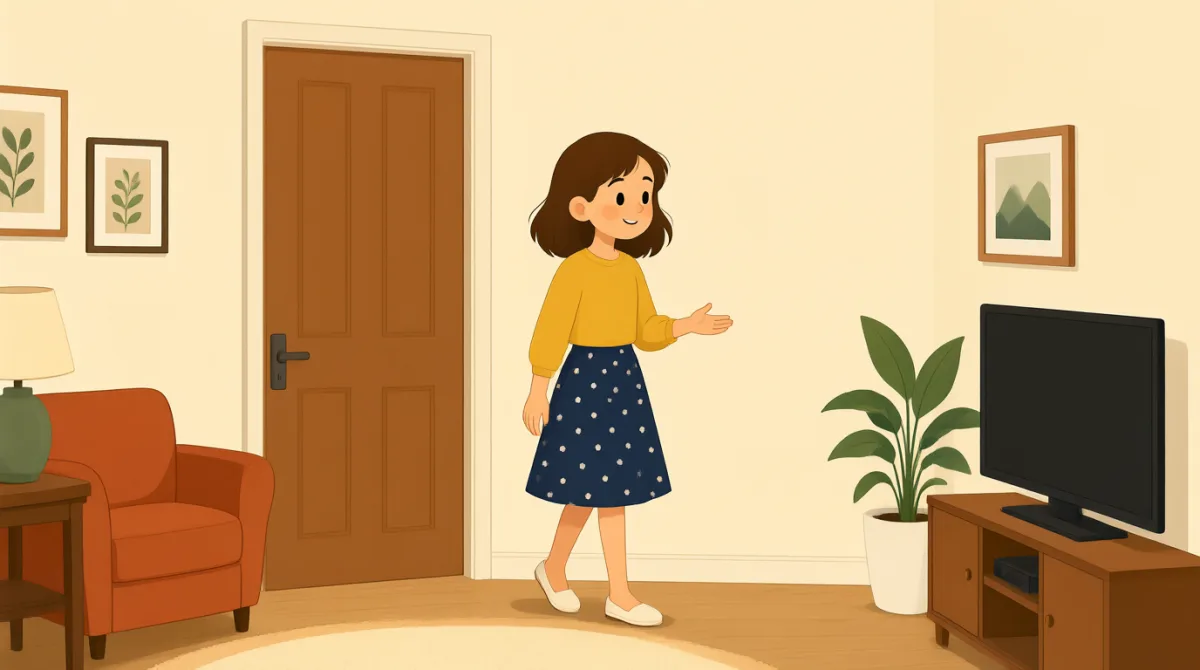

Hi, Mia! I'm here.
안녕, 미아! 나 왔어.

Hi, Emma! Welcome to my new home.
안녕, 에마! 우리 새집에 온 걸 환영해.
Thanks! Your building is nice.
고마워! 건물이 멋지다.
Thanks. Come on in.
고마워. 어서 들어와.
Wow, it looks great!
와, 정말 멋지다!
I'm glad you like it. How was your trip?
마음에 든다니 기뻐. 오는 길은 어땠어?
It was good. Is this the front door?
좋았어. 여기가 현관문이야?
Yes, it is. Please take off your shoes.
응, 맞아. 신발 벗어 줘.
어휘7
- I'm here.나 왔어.
Say this when you arrive at a place. You can use it to let someone know you have arrived.
어떤 장소에 도착했을 때 이렇게 말해요. 상대방에게 도착했다는 걸 알려 줄 수 있어요.
- Welcome to my new home.우리 새집에 온 걸 환영해.
Say this to greet someone at your home. You can use “Welcome to my new [place]” for a new apartment or house.
집에 온 사람을 반갑게 맞이할 때 쓰는 표현이에요. 새 아파트나 집에 초대할 때는 “Welcome to my new [place]”라고 말할 수 있어요.
- Come on in.어서 들어와.
This is a friendly way to invite someone inside. You can say it when a guest arrives at your door.
누군가를 안으로 초대하는 친근한 표현이에요. 손님이 집 앞에 도착했을 때 말할 수 있어요.
- It looks great!정말 멋져 보여!
Use this to say that something looks very nice. You can use it to compliment a home, room, or building.
무언가가 아주 보기 좋다고 말할 때 써요. 집이나 방, 건물을 칭찬할 때 사용할 수 있어요.
- I'm glad you like it.마음에 든다니 기뻐.
Say this when someone likes something that belongs to you. You can use “I'm glad you like [it/them]” to respond to a compliment.
상대방이 내 물건이나 공간을 마음에 들어 할 때 하는 말이에요. 칭찬을 들었을 때 “I'm glad you like [it/them]”이라고 답할 수 있어요.
- How was your trip?오는 길은 어땠어?
Use this to ask someone if their journey was good. You can ask it when a guest arrives after traveling.
상대방의 여정이 괜찮았는지 물어볼 때 써요. 여행이나 이동을 마치고 손님이 도착했을 때 물어볼 수 있어요.
- take off your shoes신발을 벗다
This means to remove your shoes. You can use it when asking someone to remove their shoes indoors.
신발을 벗는다는 뜻이에요. 실내에서 신발을 벗어 달라고 할 때 쓸 수 있어요.
핵심 문장8
- 1
Hi, Mia! I'm here.
안녕, 미아! 나 왔어.
This is a simple way to greet someone and say you have arrived. Replace “Mia” with the person's name.
상대방에게 인사하면서 도착했다고 알리는 간단한 표현이에요. “Mia” 대신 상대방의 이름을 넣어 말해 보세요.
- 2
Welcome to my new home.
우리 새집에 온 걸 환영해.
Use this to welcome a guest into your home. You can say “Welcome to my new apartment” to name the place.
손님을 집에 맞이할 때 쓰는 표현이에요. 장소를 구체적으로 말하고 싶다면 “Welcome to my new apartment”라고 할 수 있어요.
- 3
Your building is nice.
네 건물이 멋지다.
This is a simple compliment about someone's building. You can replace “building” with “home,” “room,” or another place.
상대방의 건물을 간단하게 칭찬하는 말이에요. “building” 대신 “home”, “room”이나 다른 장소를 넣을 수 있어요.
- 4
Come on in.
어서 들어와.
This is a friendly invitation to enter. Say it when someone is standing at your door.
안으로 들어오라고 친근하게 권하는 표현이에요. 누군가 문 앞에 서 있을 때 말해 보세요.
- 5
Wow, it looks great!
와, 정말 멋져 보여!
Use this to show that you like how a place looks. You can also use it to compliment an object or a room.
장소의 모습이 마음에 든다는 걸 표현할 때 써요. 물건이나 방을 칭찬할 때도 사용할 수 있어요.
- 6
How was your trip?
오는 길은 어땠어?
This is a friendly question to ask after someone travels. You can answer with a short phrase such as “It was good.”
누군가 이동한 뒤에 친근하게 물어볼 수 있는 질문이에요. “It was good.”처럼 짧게 답할 수 있어요.
- 7
It was good.
좋았어.
Use this to give a simple positive answer about a trip or experience. You can change “good” to “great” or “okay.”
여행이나 경험이 괜찮았다고 간단히 긍정적으로 답할 때 써요. “good” 대신 “great”나 “okay”를 넣을 수도 있어요.
- 8
Please take off your shoes.
신발 벗어 줘.
This is a polite way to ask someone to remove their shoes. You can use “Please” to make a request sound friendly.
상대방에게 신발을 벗어 달라고 정중하게 부탁하는 표현이에요. “Please”를 쓰면 부탁이 더 친근하게 들려요.