A Friend Passes a Test
เพื่อนสอบผ่าน
Leo tells Jack that he passed his test. Jack congratulates him and asks how he feels.
ลีโอบอกแจ็คว่าเขาสอบผ่าน แจ็คแสดงความยินดีและถามว่าเขารู้สึกอย่างไร
บทสนทนา6
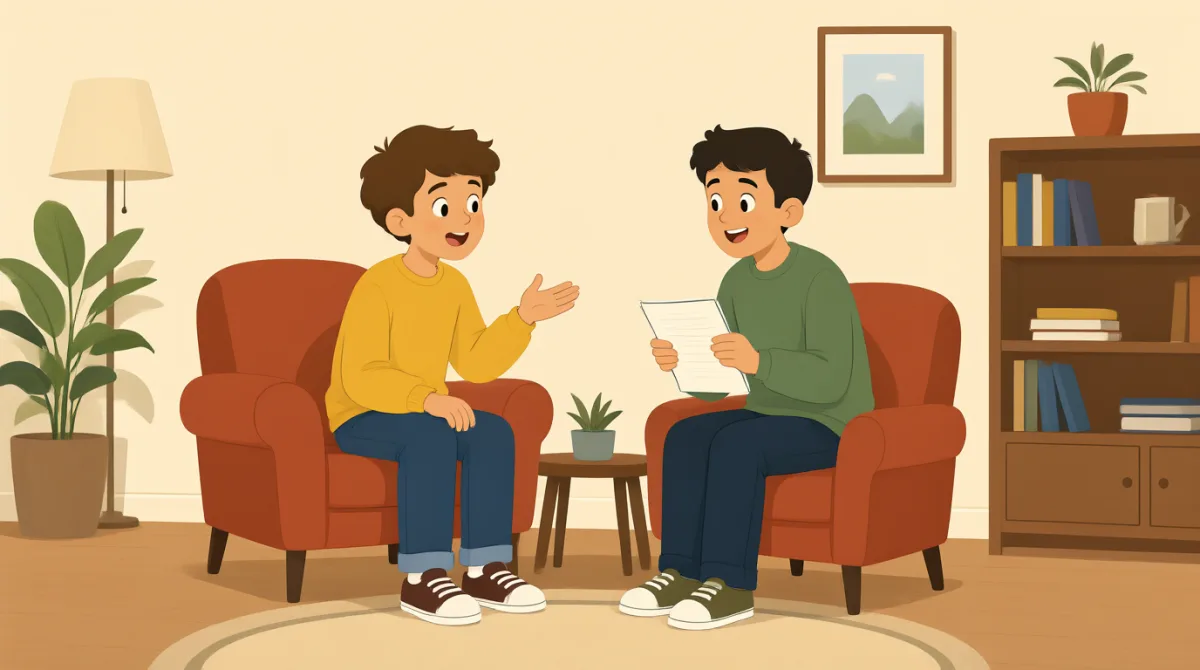

Jack, I passed my test!
แจ็ค ฉันสอบผ่านแล้ว!

That’s great! Congratulations, Leo!
เยี่ยมเลย! ยินดีด้วยนะ ลีโอ!
Thanks! I feel really happy.
ขอบใจนะ! ฉันมีความสุขมากเลย
How do you feel now?
ตอนนี้รู้สึกยังไงบ้าง?
I feel good. The test was hard.
ฉันรู้สึกดีนะ ข้อสอบยากมาก
You did it! Let’s celebrate today.
นายทำได้แล้ว! วันนี้ไปฉลองกันเถอะ
คำศัพท์8
- passed my testสอบผ่าน
This means I did well enough on a test. Use it to tell someone you succeeded.
หมายถึงทำข้อสอบได้คะแนนผ่าน ใช้บอกใครสักคนว่าเราสอบผ่าน
- That’s great!เยี่ยมเลย!
This is a happy way to show that you like someone’s good news. You can say it when a friend shares something positive.
เป็นคำพูดดีใจที่ได้ยินข่าวดีจากใครสักคน พูดได้เมื่อเพื่อนเล่าเรื่องดี ๆ ให้ฟัง
- Congratulationsยินดีด้วย
This is something you say to someone who has done well. You can use it for a test, a new job, or other good news.
พูดกับคนที่ทำอะไรได้ดี ใช้แสดงความยินดีได้ทั้งเรื่องสอบ งานใหม่ หรือข่าวดีอื่น ๆ
- I feel really happyฉันมีความสุขมาก
This tells someone you are very happy. Use “I feel really [feeling]” to describe your feelings.
ใช้บอกใครสักคนว่าเรามีความสุขมาก รูปแบบ “I feel really [feeling]” ใช้บอกความรู้สึกของเราได้
- How do you feel now?ตอนนี้รู้สึกยังไงบ้าง?
This is a way to ask about someone’s feelings. You can use it after something important happens.
เป็นวิธีถามความรู้สึกของใครสักคน ใช้ถามหลังจากเกิดเรื่องสำคัญได้
- I feel goodฉันรู้สึกดี
This is a simple way to say you feel well or happy. You can use it to answer a question about how you feel.
เป็นวิธีง่าย ๆ ที่จะบอกว่ารู้สึกสบายดีหรือมีความสุข ใช้ตอบคำถามเกี่ยวกับความรู้สึกได้
- You did it!นายทำได้แล้ว!
This means someone succeeded. Say it to encourage or praise a person.
หมายถึงมีใครสักคนทำสำเร็จ ใช้พูดให้กำลังใจหรือชมอีกฝ่ายได้
- Let’s celebrate todayวันนี้ไปฉลองกันเถอะ
This is a suggestion to do something fun together. Use “Let’s” to invite someone to do an activity.
เป็นการชวนให้ทำกิจกรรมสนุก ๆ ด้วยกัน ใช้ “Let’s” เพื่อชวนใครสักคนทำกิจกรรมได้
ประโยคสำคัญ8
- 1
Jack, I passed my test!
แจ็ค ฉันสอบผ่านแล้ว!
Use this sentence to share good news about a test. You can change “my test” to another thing you succeeded at.
ใช้ประโยคนี้บอกข่าวดีเรื่องการสอบ เปลี่ยน “my test” เป็นสิ่งอื่นที่เราทำสำเร็จก็ได้
- 2
That’s great!
เยี่ยมเลย!
This is a short, friendly response to good news. Use it to show that you are happy for someone.
เป็นคำตอบสั้น ๆ แบบเป็นกันเองเมื่อได้ยินข่าวดี ใช้แสดงว่าเราดีใจกับอีกฝ่ายได้
- 3
Congratulations, Leo!
ยินดีด้วยนะ ลีโอ!
Say this to someone who has done something well. You can use the person’s name at the end.
พูดกับคนที่ทำอะไรได้ดี จะใส่ชื่อของคนนั้นไว้ท้ายประโยคก็ได้
- 4
Thanks! I feel really happy.
ขอบใจนะ! ฉันมีความสุขมากเลย
This sentence thanks someone and tells them how you feel. You can use “I feel really…” with a feeling word.
ประโยคนี้ใช้ขอบคุณใครสักคนและบอกความรู้สึกของเรา ใช้ “I feel really…” ตามด้วยคำบอกความรู้สึกได้
- 5
How do you feel now?
ตอนนี้รู้สึกยังไงบ้าง?
Use this question to ask about someone’s feelings after an event. Change “now” to “today” or another time if needed.
ใช้คำถามนี้ถามความรู้สึกของใครสักคนหลังเกิดเหตุการณ์หนึ่ง เปลี่ยน “now” เป็น “today” หรือช่วงเวลาอื่นได้ตามต้องการ
- 6
I feel good.
ฉันรู้สึกดี
This is a simple answer to a question about how you feel. You can replace “good” with another feeling word.
เป็นคำตอบง่าย ๆ เมื่อมีคนถามว่าเรารู้สึกอย่างไร เปลี่ยน “good” เป็นคำบอกความรู้สึกอื่นได้
- 7
The test was hard.
ข้อสอบยากมาก
Use this sentence to say that a test was difficult. You can replace “The test” with another thing, like “The class.”
ใช้ประโยคนี้บอกว่าข้อสอบยาก เปลี่ยน “The test” เป็นอย่างอื่นได้ เช่น “The class”
- 8
Let’s celebrate today.
วันนี้ไปฉลองกันเถอะ
Use this sentence to suggest doing something fun together. You can replace “celebrate” with another activity, such as “eat” or “play.”
ใช้ประโยคนี้ชวนกันทำอะไรสนุก ๆ เปลี่ยน “celebrate” เป็นกิจกรรมอื่นได้ เช่น “eat” หรือ “play”