Taking Out the Trash Together
Wspólne wynoszenie śmieci
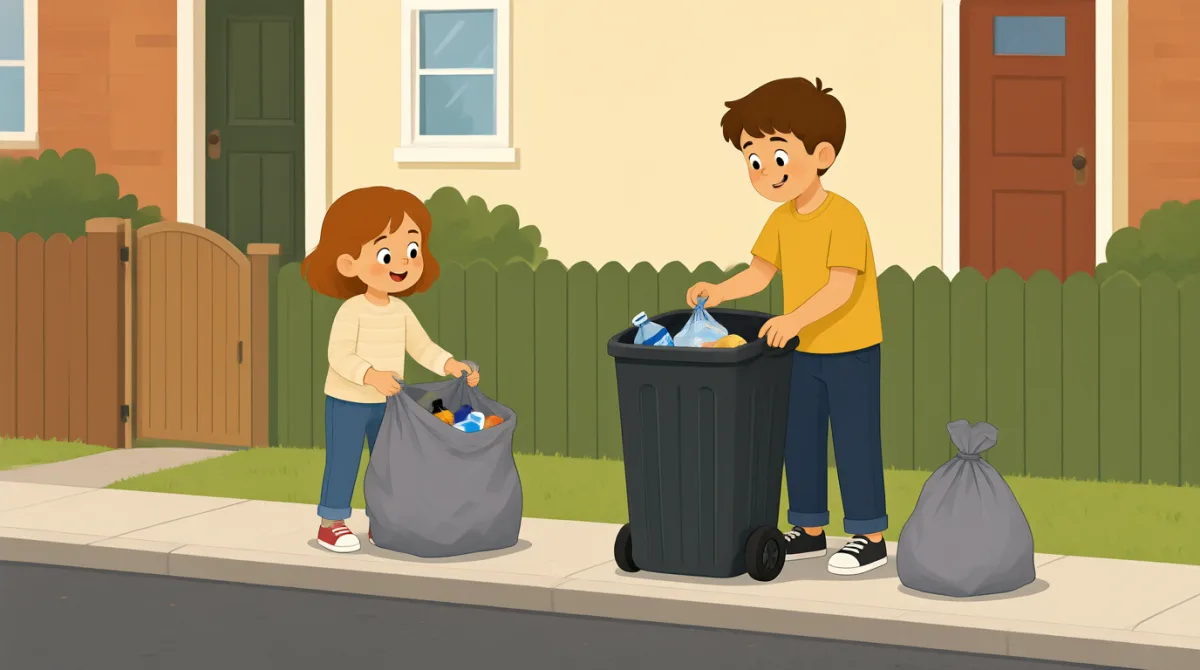
Leo and Jack take the trash out together. They sort the bags and put them by the curb.
Leo i Jack wspólnie wynoszą śmieci. Sortują worki i stawiają je przy krawężniku.
Dialog7

I have two bags. Which one goes out first?
Mam dwa worki. Który wynieść najpierw?

The blue bag is recycling. The black one is trash.
Niebieski worek jest na recykling, a czarny na śmieci.
Is this can recycling?
Czy tę puszkę wrzucić do recyklingu?
Yes, put it in the blue bag.
Tak, wrzuć ją do niebieskiego worka.
Okay. Let’s take them to the curb.
Dobra. Zanieśmy je do krawężnika.
Sure. Put the bags by the curb, not in the street.
Jasne. Postaw worki przy krawężniku, nie na ulicy.
Done! That was easy.
Gotowe! To było łatwe.
Słownictwo8
- bagsworki
Bags are containers for holding things. Here, they hold trash and recycling.
Worki to pojemniki do przechowywania różnych rzeczy. Tutaj służą do wyrzucania śmieci i odpadów do recyklingu.
- goes out firstwynieść najpierw
This asks which bag should be taken outside before the other one.
To pytanie dotyczy tego, który worek należy wynieść na zewnątrz jako pierwszy.
- recyclingrecykling
Recycling is used paper, cans, or other things that can be made into something new.
Recykling to zużyty papier, puszki i inne rzeczy, które można przetworzyć na coś nowego.
- trashśmieci
Trash is something people throw away.
Śmieci to rzeczy, które ludzie wyrzucają.
- put it inwrzucić do
Use this phrase to say where something should go. For example, put a can in a bag.
Tego wyrażenia używamy, żeby powiedzieć, gdzie coś powinno trafić. Na przykład: wrzuć puszkę do worka.
- curbkrawężnik
The curb is the raised edge of the street, beside the sidewalk.
Krawężnik to podwyższona krawędź jezdni, znajdująca się obok chodnika.
- in the streetna ulicy
This means on the part of the road where cars drive.
To znaczy na tej części drogi, po której jeżdżą samochody.
- Done!Gotowe!
Say “Done!” when you have finished a task.
Powiedz „Gotowe!”, gdy skończysz jakieś zadanie.
Kluczowe zdania8
- 1
I have two bags.
Mam dwa worki.
Use this simple sentence to say how many bags or other items you have. Change “two bags” to another number and item.
Użyj tego prostego zdania, żeby powiedzieć, ile masz worków lub innych rzeczy. Zmień “two bags” na inną liczbę i nazwę przedmiotu.
- 2
Which one goes out first?
Który wynieść najpierw?
Use this question when you need to know which item to do or take out before the others. Change “one” to name the item if needed.
Użyj tego pytania, gdy chcesz wiedzieć, którą rzecz należy najpierw zrobić lub wynieść. W razie potrzeby zamiast “one” podaj nazwę rzeczy.
- 3
The blue bag is recycling.
Niebieski worek jest na recykling.
This sentence tells someone what belongs in a particular bag. You can change “blue bag” and “recycling” to name other items and categories.
Tym zdaniem mówisz komuś, co należy wrzucać do danego worka. Możesz zmienić “blue bag” i “recycling”, żeby podać inne przedmioty i kategorie.
- 4
Is this can recycling?
Czy tę puszkę wrzucić do recyklingu?
Use this question to check where an item belongs. Replace “can” with another item, such as “bottle.”
Użyj tego pytania, żeby sprawdzić, gdzie powinna trafić dana rzecz. Zamiast “can” podaj inny przedmiot, na przykład “bottle.”
- 5
Yes, put it in the blue bag.
Tak, wrzuć ją do niebieskiego worka.
This gives a simple instruction about where to place something. Change “the blue bag” to another place or container.
To prosta instrukcja, która mówi, gdzie coś umieścić. Zmień “the blue bag” na inne miejsce lub pojemnik.
- 6
Let’s take them to the curb.
Zanieśmy je do krawężnika.
Use “Let’s” to suggest doing something together. Replace “take them to the curb” with another action.
Użyj “Let’s”, żeby zaproponować wspólne zrobienie czegoś. Zamiast “take them to the curb” podaj inną czynność.
- 7
Put the bags by the curb, not in the street.
Postaw worki przy krawężniku, nie na ulicy.
This sentence gives an instruction and says where not to put something. Use “not” to make a clear warning.
To zdanie zawiera polecenie i wskazuje, gdzie czegoś nie stawiać. Użyj “not”, żeby jasno wyrazić ostrzeżenie.
- 8
That was easy.
To było łatwe.
Say this after a task that did not take much effort. You can use it to share how an activity felt.
Powiedz tak po wykonaniu zadania, które nie wymagało dużego wysiłku. Możesz użyć tego zdania, żeby opisać, jakie wrażenie zrobiła na tobie dana czynność.