Taking Out the Trash Together
إخراج القمامة معًا
Leo and Jack take the trash out together. They sort the bags and put them by the curb.
يُخرج ليو وجاك القمامة معًا. يفرزان الأكياس ويضعانها عند حافة الرصيف.
حوار7
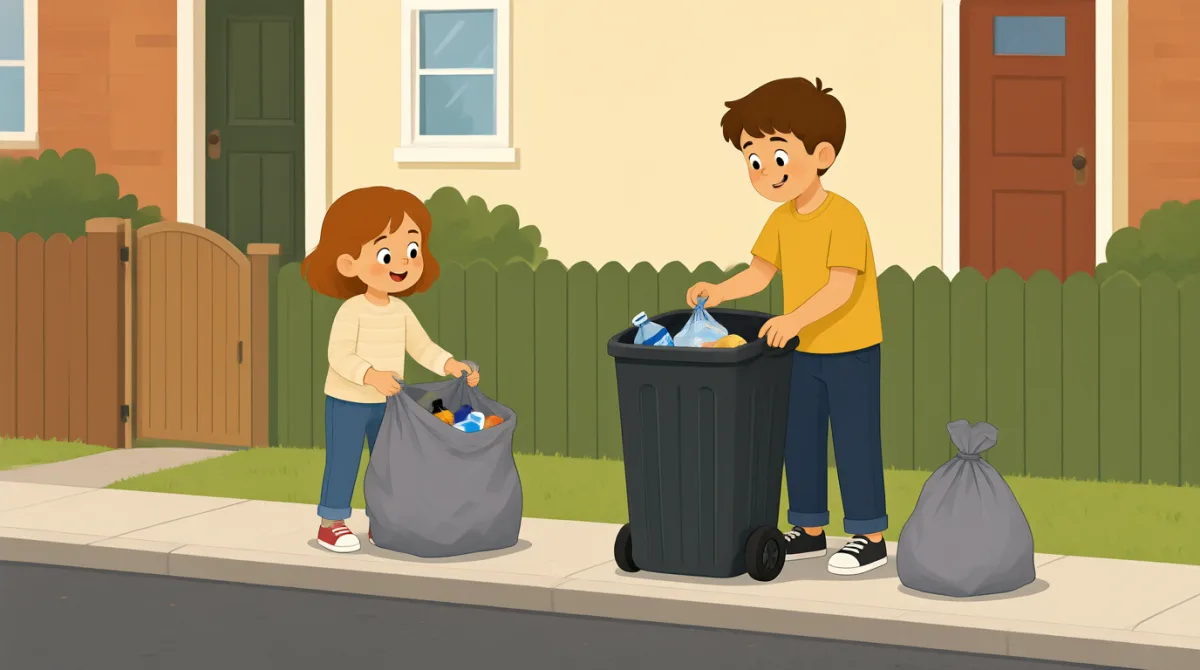

I have two bags. Which one goes out first?
لديّ كيسان. أيّهما نُخرج أولًا؟

The blue bag is recycling. The black one is trash.
الكيس الأزرق لإعادة التدوير، والأسود للقمامة.
Is this can recycling?
هل هذه العلبة لإعادة التدوير؟
Yes, put it in the blue bag.
نعم، ضعها في الكيس الأزرق.
Okay. Let’s take them to the curb.
حسنًا. لنأخذهما إلى حافة الرصيف.
Sure. Put the bags by the curb, not in the street.
بالتأكيد. ضع الأكياس عند حافة الرصيف، لا في الشارع.
Done! That was easy.
انتهينا! كان ذلك سهلًا.
المفردات8
- bagsأكياس
Bags are containers for holding things. Here, they hold trash and recycling.
الأكياس حاويات تُستخدم لحمل الأشياء. وهنا تُستخدم لحمل القمامة والمواد القابلة لإعادة التدوير.
- goes out firstيُخرج أولًا
This asks which bag should be taken outside before the other one.
يُستخدم هذا السؤال لمعرفة أي كيس ينبغي إخراجه قبل الآخر.
- recyclingإعادة التدوير
Recycling is used paper, cans, or other things that can be made into something new.
إعادة التدوير هي الاستفادة من الورق أو العلب أو غيرها من الأشياء المستعملة لصنع شيء جديد.
- trashقمامة
Trash is something people throw away.
القمامة هي الأشياء التي يتخلّص الناس منها.
- put it inضعه فيها
Use this phrase to say where something should go. For example, put a can in a bag.
تُستخدم هذه العبارة لتوضيح المكان الذي ينبغي أن يوضع فيه شيء ما. مثلًا، ضع علبةً في كيس.
- curbحافة الرصيف
The curb is the raised edge of the street, beside the sidewalk.
حافة الرصيف هي الطرف المرتفع من الطريق، بمحاذاة الرصيف المخصّص للمشاة.
- in the streetفي الشارع
This means on the part of the road where cars drive.
تعني هذه العبارة الجزء من الطريق الذي تسير فيه السيارات.
- Done!انتهيت!
Say “Done!” when you have finished a task.
قل “Done!” عندما تنتهي من مهمة.
الجمل الأساسية8
- 1
I have two bags.
لديّ كيسان.
Use this simple sentence to say how many bags or other items you have. Change “two bags” to another number and item.
استخدم هذه الجملة البسيطة لتذكر عدد الأكياس أو الأشياء الأخرى التي لديك. استبدل “two bags” بعدد وشيء آخرين.
- 2
Which one goes out first?
أيّهما نُخرج أولًا؟
Use this question when you need to know which item to do or take out before the others. Change “one” to name the item if needed.
استخدم هذا السؤال عندما تريد معرفة أي شيء ينبغي فعله أو إخراجه قبل غيره. يمكنك استبدال “one” باسم الشيء إذا لزم الأمر.
- 3
The blue bag is recycling.
الكيس الأزرق لإعادة التدوير.
This sentence tells someone what belongs in a particular bag. You can change “blue bag” and “recycling” to name other items and categories.
تخبر هذه الجملة شخصًا بما ينبغي وضعه في كيس معيّن. يمكنك تغيير “blue bag” و“recycling” لتسمية أشياء وفئات أخرى.
- 4
Is this can recycling?
هل هذه العلبة لإعادة التدوير؟
Use this question to check where an item belongs. Replace “can” with another item, such as “bottle.”
استخدم هذا السؤال للتحقق من المكان الذي ينبغي وضع شيء فيه. استبدل “can” بشيء آخر، مثل “bottle.”
- 5
Yes, put it in the blue bag.
نعم، ضعها في الكيس الأزرق.
This gives a simple instruction about where to place something. Change “the blue bag” to another place or container.
تعطي هذه الجملة توجيهًا بسيطًا بشأن المكان الذي ينبغي وضع شيء فيه. استبدل “the blue bag” بمكان أو حاوية أخرى.
- 6
Let’s take them to the curb.
لنأخذهما إلى حافة الرصيف.
Use “Let’s” to suggest doing something together. Replace “take them to the curb” with another action.
استخدم “Let’s” لاقتراح القيام بشيء معًا. استبدل “take them to the curb” بفعل آخر.
- 7
Put the bags by the curb, not in the street.
ضع الأكياس عند حافة الرصيف، لا في الشارع.
This sentence gives an instruction and says where not to put something. Use “not” to make a clear warning.
تتضمن هذه الجملة توجيهًا وتوضح مكانًا لا ينبغي وضع شيء فيه. استخدم “not” لإعطاء تحذير واضح.
- 8
That was easy.
كان ذلك سهلًا.
Say this after a task that did not take much effort. You can use it to share how an activity felt.
قل هذه العبارة بعد إنجاز مهمة لم تتطلب جهدًا كبيرًا. يمكنك استخدامها للتعبير عن شعورك تجاه نشاط ما.