Finding Your Seat
Znajdowanie swoich miejsc
Emma and Jack enter the theater and look for their seats. They check their tickets for the row and seat numbers.
Emma i Jack wchodzą do sali kinowej i szukają swoich miejsc. Sprawdzają na biletach numery rzędu i miejsc.
Dialog7
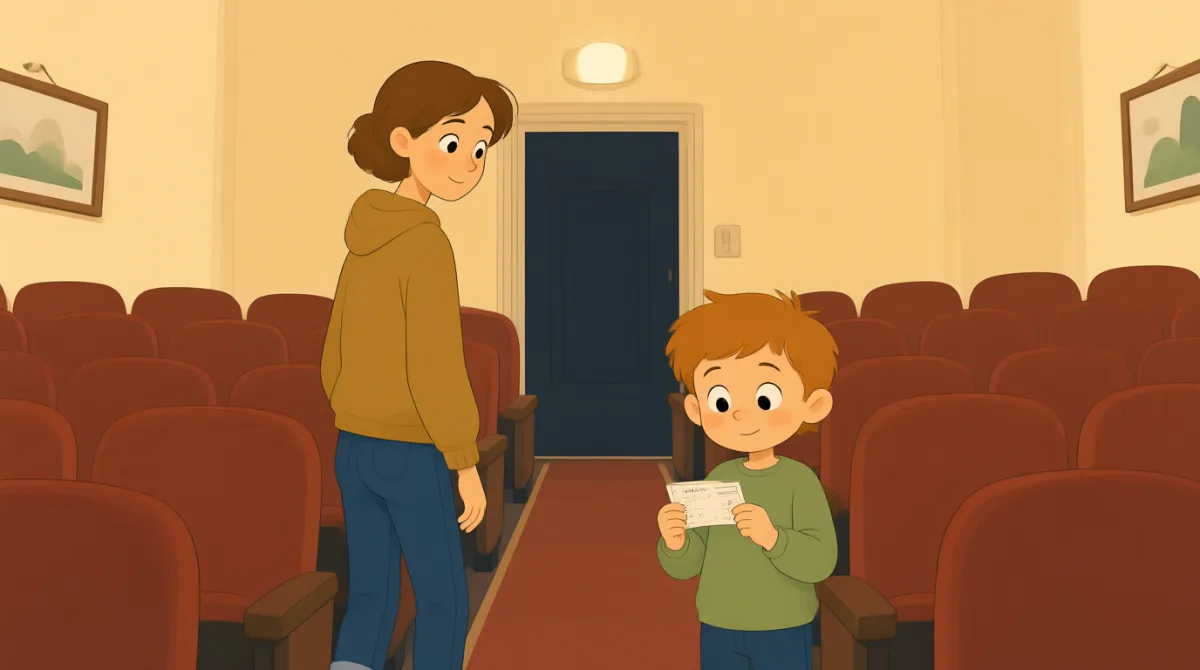

Our seats are in row B. Where is it?
Nasze miejsca są w rzędzie B. Gdzie on jest?

Let me check your tickets. Row B is over there.
Już sprawdzam wasze bilety. Rząd B jest tam.
I see it. Are our seats numbers five and six?
Widzę. Nasze miejsca mają numery pięć i sześć?
Yes. Five is yours, and six is mine.
Tak. Piątka jest twoja, a szóstka moja.
Great! Can I sit here with my popcorn?
Świetnie! Mogę tu usiąść z popcornem?
Sure. Keep your drink in the cup holder.
Jasne. Włóż napój do uchwytu na kubek.
Thanks! I’m ready for the movie.
Dzięki! Jestem gotowa na film.
Słownictwo6
- row Brząd B
This means the theater row marked with the letter B. Use “row” with a letter or number to describe where seats are.
Chodzi o rząd w kinie oznaczony literą B. Użyj „row” z literą lub numerem, żeby wskazać, gdzie znajdują się miejsca.
- Let me check your tickets.Już sprawdzam wasze bilety.
Jack says he will look at the tickets to find the seat information. Use “Let me check” when you want to look at something.
Jack mówi, że sprawdzi bilety, żeby znaleźć informacje o miejscach. Użyj „Let me check”, kiedy chcesz coś sprawdzić.
- over theretam
This means in that place, away from the speaker. Use it to point out where something is.
To znaczy „w tamtym miejscu”, z dala od osoby mówiącej. Użyj tego wyrażenia, żeby wskazać, gdzie coś się znajduje.
- Can I sit here?Mogę tu usiąść?
Emma asks politely if she can sit in a place. Use “Can I” to ask for permission.
Emma grzecznie pyta, czy może usiąść w danym miejscu. Użyj „Can I”, żeby poprosić o pozwolenie.
- cup holderuchwyt na kubek
This is the place beside a theater seat where you can put a drink. You can say, “Put your drink in the cup holder.”
To miejsce obok fotela kinowego, w którym można postawić napój. Możesz powiedzieć: „Put your drink in the cup holder.”
- I’m ready for the movie.Jestem gotowa na film.
Emma says she is prepared to watch the movie. Use “I’m ready for” before an activity or event.
Emma mówi, że jest gotowa obejrzeć film. Użyj „I’m ready for” przed nazwą aktywności lub wydarzenia.
Kluczowe zdania8
- 1
Our seats are in row B.
Nasze miejsca są w rzędzie B.
This tells someone which row your seats are in. You can change the letter to give your own row, such as “Our seats are in row C.”
To zdanie mówi komuś, w którym rzędzie są wasze miejsca. Możesz zmienić literę, żeby podać swój rząd, na przykład: „Our seats are in row C.”
- 2
Where is it?
Gdzie on jest?
This is a simple way to ask where something is. Use it when you are looking for a place or thing you have just mentioned.
To prosty sposób, żeby zapytać, gdzie coś się znajduje. Użyj tego pytania, gdy szukasz miejsca lub rzeczy, o której przed chwilą była mowa.
- 3
Let me check your tickets.
Już sprawdzam wasze bilety.
This is useful when you want to look at tickets for information. You can also say, “Let me check the time” or “Let me check the address.”
To przydatne zdanie, gdy chcesz sprawdzić informacje na biletach. Możesz też powiedzieć: „Let me check the time” lub „Let me check the address.”
- 4
Row B is over there.
Rząd B jest tam.
This sentence points out where a row is. You can replace “Row B” with another place, such as “The entrance is over there.”
To zdanie wskazuje, gdzie znajduje się rząd. Możesz zastąpić „Row B” innym miejscem, na przykład: „The entrance is over there.”
- 5
Are our seats numbers five and six?
Nasze miejsca mają numery pięć i sześć?
This is a yes-or-no question to check seat numbers. Use “Are our seats numbers…” and add the two numbers you want to confirm.
To pytanie, na które można odpowiedzieć „tak” lub „nie”, służy do sprawdzenia numerów miejsc. Użyj „Are our seats numbers…” i dodaj dwie liczby, które chcesz potwierdzić.
- 6
Five is yours, and six is mine.
Piątka jest twoja, a szóstka moja.
This sentence tells two people which seats belong to them. Use “yours” and “mine” to show who owns or uses something.
To zdanie mówi dwóm osobom, które miejsca należą do każdej z nich. Użyj „yours” i „mine”, żeby wskazać, do kogo coś należy lub kto z czegoś korzysta.
- 7
Keep your drink in the cup holder.
Włóż napój do uchwytu na kubek.
This is a simple instruction for where to put a drink. You can use “Keep your [thing] in the [place]” for other items and locations.
To prosta wskazówka, gdzie postawić napój. Możesz użyć wzoru „Keep your [thing] in the [place]” w odniesieniu do innych rzeczy i miejsc.
- 8
I’m ready for the movie.
Jestem gotowa na film.
This is a natural way to say you are prepared for an event. You can also say, “I’m ready for class” or “I’m ready for dinner.”
To naturalny sposób, żeby powiedzieć, że jesteś gotowa na jakieś wydarzenie. Możesz też powiedzieć: „I’m ready for class” lub „I’m ready for dinner.”