Explaining the Test
Wyjaśnienie sprawy z testem
Emma explains that she has a test tomorrow and needs to study. Leo understands why she needs quiet.
Emma wyjaśnia, że jutro ma test i musi się pouczyć. Leo rozumie, dlaczego potrzebuje ciszy.
Dialog6
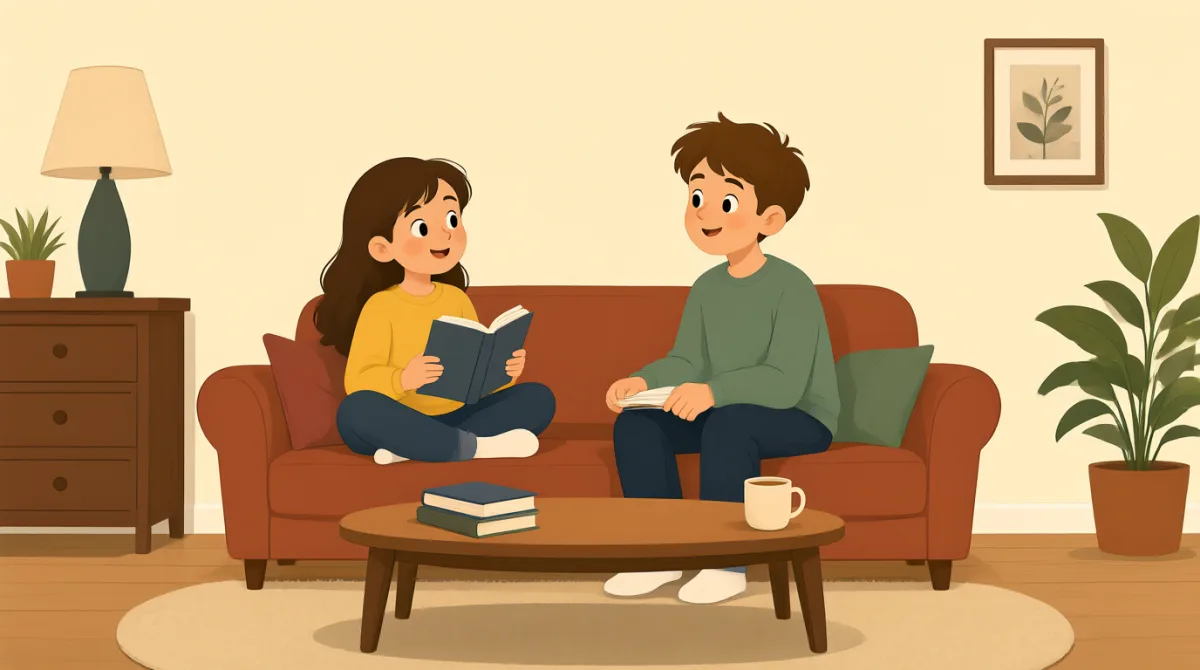

I have a test tomorrow, so I need to study tonight.
Jutro mam test, więc muszę się dziś wieczorem pouczyć.

Oh, I see. What are you studying?
A, rozumiem. Czego się uczysz?
I have a math test. I need to read and take notes.
Mam test z matematyki. Muszę poczytać i robić notatki.
That sounds like a lot of work.
Brzmi jak sporo pracy.
Yes, and I need a quiet place to study.
Tak, potrzebuję też cichego miejsca do nauki.
I understand. You need quiet tonight.
Rozumiem. Potrzebujesz dziś wieczorem ciszy.
Słownictwo7
- testtest
A test is an exam that checks what you know. Here, Emma has a math test tomorrow.
Test to sprawdzian, który sprawdza, co wiesz. Emma jutro ma test z matematyki.
- tomorrowjutro
Tomorrow is the day after today. Emma's test is tomorrow.
Jutro to dzień po dzisiejszym. Test Emmy jest jutro.
- studyuczyć się
To study is to learn or prepare for a test. Emma needs to study tonight.
Uczyć się to zdobywać wiedzę albo przygotowywać się do testu. Emma musi się dziś wieczorem pouczyć.
- take notesrobić notatki
To take notes is to write down important information. Emma needs to take notes for her math test.
Robić notatki to zapisywać ważne informacje. Emma musi robić notatki do testu z matematyki.
- a lot of worksporo pracy
This means something needs a lot of time or effort. Leo says studying sounds like a lot of work.
Tego wyrażenia używamy, gdy coś wymaga dużo czasu lub wysiłku. Leo mówi, że nauka brzmi jak sporo pracy.
- quiet placeciche miejsce
A quiet place has little or no noise. Emma needs one so she can study.
Ciche miejsce to takie, w którym jest niewiele hałasu albo nie ma go wcale. Emma go potrzebuje, żeby móc się uczyć.
- I understand.Rozumiem.
This means you know how someone feels or why they need something. Leo understands why Emma needs quiet.
Tego zwrotu używasz, gdy wiesz, co ktoś czuje albo dlaczego czegoś potrzebuje. Leo rozumie, dlaczego Emma potrzebuje ciszy.
Kluczowe zdania8
- 1
I have a test tomorrow, so I need to study tonight.
Jutro mam test, więc muszę się dziś wieczorem pouczyć.
Use this to explain why you need time to study. You can change “a test” and “tonight” to give your own reason and time.
Użyj tego zdania, żeby wyjaśnić, dlaczego potrzebujesz czasu na naukę. Możesz zmienić “a test” i “tonight”, by podać własny powód i czas.
- 2
Oh, I see.
A, rozumiem.
This is a simple way to show that you understand. You can say it after someone explains a situation.
To prosty sposób, by pokazać, że rozumiesz. Możesz tak powiedzieć, gdy ktoś wyjaśni ci jakąś sytuację.
- 3
What are you studying?
Czego się uczysz?
Use this question to ask what subject or topic someone is learning. The pattern “What are you studying?” works in many everyday conversations.
Użyj tego pytania, by zapytać, jakiego przedmiotu lub tematu ktoś się uczy. Wzór “What are you studying?” przydaje się w wielu codziennych rozmowach.
- 4
I have a math test.
Mam test z matematyki.
Use this to say what kind of test you have. Replace “math” with another subject, such as English or science.
Użyj tego zdania, by powiedzieć, jaki masz test. Zamiast “math” możesz podać inny przedmiot, na przykład angielski lub przyrodę.
- 5
I need to read and take notes.
Muszę poczytać i robić notatki.
This sentence explains what you need to do. You can use “I need to” followed by two tasks to describe your plans.
To zdanie wyjaśnia, co musisz zrobić. Po “I need to” możesz wymienić dwie czynności, by opisać swoje plany.
- 6
That sounds like a lot of work.
Brzmi jak sporo pracy.
Use this to react when someone describes a difficult or busy task. You can change “a lot of work” to describe something else.
Użyj tego zdania, gdy ktoś opisuje trudne lub wymagające zajęcie. Możesz zastąpić “a lot of work” innym wyrażeniem, żeby opisać coś innego.
- 7
I understand.
Rozumiem.
Use this short sentence to show that you understand someone's reason or feelings. It is a polite response in everyday conversations.
Użyj tego krótkiego zdania, by pokazać, że rozumiesz czyjeś powody lub uczucia. To uprzejma odpowiedź w codziennych rozmowach.
- 8
You need quiet tonight.
Potrzebujesz dziś wieczorem ciszy.
This sentence restates what someone needs and when. You can change “quiet” and “tonight” to talk about other needs and times.
To zdanie powtarza, czego ktoś potrzebuje i kiedy. Możesz zmienić “quiet” i “tonight”, by mówić o innych potrzebach i porach.