Applying for a Library Card
Wyrabianie karty bibliotecznej
An individual visits the public library to apply for a new library card, needing to understand the requirements and fill out necessary forms.
Osoba przychodzi do biblioteki publicznej, aby wyrobić nową kartę biblioteczną. Chce poznać wymagania i wypełnić niezbędne formularze.
Dialog8
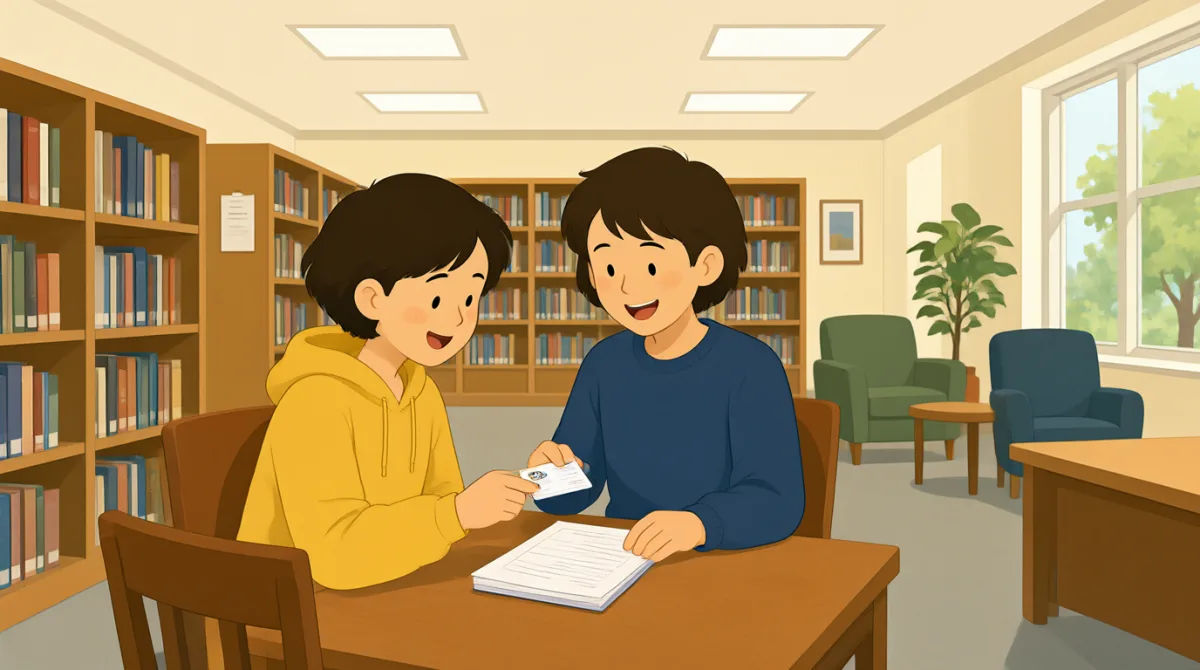

Hi there. I'd like to apply for a library card, please.
Dzień dobry. Chciałbym wyrobić kartę biblioteczną.

Certainly! Welcome to the library. Do you have a valid ID and proof of address with you?
Oczywiście! Witamy w bibliotece. Czy ma pan przy sobie ważny dokument tożsamości i potwierdzenie adresu?
Yes, I have my driver's license and a utility bill here.
Tak, mam przy sobie prawo jazdy i rachunek za media.
Great. That's perfect. Please fill out this application form. It asks for your name, address, phone number, and email.
Świetnie, to wystarczy. Proszę wypełnić ten formularz. Trzeba podać imię i nazwisko, adres, numer telefonu oraz adres e-mail.
Okay. And how long does it usually take to process?
Dobrze. A ile zwykle trwa rozpatrzenie wniosku?
It's usually pretty quick, just a few minutes once you've completed the form. We'll issue your card on the spot.
Zwykle trwa to bardzo krótko, zaledwie kilka minut od wypełnienia formularza. Kartę wydamy od ręki.
Perfect. Thanks for your help!
Świetnie. Dziękuję za pomoc!
You're welcome. Let me know if you have any questions while filling it out.
Nie ma za co. Proszę dać znać, jeśli będzie pan mieć jakieś pytania podczas wypełniania formularza.
Słownictwo7
- applyubiegać się (o)
To apply means to request or ask for something officially, like a card or permit. In this dialogue, Leo uses it to say he wants to get a library card.
„Apply” oznacza oficjalnie poprosić o coś lub się o coś ubiegać, na przykład o kartę albo pozwolenie. W tym dialogu Leo mówi, że chce wyrobić kartę biblioteczną.
- validważny
Valid means legally acceptable or current and not expired. Here, it describes an ID that is still good to use for identification.
„Valid” oznacza prawnie akceptowany, aktualny i niewygasły. Tutaj określa dokument tożsamości, którego można jeszcze użyć do potwierdzenia tożsamości.
- proofpotwierdzenie; dowód
Proof means evidence or a document that shows something is true. In the dialogue, proof of address is a bill showing where you live.
„Proof” oznacza dowód lub dokument potwierdzający, że coś jest prawdą. W dialogu „proof of address” to rachunek pokazujący, gdzie mieszkasz.
- utility billrachunek za media
A utility bill is a statement you receive for services like electricity, water, or gas. It's often used as proof of your home address.
„Utility bill” to rachunek za usługi takie jak prąd, woda lub gaz. Często służy jako potwierdzenie adresu zamieszkania.
- application formformularz zgłoszeniowy
An application form is a paper or online document you fill out to request something, like a library card. It asks for personal details.
„Application form” to papierowy lub internetowy formularz, który wypełniasz, aby o coś poprosić, na przykład o kartę biblioteczną. Zawiera pytania o dane osobowe.
- processrozpatrywać; przetwarzać
To process means to handle or complete the steps for something, like reviewing a form. Leo asks how long it takes to process his application.
„Process” oznacza zająć się czymś lub wykonać kolejne kroki, na przykład sprawdzić formularz. Leo pyta, ile trwa rozpatrzenie jego wniosku.
- issuewydać
To issue means to give or provide officially, like handing out a card. The library issues the card right away after processing.
„Issue” oznacza oficjalnie coś komuś przekazać lub zapewnić, na przykład wydać kartę. Biblioteka wydaje kartę od razu po rozpatrzeniu wniosku.
Kluczowe zdania7
- 1
I'd like to apply for a library card, please.
Chciałbym wyrobić kartę biblioteczną.
This is a polite way to request something at a service desk. Use 'I'd like to' for formal requests; it's useful for starting conversations in public places like libraries or offices.
To uprzejmy sposób, by o coś poprosić w punkcie obsługi. Użyj 'I'd like to' w formalnych prośbach. To przydatny zwrot na początek rozmowy w miejscu publicznym, na przykład w bibliotece lub urzędzie.
- 2
Do you have a valid ID and proof of address with you?
Czy ma pan przy sobie ważny dokument tożsamości i potwierdzenie adresu?
This is a question to check if someone has required documents. 'With you' means carrying them at the moment. It's common in service situations to verify identity and residence.
To pytanie sprawdza, czy ktoś ma wymagane dokumenty. 'With you' oznacza, że masz je przy sobie w danym momencie. Takie pytania są częste w sytuacjach obsługi, gdy trzeba potwierdzić tożsamość i miejsce zamieszkania.
- 3
Yes, I have my driver's license and a utility bill here.
Tak, mam przy sobie prawo jazdy i rachunek za media.
This responds affirmatively by listing items. 'Here' emphasizes they are present. Useful for confirming you meet requirements in official settings.
To twierdząca odpowiedź, w której wymieniasz dokumenty. 'Here' podkreśla, że masz je przy sobie. To przydatny zwrot, gdy chcesz potwierdzić spełnienie wymagań w oficjalnej sytuacji.
- 4
Please fill out this application form.
Proszę wypełnić ten formularz.
This instructs someone to complete a document. 'Fill out' is the phrasal verb for writing information in forms. It's a standard phrase in administrative tasks.
To polecenie, by uzupełnić dokument. 'Fill out' to czasownik frazowy oznaczający wpisywanie informacji do formularza. To standardowy zwrot w sprawach administracyjnych.
- 5
It asks for your name, address, phone number, and email.
Trzeba podać imię i nazwisko, adres, numer telefonu oraz adres e-mail.
This explains what information is needed. 'It asks for' personifies the form; the structure lists items with 'and' before the last one. Helpful for understanding form requirements.
To wyjaśnia, jakie informacje są potrzebne. 'It asks for' przypisuje formularzowi czynność pytania o dane. W wyliczeniu przed ostatnim elementem pojawia się 'and'. To przydatne, gdy chcesz zrozumieć, jakie informacje trzeba podać w formularzu.
- 6
How long does it usually take to process?
Ile zwykle trwa rozpatrzenie wniosku?
This inquires about time for a procedure. 'Usually' means typically; present simple 'does it take' is for general questions about duration. Use it when asking about service times.
To pytanie o czas trwania procedury. 'Usually' oznacza „zwykle”, a czasu present simple w konstrukcji 'does it take' używa się w ogólnych pytaniach o czas trwania. Przydaje się, gdy pytasz o czas obsługi.
- 7
We'll issue your card on the spot.
Kartę wydamy od ręki.
This means giving the card immediately. 'On the spot' is an idiom for right away. Future 'we'll' shows a promise; useful for reassuring customers about quick service.
To znaczy, że karta zostanie wydana natychmiast. 'On the spot' to idiom oznaczający „od razu”. Forma przyszła 'we'll' wyraża obietnicę. Zwrot przydaje się, by zapewnić klienta, że obsługa będzie szybka.