Requesting Specific Support
구체적인 지원 요청하기
Mia asks the school to consider practical supports, including written instructions, scheduled movement breaks, and extra processing time. Grace discusses which accommodations can be documented and how staff will deliver them consistently.
미아는 서면 지시, 정해진 움직임 휴식 시간, 추가 처리 시간 등 실질적인 지원을 고려해 달라고 학교에 요청합니다. 그레이스는 어떤 편의 제공을 문서화할 수 있는지, 그리고 교직원들이 이를 일관되게 제공하려면 어떻게 해야 하는지 논의합니다.
대화12
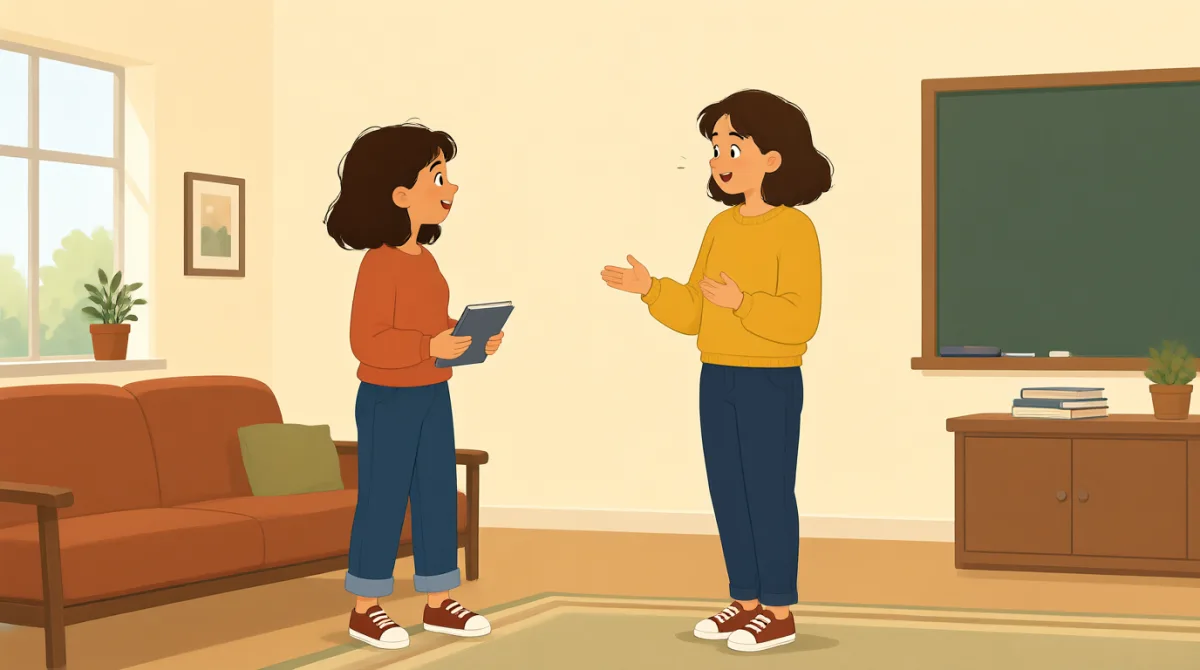

I’d like us to consider three supports: written instructions, scheduled movement breaks, and additional processing time. These address specific barriers we’re seeing, rather than lowering the expectations for the work.
세 가지 지원을 고려해 주셨으면 해요. 서면 지시, 정해진 움직임 휴식 시간, 그리고 추가 처리 시간이에요. 이런 지원은 학습에 걸림돌이 되는 구체적인 부분을 해결하려는 거지, 과제의 기대 수준을 낮추려는 게 아니에요.

That distinction is helpful. We can document accommodations that are tied to educational access, but we’ll need to define each one clearly enough that staff can apply it consistently across settings.
그 차이를 짚어 주셔서 도움이 되네요. 교육에 접근하는 데 필요한 편의 제공은 문서화할 수 있지만, 교직원들이 장소가 달라도 일관되게 적용할 수 있도록 각각의 내용을 충분히 구체적으로 정해야 해요.

For written instructions, could the plan specify that key steps are provided in writing, not just posted on the board? He can miss them when the class is moving quickly.
서면 지시의 경우, 핵심 단계가 칠판에 적혀 있기만 한 게 아니라 글로도 제공된다고 계획서에 명시할 수 있을까요? 수업이 빠르게 진행되면 아이가 그 내용을 놓칠 수 있어요.
Yes. We could state that multi-step directions will be provided verbally and in writing, with a brief check for understanding. That gives teachers a concrete routine to follow.
네. 여러 단계로 된 지시는 말로도 글로도 제공하고, 이해했는지 간단히 확인한다고 명시할 수 있어요. 그러면 교사들이 따라야 할 구체적인 절차가 생기죠.
That sounds workable. For movement breaks, I’d prefer scheduled opportunities rather than relying on him to ask once he’s already overwhelmed. How often can the team support that?
실행할 수 있을 것 같네요. 움직임 휴식은 아이가 이미 감당하기 어려워진 뒤에 요청하기를 기다리기보다, 정해진 시간에 받을 수 있으면 좋겠어요. 팀에서 얼마나 자주 지원할 수 있을까요?
We can start with a brief break about every forty-five minutes, and allow an additional break when needed. We should also identify an appropriate place and a way to return to instruction smoothly.
45분마다 짧게 한 번 쉬는 것부터 시작하고, 필요할 때는 추가로 쉴 수 있게 할 수 있어요. 적절한 장소와 수업으로 원활하게 돌아오는 방법도 정해야 해요.
Could the plan say who helps him transition back? A break is useful, but if he misses the next direction while returning, we haven’t really solved the problem.
다시 수업에 참여할 때 누가 도와줄지도 계획서에 적을 수 있을까요? 쉬는 건 도움이 되지만, 돌아오는 동안 다음 지시를 놓치면 문제가 해결된 게 아니니까요.
That’s a fair point. The classroom teacher can give a brief transition cue and restate any instruction he missed. I’ll make sure the responsibility is explicit in the plan.
일리 있는 말씀이에요. 담임 교사가 간단한 전환 신호를 주고, 아이가 놓친 지시가 있으면 다시 알려 주면 돼요. 그 책임이 계획서에 명확히 드러나도록 할게요.
For processing time, we’re not asking for unlimited extensions. We’d like him to have additional time to understand directions and complete tasks, especially when responses are timed.
처리 시간에 관해서 무제한으로 시간을 더 달라는 건 아니에요. 지시를 이해하고 과제를 마칠 수 있도록 시간을 더 주셨으면 해요. 특히 정해진 시간 안에 답해야 하는 경우에요.
We can document extended time when the task measures knowledge rather than speed, and note that directions should be clarified before timing begins. The team can specify the amount based on the assessment and classroom needs.
과제가 속도보다 지식을 평가하는 경우에는 추가 시간을 제공한다고 문서화하고, 시간 측정을 시작하기 전에 지시를 명확히 해 주어야 한다고 적을 수 있어요. 평가 방식과 교실에서의 필요에 따라 팀에서 추가 시간을 정하면 돼요.
I’d also like us to identify how we’ll know these supports are happening. Could staff keep a simple record, so we can review implementation rather than rely on everyone’s memory?
이런 지원이 실제로 제공되고 있는지 확인하는 방법도 정했으면 해요. 모두의 기억에만 의존하지 않고 실행 여부를 검토할 수 있도록, 교직원들이 간단히 기록해 둘 수 있을까요?
Agreed. Let’s include the supports, who is responsible, and how implementation will be tracked. If the wording is specific, we can review what’s working and address gaps without assigning blame.
좋아요. 어떤 지원을 제공할지, 누가 책임질지, 실행 여부를 어떻게 기록할지 포함하죠. 내용을 구체적으로 적어 두면 누구 탓을 하기보다 무엇이 잘되고 있는지 검토하고 부족한 점을 해결할 수 있어요.
어휘7
- educational access교육에 대한 접근
The ability to participate in and benefit from learning. Here, it means accommodations should address barriers without changing what the student is expected to learn.
학습에 참여하고 그로부터 도움을 얻을 수 있는 능력을 말해요. 여기서는 학생이 배워야 할 내용을 바꾸지 않으면서 학습을 가로막는 장애물을 해결하는 편의 제공을 뜻해요.
- apply it consistently일관되게 적용하다
To use a support in the same reliable way across people or situations. This phrase is useful when discussing how staff should follow a plan.
사람이나 상황이 달라도 지원을 믿을 수 있는 같은 방식으로 제공한다는 뜻이에요. 교직원들이 계획을 어떻게 따라야 하는지 이야기할 때 유용한 표현이에요.
- a brief check for understanding이해 여부를 간단히 확인하기
A short way to confirm that someone has understood directions or information. It can be used to describe a practical routine after giving instructions.
누군가 지시나 정보를 이해했는지 짧게 확인하는 방법이에요. 지시를 내린 뒤 따를 수 있는 실질적인 절차를 설명할 때 쓸 수 있어요.
- scheduled opportunities정해진 시간에 마련된 기회
Planned times when something can happen, rather than relying on it to happen spontaneously. Here, it describes movement breaks arranged in advance.
무언가가 우연히 생기기를 기다리는 게 아니라, 미리 계획해 둔 시간을 말해요. 여기서는 사전에 정해 둔 움직임 휴식 시간을 가리켜요.
- transition cue전환 신호
A short signal or reminder that helps someone move from one activity to another. It can be used when explaining how to support a student returning from a break.
한 활동에서 다른 활동으로 옮겨 가도록 돕는 짧은 신호나 알림이에요. 학생이 휴식 후 수업으로 돌아올 때 어떻게 지원할지 설명하는 데 쓸 수 있어요.
- extended time추가 시간
Additional time allowed to understand directions or complete a task. In this context, it is considered when the task measures knowledge rather than speed.
지시를 이해하거나 과제를 마치도록 더 허용하는 시간을 말해요. 여기서는 과제가 속도가 아닌 지식을 평가할 때 고려하는 지원이에요.
- implementation실행
The process of putting a plan into practice. Tracking implementation helps the team check whether agreed supports are actually being provided.
계획을 실제로 실천하는 과정이에요. 실행 상황을 기록하면 합의한 지원이 실제로 제공되고 있는지 팀에서 확인할 수 있어요.
핵심 문장7
- 1
These address specific barriers we’re seeing, rather than lowering the expectations for the work.
이런 지원은 학습에 걸림돌이 되는 구체적인 부분을 해결하려는 거지, 과제의 기대 수준을 낮추려는 게 아니에요.
This sentence explains that support can improve access without reducing academic standards. Reuse the structure “These address [barriers or needs], rather than [unwanted alternative]” to clarify your purpose.
이 문장은 학업 기준을 낮추지 않으면서도 학습에 더 잘 참여할 수 있도록 지원할 수 있다는 점을 설명해요. 의도를 분명히 하고 싶을 때 “These address [barriers or needs], rather than [unwanted alternative]” 구조를 활용해 보세요.
- 2
We can document accommodations that are tied to educational access, but we’ll need to define each one clearly enough that staff can apply it consistently across settings.
교육에 접근하는 데 필요한 편의 제공은 문서화할 수 있지만, 교직원들이 장소가 달라도 일관되게 적용할 수 있도록 각각의 내용을 충분히 구체적으로 정해야 해요.
This balances agreement with the need for precise, practical wording. Use it when proposing that a plan specify what support involves and how it should be delivered.
이 문장은 지원에 동의하면서도 정확하고 실용적인 표현이 필요하다는 점을 함께 말해요. 계획서에 어떤 지원을 제공할지, 어떻게 시행할지를 명시하자고 제안할 때 쓸 수 있어요.
- 3
For written instructions, could the plan specify that key steps are provided in writing, not just posted on the board?
서면 지시의 경우, 핵심 단계가 칠판에 적혀 있기만 한 게 아니라 글로도 제공된다고 계획서에 명시할 수 있을까요?
This is a diplomatic way to request a specific change to a plan. The pattern “Could the plan specify that…?” is useful when asking for clear documentation.
계획을 구체적으로 바꿔 달라고 정중하게 요청하는 표현이에요. 명확한 내용을 문서에 남겨 달라고 요청할 때 “Could the plan specify that…?” 패턴을 활용해 보세요.
- 4
For movement breaks, I’d prefer scheduled opportunities rather than relying on him to ask once he’s already overwhelmed.
움직임 휴식은 아이가 이미 감당하기 어려워진 뒤에 요청하기를 기다리기보다, 정해진 시간에 받을 수 있으면 좋겠어요.
This explains why proactive support may work better than waiting for a student to request help. Reuse “I’d prefer [option] rather than relying on [less reliable option]” to state a preference and its rationale.
학생이 도움을 요청할 때까지 기다리는 것보다 미리 지원하는 편이 나을 수 있는 이유를 설명해요. 선호하는 방식과 그 이유를 함께 말할 때 “I’d prefer [option] rather than relying on [less reliable option]”을 활용해 보세요.
- 5
The classroom teacher can give a brief transition cue and restate any instruction he missed.
담임 교사가 간단한 전환 신호를 주고, 아이가 놓친 지시가 있으면 다시 알려 줄 수 있어요.
This identifies both the responsible person and the actions needed to make a support effective. Use this kind of concrete wording when clarifying who will do what.
이 문장은 누가 책임질지와 지원을 효과적으로 제공하기 위해 무엇을 해야 하는지를 모두 알려 줘요. 누가 어떤 일을 할지 분명히 할 때 이런 식으로 구체적으로 표현해 보세요.
- 6
We can document extended time when the task measures knowledge rather than speed, and note that directions should be clarified before timing begins.
과제가 속도보다 지식을 평가하는 경우에는 추가 시간을 제공한다고 문서화하고, 시간 측정을 시작하기 전에 지시를 명확히 해 주어야 한다고 적을 수 있어요.
This defines when extra time is appropriate and adds a practical condition for timed tasks. The sentence is useful for describing an accommodation with clear limits and implementation details.
추가 시간이 적절한 경우를 정하고, 시간 제한이 있는 과제를 위한 실질적인 조건도 덧붙이는 문장이에요. 분명한 제한과 실행 방법을 포함해 편의 제공을 설명할 때 유용해요.
- 7
Let’s include the supports, who is responsible, and how implementation will be tracked.
어떤 지원을 제공할지, 누가 책임질지, 실행 여부를 어떻게 기록할지 포함하죠.
This concise proposal identifies three essential parts of an actionable plan. Reuse the structure “Let’s include [what], [who], and [how]” to organize a request.
실행 가능한 계획에 꼭 필요한 세 가지 요소를 간결하게 제안하는 표현이에요. 요청 내용을 정리할 때 “Let’s include [what], [who], and [how]” 구조를 활용해 보세요.