It Starts to Rain
비가 오기 시작해요
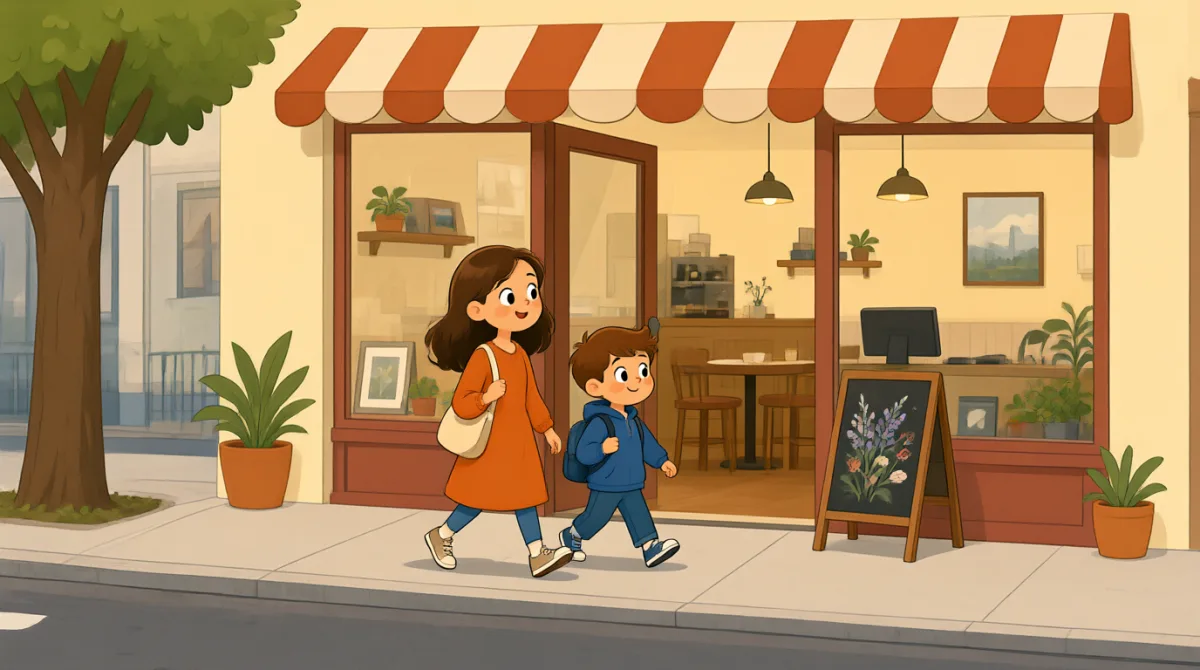
Emma and Leo are walking when it suddenly starts to rain. They look for a nearby shop.
에마와 레오가 걷고 있는데 갑자기 비가 오기 시작해요. 두 사람은 근처에 있는 가게를 찾아요.
대화7

Oh, no! It’s starting to rain.
아, 안 돼! 비가 오기 시작하네.

Yes, and it’s coming down fast.
그러게, 비가 엄청 세게 내리네.
I don’t have an umbrella.
난 우산이 없어.
Me neither. Let’s find a shop.
나도 없어. 가게를 찾아보자.
Is there a shop near here?
이 근처에 가게가 있어?
I see one across the street.
길 건너편에 하나 보여.
Great! Let’s go there quickly.
잘됐다! 빨리 가자.
어휘8
- starting to rain비가 오기 시작하다
Rain is beginning now. Use “It’s starting to rain” when the rain begins.
지금 비가 내리기 시작한다는 뜻이에요. 비가 막 내리기 시작할 때 “It’s starting to rain”이라고 해요.
- coming down fast비가 세차게 내리다
Rain is falling heavily or quickly. Use this phrase to describe strong rain.
비가 많이 또는 빠르게 내린다는 뜻이에요. 비가 세차게 내리는 상황을 묘사할 때 쓰는 표현이에요.
- umbrella우산
An umbrella keeps you dry in the rain. You can say, “I have an umbrella” or “I don’t have an umbrella.”
우산은 비에 젖지 않게 해 줘요. “I have an umbrella” 또는 “I don’t have an umbrella”라고 말할 수 있어요.
- Me neither.나도 없어.
This means “I don’t have one either.” Use it to agree with a negative statement.
“나도 없어”라는 뜻이에요. 부정문에 동의할 때 써요.
- find a shop가게를 찾다
This means to look for a place that sells things. You can say, “Let’s find a shop” when you need to buy something.
물건을 파는 곳을 찾아본다는 뜻이에요. 뭔가를 사야 할 때 “Let’s find a shop”이라고 말할 수 있어요.
- near here이 근처에
This means close to this place. Use it to ask if something is nearby.
이 장소에서 가까운 곳이라는 뜻이에요. 무언가가 가까이에 있는지 물어볼 때 써요.
- across the street길 건너편에
This means on the other side of the road. Use it to say where a place is.
도로의 반대편이라는 뜻이에요. 장소가 어디 있는지 말할 때 써요.
- quickly빨리
This means fast. Use it when you want someone to do something without waiting.
빠르게라는 뜻이에요. 기다리지 말고 무언가를 하길 바랄 때 써요.
핵심 문장8
- 1
Oh, no! It’s starting to rain.
아, 안 돼! 비가 오기 시작하네.
Use this when rain begins and you are surprised or worried. You can also say, “It’s starting to snow.”
비가 내리기 시작해서 놀라거나 걱정될 때 써요. “It’s starting to snow”라고 말할 수도 있어요.
- 2
Yes, and it’s coming down fast.
그러게, 비가 엄청 세게 내리네.
This describes rain that is falling heavily. You can use “coming down fast” to talk about strong rain.
비가 많이 내리는 상황을 묘사하는 문장이에요. 비가 세차게 내릴 때 “coming down fast”를 쓸 수 있어요.
- 3
I don’t have an umbrella.
난 우산이 없어.
Use this to say you do not own or have an umbrella with you. Replace “umbrella” with another item you need.
우산을 가지고 있지 않거나 지금 갖고 있지 않다고 말할 때 써요. 필요한 다른 물건으로 “umbrella”를 바꿔 말해 보세요.
- 4
Me neither.
나도 없어.
Use this short reply to agree with a negative statement. For example, after “I don’t have a ticket,” you can say, “Me neither.”
부정문에 동의할 때 쓰는 짧은 대답이에요. 예를 들어 “I don’t have a ticket”이라고 들으면 “Me neither”라고 할 수 있어요.
- 5
Let’s find a shop.
가게를 찾아보자.
Use “Let’s” to suggest doing something together. Replace “find a shop” with another action, such as “find a café.”
“Let’s”는 함께 무언가를 하자고 제안할 때 써요. “find a shop”을 “find a café”처럼 다른 행동으로 바꿔 보세요.
- 6
Is there a shop near here?
이 근처에 가게가 있어?
Use this to ask if a place is close to where you are. Replace “a shop” with another place, such as “a bus stop.”
현재 있는 곳에서 어떤 장소가 가까운지 물어볼 때 써요. “a shop”을 “a bus stop”처럼 다른 장소로 바꿔 보세요.
- 7
I see one across the street.
길 건너편에 하나 보여.
Use this to point out something you can see on the other side of the road. “One” replaces a singular noun already mentioned.
도로 반대편에 보이는 것을 가리킬 때 써요. “One”은 앞에서 이미 언급한 단수 명사를 대신해요.
- 8
Great! Let’s go there quickly.
잘됐다! 빨리 가자.
Use this to agree with a plan and suggest moving fast. Replace “there” with a place you have just talked about.
계획에 동의하면서 서둘러 움직이자고 제안할 때 써요. 방금 이야기한 장소를 가리키도록 “there”를 바꿔 보세요.