It Starts to Rain
Zaczyna padać
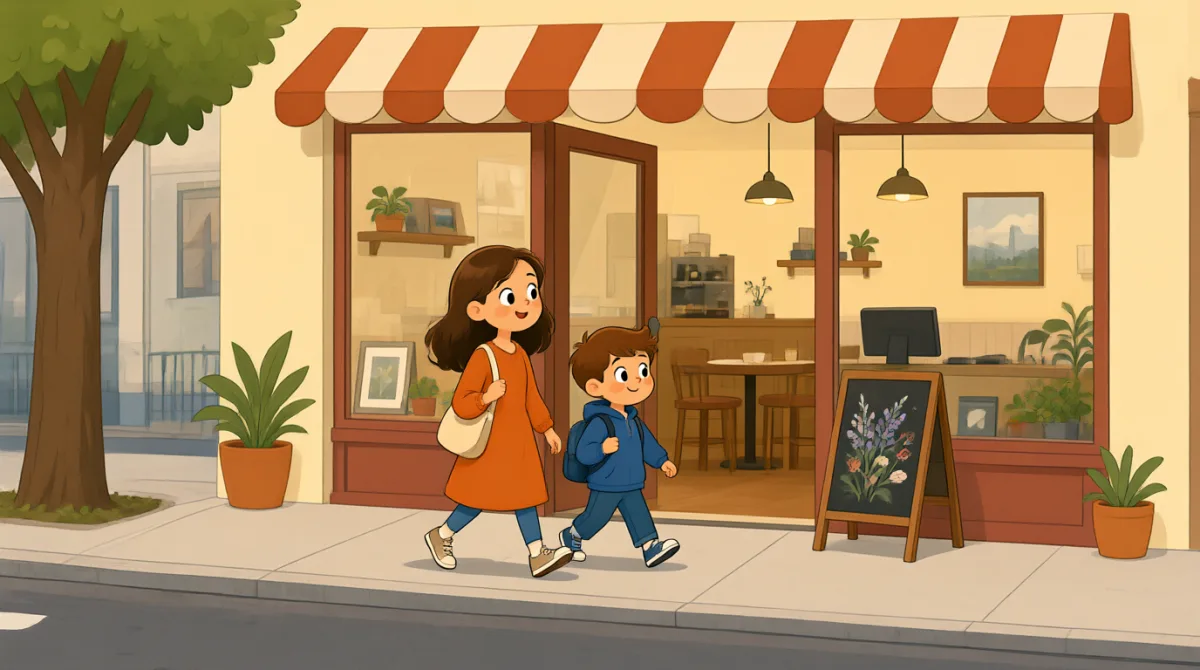
Emma and Leo are walking when it suddenly starts to rain. They look for a nearby shop.
Emma i Leo idą, gdy nagle zaczyna padać. Szukają pobliskiego sklepu.
Dialog7

Oh, no! It’s starting to rain.
O nie! Zaczyna padać.

Yes, and it’s coming down fast.
No tak, i mocno leje.
I don’t have an umbrella.
Nie mam parasola.
Me neither. Let’s find a shop.
Ja też nie. Znajdźmy jakiś sklep.
Is there a shop near here?
Czy jest tu gdzieś w pobliżu jakiś sklep?
I see one across the street.
Widzę jeden po drugiej stronie ulicy.
Great! Let’s go there quickly.
Świetnie! Chodźmy tam szybko.
Słownictwo8
- starting to rainzaczyna padać
Rain is beginning now. Use “It’s starting to rain” when the rain begins.
Deszcz właśnie zaczyna padać. Użyj „It’s starting to rain”, kiedy zaczyna padać.
- coming down fastmocno padać
Rain is falling heavily or quickly. Use this phrase to describe strong rain.
Deszcz pada mocno lub intensywnie. Użyj tego wyrażenia, żeby opisać ulewę.
- umbrellaparasol
An umbrella keeps you dry in the rain. You can say, “I have an umbrella” or “I don’t have an umbrella.”
Parasol chroni przed deszczem. Możesz powiedzieć „I have an umbrella” albo „I don’t have an umbrella”.
- Me neither.Ja też nie.
This means “I don’t have one either.” Use it to agree with a negative statement.
To znaczy „Ja też nie mam”. Użyj tego zwrotu, żeby zgodzić się z przeczącą wypowiedzią.
- find a shopznaleźć sklep
This means to look for a place that sells things. You can say, “Let’s find a shop” when you need to buy something.
To znaczy poszukać miejsca, w którym coś się sprzedaje. Kiedy chcesz coś kupić, możesz powiedzieć „Let’s find a shop”.
- near herew pobliżu
This means close to this place. Use it to ask if something is nearby.
To znaczy blisko tego miejsca. Użyj tego zwrotu, żeby zapytać, czy coś jest niedaleko.
- across the streetpo drugiej stronie ulicy
This means on the other side of the road. Use it to say where a place is.
To znaczy po przeciwnej stronie drogi. Użyj tego zwrotu, żeby powiedzieć, gdzie znajduje się jakieś miejsce.
- quicklyszybko
This means fast. Use it when you want someone to do something without waiting.
To znaczy w szybkim tempie. Użyj tego słowa, gdy chcesz, żeby ktoś coś zrobił bez zwlekania.
Kluczowe zdania8
- 1
Oh, no! It’s starting to rain.
O nie! Zaczyna padać.
Use this when rain begins and you are surprised or worried. You can also say, “It’s starting to snow.”
Użyj tego, gdy zaczyna padać, a ty jesteś zaskoczony lub zaniepokojony. Możesz też powiedzieć „It’s starting to snow”.
- 2
Yes, and it’s coming down fast.
No tak, i mocno leje.
This describes rain that is falling heavily. You can use “coming down fast” to talk about strong rain.
To opisuje mocno padający deszcz. Możesz użyć „coming down fast”, żeby mówić o intensywnym deszczu.
- 3
I don’t have an umbrella.
Nie mam parasola.
Use this to say you do not own or have an umbrella with you. Replace “umbrella” with another item you need.
Użyj tego, żeby powiedzieć, że nie masz parasola albo nie masz go przy sobie. Zastąp „umbrella” nazwą innej potrzebnej ci rzeczy.
- 4
Me neither.
Ja też nie.
Use this short reply to agree with a negative statement. For example, after “I don’t have a ticket,” you can say, “Me neither.”
Użyj tej krótkiej odpowiedzi, żeby zgodzić się z przeczącą wypowiedzią. Na przykład po „I don’t have a ticket” możesz powiedzieć „Me neither”.
- 5
Let’s find a shop.
Znajdźmy jakiś sklep.
Use “Let’s” to suggest doing something together. Replace “find a shop” with another action, such as “find a café.”
Użyj „Let’s”, żeby zaproponować wspólne zrobienie czegoś. Zastąp „find a shop” inną czynnością, na przykład „find a café”.
- 6
Is there a shop near here?
Czy jest tu gdzieś w pobliżu jakiś sklep?
Use this to ask if a place is close to where you are. Replace “a shop” with another place, such as “a bus stop.”
Użyj tego pytania, żeby dowiedzieć się, czy jakieś miejsce znajduje się blisko ciebie. Zastąp „a shop” nazwą innego miejsca, na przykład „a bus stop”.
- 7
I see one across the street.
Widzę jeden po drugiej stronie ulicy.
Use this to point out something you can see on the other side of the road. “One” replaces a singular noun already mentioned.
Użyj tego, żeby wskazać coś, co widzisz po drugiej stronie ulicy. „One” zastępuje wspomniany wcześniej rzeczownik w liczbie pojedynczej.
- 8
Great! Let’s go there quickly.
Świetnie! Chodźmy tam szybko.
Use this to agree with a plan and suggest moving fast. Replace “there” with a place you have just talked about.
Użyj tego, żeby zgodzić się na plan i zaproponować, by się pospieszyć. Zastąp „there” miejscem, o którym przed chwilą rozmawialiście.