Talking About Your Morning
朝のことを話す
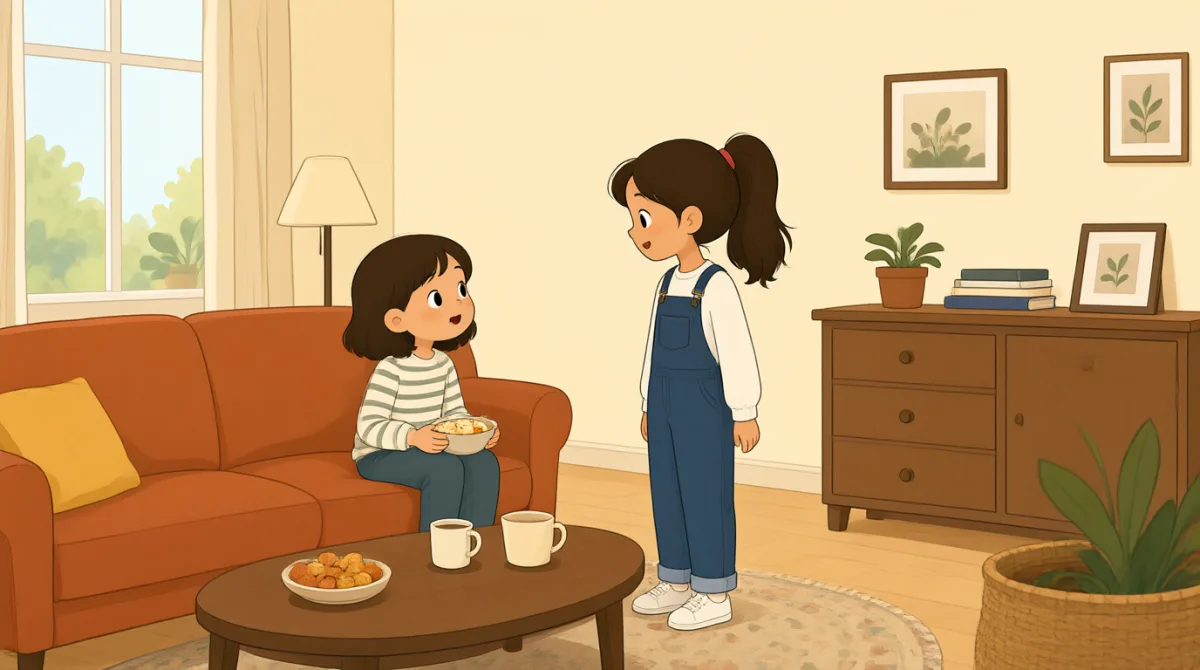
Emma asks Mia about her morning routine. Mia talks about when she gets up and what she eats for breakfast.
エマがミアに朝の習慣について尋ねます。ミアは何時に起きるか、朝食に何を食べるかを話します。
会話8

What time do you get up, Mia?
ミアは何時に起きるの?

I get up at seven every morning.
毎朝7時に起きるよ。
Do you eat breakfast at home?
朝ごはんは家で食べるの?
Yes, I eat breakfast in the kitchen.
うん、台所で食べるよ。
What do you have for breakfast?
朝ごはんは何を食べるの?
I have eggs and toast. I drink tea.
卵とトーストを食べるよ。紅茶を飲むよ。
That sounds nice. Do you eat early?
いいね。早めに食べるの?
Yes, I eat at seven thirty.
うん、7時半に食べるよ。
語彙8
- get up起きる
To get up means to leave your bed and start your day. You can say, “I get up at seven.”
“get up” は、ベッドから出て一日を始めるという意味です。“I get up at seven.”(7時に起きます。)と言えます。
- every morning毎朝
This means something happens each morning. Use it to talk about a daily routine.
“every morning” は、毎朝何かが起こるという意味です。毎日の習慣について話すときに使います。
- eat breakfast朝食を食べる
This means to have the first meal of the day. You can say where or when you eat breakfast.
“eat breakfast” は、一日の最初の食事をするという意味です。朝食を食べる場所や時間を伝えるときにも使えます。
- at home家で
This means in your own house. Use it to say where you do something.
“at home” は、自分の家でという意味です。何かをする場所を伝えるときに使います。
- in the kitchen台所で
This means inside the room where you cook and eat. Use “in” to say where an activity happens.
“in the kitchen” は、料理をしたり食事をしたりする部屋の中で、という意味です。活動をする場所を表すときは “in” を使います。
- have for breakfast朝食に食べる
This asks or tells what food someone eats in the morning. For example, “I have eggs for breakfast.”
“have for breakfast” は、朝に何を食べるかを尋ねたり、伝えたりするときに使います。たとえば、“I have eggs for breakfast.”(朝食に卵を食べます。)と言えます。
- toastトースト
Toast is bread that is cooked until it is warm and crisp. It is often eaten for breakfast.
“toast” は、温かくカリッとするまで焼いたパンのことです。朝食によく食べられます。
- early早く
Early means before the usual or expected time. You can use it to talk about when you eat or get up.
“early” は、いつもや予定している時間より前に、という意味です。食事や起床の時間について話すときに使えます。
重要な文8
- 1
What time do you get up, Mia?
ミアは何時に起きるの?
Use this question to ask when someone gets out of bed. Replace “Mia” with the person’s name or use “you” alone.
この質問は、相手が何時にベッドから出るかを尋ねるときに使います。“Mia” を相手の名前に置き換えるか、名前を付けずに “you” だけを使うこともできます。
- 2
I get up at seven every morning.
毎朝7時に起きるよ。
This is a simple way to describe a daily routine. Change the time to say when you get up.
毎日の習慣を簡単に伝える言い方です。起きる時間に合わせて時刻を変えましょう。
- 3
Do you eat breakfast at home?
朝ごはんは家で食べるの?
Use this yes-or-no question to ask where someone eats breakfast. Change “at home” to another place if needed.
この「はい・いいえ」で答える質問は、相手がどこで朝食を食べるかを尋ねるときに使います。必要に応じて “at home” を別の場所に変えましょう。
- 4
Yes, I eat breakfast in the kitchen.
うん、台所で食べるよ。
This answers a question about where you eat breakfast. You can replace “in the kitchen” with another place.
朝食を食べる場所についての質問に答える表現です。“in the kitchen” を別の場所に置き換えることができます。
- 5
What do you have for breakfast?
朝ごはんは何を食べるの?
Use this question to ask what food someone eats in the morning. You can answer with “I have” and the food.
この質問は、相手が朝に何を食べるかを尋ねるときに使います。“I have” のあとに食べ物を続けて答えられます。
- 6
I have eggs and toast.
卵とトーストを食べるよ。
This is a simple way to name foods you eat. Replace “eggs and toast” with your own breakfast foods.
食べるものを簡単に伝える言い方です。“eggs and toast” を、自分が朝食に食べるものに置き換えましょう。
- 7
I drink tea.
紅茶を飲むよ。
Use this sentence to say what you drink. Replace “tea” with another drink, such as “coffee” or “water.”
飲み物を伝えるときに使う文です。“tea” を “coffee” や “water” など別の飲み物に置き換えられます。
- 8
Yes, I eat at seven thirty.
うん、7時半に食べるよ。
This gives the time you eat. Replace “seven thirty” with another time.
食べる時間を伝える表現です。“seven thirty” を別の時間に置き換えましょう。