Unpacking and Sorting - The Overwhelm
सामान खोलना और छाँटना — उलझन
The couple opens the IKEA box to find an overwhelming number of parts and screws, initiating the first step of sorting and identifying everything according to the instruction manual. One partner might be more methodical, while the other feels daunted by the sheer volume of pieces.
यह जोड़ा IKEA का डिब्बा खोलता है और उसमें ढेर सारे पुर्ज़े और पेंच देखकर घबरा जाता है। अब निर्देश पुस्तिका के अनुसार हर चीज़ को पहचानने और छाँटने का पहला कदम शुरू होता है। एक साथी चीज़ों को व्यवस्थित ढंग से छाँट सकता है, जबकि दूसरा पुर्ज़ों की इतनी बड़ी संख्या देखकर परेशान हो जाता है।
संवाद8
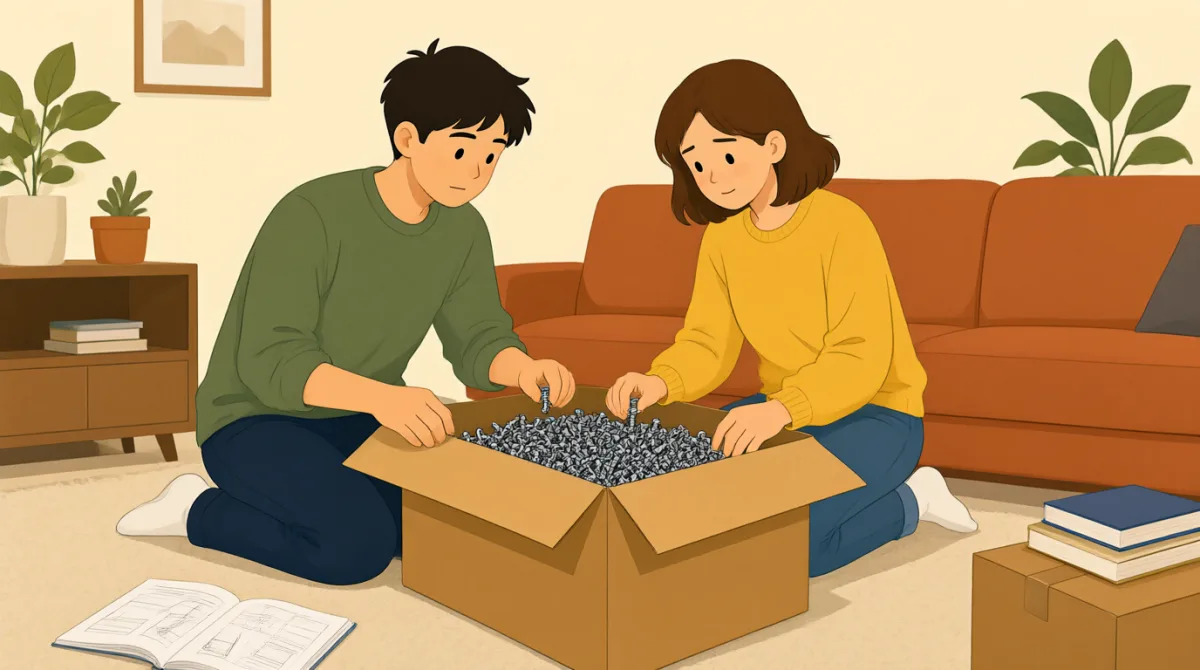

Okay, box is open! Wow… that is a lot of pieces. Where do we even begin?
अच्छा, डिब्बा खुल गया! अरे वाह… कितने सारे पुर्ज़े हैं। समझ ही नहीं आ रहा कि शुरुआत कहाँ से करें।

Right. Deep breaths. First things first, let's pull out the instruction manual. We need to identify all the parts and make sure nothing's missing.
हाँ। गहरी साँस लो। सबसे पहले निर्देश पुस्तिका निकालते हैं। हमें सारे पुर्ज़ों की पहचान करनी है और देखना है कि कुछ भी गायब तो नहीं।
Ugh, this looks like a puzzle. One hundred identical-looking wooden dowels. And these tiny screws… there are so many different kinds!
उफ़, ये तो किसी पहेली जैसी लग रही है। सौ लकड़ी की खूंटियाँ, जो सब एक जैसी दिखती हैं। और ये छोटे-छोटे पेंच… कितनी अलग-अलग किस्मों के हैं!
I know, it's a bit daunting. How about you take the large pieces and match them to the diagram on page two. I'll sort out all the hardware – the screws, nuts, and bolts – into little piles.
हाँ, थोड़ा मुश्किल लग रहा है। तुम बड़े पुर्ज़े लेकर उन्हें दूसरे पन्ने के चित्र से मिलाओ। मैं सारे छोटे सामान—पेंच, नट और बोल्ट—अलग-अलग ढेरों में छाँटता हूँ।
Sounds like a plan. So, these long ones are ‘Part A’, and the short, thin ones are ‘Part B’, got it. Wait, what about these oddly shaped ones? They're not on the first page.
ठीक है, ऐसा ही करते हैं। तो ये लंबे वाले ‘Part A’ हैं, और छोटे, पतले वाले ‘Part B’। समझ गई। रुको, इन अजीब आकार वाले पुर्ज़ों का क्या? ये पहले पन्ने पर नहीं हैं।
Hmm, let me check. Ah, those must be for the drawers later on. The manual usually introduces parts as they're needed. See? Page three starts with the drawer components.
हम्म, देखता हूँ। अच्छा, ये बाद में दराज़ों के लिए होंगे। पुस्तिका में आम तौर पर पुर्ज़ों के बारे में तभी बताया जाता है, जब उनकी ज़रूरत पड़ती है। देखो? तीसरे पन्ने पर दराज़ के पुर्ज़ों से शुरुआत होती है।
Right, okay. This is going to take a while. I feel like we need a dedicated sorting area just for the screws.
अच्छा, ठीक है। इसमें तो काफ़ी वक्त लगेगा। मुझे लगता है कि हमें सिर्फ़ पेंच छाँटने के लिए अलग जगह बनानी पड़ेगी।
Agreed. I'll grab some small bowls or cups from the kitchen. That always makes it easier. Don't worry, we'll get through this. It's always the sorting that feels the most overwhelming.
सही कहा। मैं रसोई से कुछ छोटी कटोरियाँ या कप ले आता हूँ। इससे काम हमेशा आसान हो जाता है। चिंता मत करो, हम ये कर लेंगे। छँटाई वाला काम ही हमेशा सबसे ज़्यादा भारी लगता है।
शब्दावली8
- piecesपुर्ज़े
Small parts or components of something, like furniture. Use it when talking about assembling or building items, e.g., 'There are many pieces in the box.'
किसी चीज़, जैसे फ़र्नीचर, के छोटे हिस्सों या घटकों को “pieces” कहते हैं। चीज़ें जोड़ने या बनाने की बात करते समय इसका इस्तेमाल करें। उदाहरण: 'There are many pieces in the box.' (डिब्बे में बहुत सारे पुर्ज़े हैं।)
- instruction manualनिर्देश पुस्तिका
A booklet with steps and pictures to guide how to assemble or use something. Common in DIY tasks like IKEA furniture; say 'Read the instruction manual first.'
ऐसी छोटी किताब जिसमें किसी चीज़ को जोड़ने या इस्तेमाल करने के तरीके के चरण और चित्र दिए होते हैं, उसे “instruction manual” कहते हैं। IKEA का फ़र्नीचर जोड़ने जैसे कामों में यह आम है। कहें: 'Read the instruction manual first.' (पहले निर्देश पुस्तिका पढ़ो।)
- dauntingमुश्किल लगने वाला
Something that feels scary or overwhelming because it's difficult. Useful for expressing hesitation, like 'The task looks daunting.'
जो काम कठिन होने की वजह से डरावना या बहुत भारी लगे, उसे “daunting” कहते हैं। हिचकिचाहट जताने के लिए यह उपयोगी है, जैसे: 'The task looks daunting.' (यह काम बहुत मुश्किल लग रहा है।)
- hardwareछोटे धातु के पुर्ज़े
Metal parts like screws and bolts used in building. In this context, it means small fasteners for furniture; e.g., 'Sort the hardware into piles.'
बनाने या जोड़ने में इस्तेमाल होने वाले पेंच और बोल्ट जैसे धातु के पुर्ज़ों को “hardware” कहते हैं। यहाँ इसका मतलब फ़र्नीचर जोड़ने वाले छोटे पुर्ज़े हैं। उदाहरण: 'Sort the hardware into piles.' (छोटे पुर्ज़ों को अलग-अलग ढेरों में छाँटो।)
- diagramचित्र
A simple drawing or picture that shows how parts fit together. Helpful in instructions; say 'Match the parts to the diagram.'
किसी सरल रेखाचित्र या चित्र को “diagram” कहते हैं, जो दिखाता है कि पुर्ज़े आपस में कैसे जुड़ते हैं। निर्देशों में यह मददगार होता है। कहें: 'Match the parts to the diagram.' (पुर्ज़ों को चित्र से मिलाओ।)
- componentsघटक
Individual parts that make up a whole item. Use in technical or assembly contexts, like 'Drawer components are on page three.'
किसी पूरी चीज़ को बनाने वाले अलग-अलग पुर्ज़ों को “components” कहते हैं। तकनीकी कामों या चीज़ें जोड़ने के संदर्भ में इसका इस्तेमाल करें, जैसे: 'Drawer components are on page three.' (दराज़ के पुर्ज़े तीसरे पन्ने पर हैं।)
- overwhelmingबहुत ज़्यादा लगने वाला
Too much to handle easily, causing stress. Common for big tasks; e.g., 'The number of pieces is overwhelming.'
जब कोई चीज़ आसानी से सँभालने लायक न लगे और तनाव पैदा करे, तो उसे “overwhelming” कहते हैं। बड़े कामों के लिए यह आम है। उदाहरण: 'The number of pieces is overwhelming.' (पुर्ज़ों की संख्या देखकर सिर चकरा जाता है।)
- sortingछँटाई
Organizing items into groups or categories. Practical for tasks like this; say 'Start with sorting the screws.'
चीज़ों को समूहों या श्रेणियों में व्यवस्थित करने को “sorting” कहते हैं। इस तरह के कामों में यह शब्द काम आता है। कहें: 'Start with sorting the screws.' (पेंच छाँटने से शुरुआत करो।)
मुख्य वाक्य8
- 1
Where do we even begin?
समझ ही नहीं आ रहा कि शुरुआत कहाँ से करें।
This expresses confusion or uncertainty about starting a task. Useful for collaborative situations; it's informal and shows overwhelm. Grammar: 'Even' adds emphasis for surprise.
'Where do we even begin?' का इस्तेमाल किसी काम की शुरुआत को लेकर उलझन या अनिश्चितता जताने के लिए होता है। साथ मिलकर काम करते समय यह उपयोगी है। यह अनौपचारिक है और परेशानी का भाव दिखाता है। व्याकरण: 'Even' (भी/आख़िर) आश्चर्य पर ज़ोर देता है।
- 2
First things first, let's pull out the instruction manual.
सबसे पहले निर्देश पुस्तिका निकालते हैं।
Prioritizes the most important step first. Great for organizing work; use when guiding others. Grammar: Imperative 'let's' suggests teamwork.
'First things first, let's pull out the instruction manual.' में सबसे ज़रूरी कदम को पहले करने की बात है। काम व्यवस्थित करते समय और दूसरों का मार्गदर्शन करते हुए यह वाक्य उपयोगी है। व्याकरण: 'let's' वाला आदेशात्मक रूप साथ मिलकर काम करने का सुझाव देता है।
- 3
This looks like a puzzle.
ये तो किसी पहेली जैसी लग रही है।
Compares a complicated task to a puzzle, meaning it's confusing. Helpful for everyday complaints; informal and relatable in DIY scenarios.
'This looks like a puzzle.' किसी उलझे हुए काम की तुलना पहेली से करता है, यानी काम समझने में मुश्किल लग रहा है। रोज़मर्रा की शिकायतों में यह अनौपचारिक और स्वाभाविक लगता है, ख़ासकर खुद कुछ जोड़ते समय।
- 4
How about you take the large pieces and match them to the diagram?
तुम बड़े पुर्ज़े लेकर उन्हें चित्र से मिलाओगी, कैसा रहेगा?
Suggests dividing tasks politely. Useful for teamwork; 'How about' softens suggestions. Grammar: Imperative form with 'you' for assigning roles.
'How about you take the large pieces and match them to the diagram?' काम बाँटने का विनम्र सुझाव देता है। साथ मिलकर काम करते समय यह उपयोगी है। 'How about' सुझाव को नरम बनाता है। व्याकरण: 'you' के साथ आदेशात्मक रूप से ज़िम्मेदारी बाँटी जाती है।
- 5
Sounds like a plan.
ठीक है, ऐसा ही करते हैं।
Agrees with a suggestion positively. Common in casual conversations to show approval; quick and efficient for moving forward.
'Sounds like a plan.' किसी सुझाव से सहमत होने और उसे मंज़ूरी देने का सहज तरीका है। अनौपचारिक बातचीत में आगे बढ़ने के लिए यह छोटा और असरदार जवाब है।
- 6
Those must be for the drawers later on.
वे बाद में दराज़ों के लिए होंगे।
Makes a logical guess about purpose. Useful for problem-solving; 'must be' expresses strong inference based on context.
'Those must be for the drawers later on.' संदर्भ के आधार पर किसी चीज़ के इस्तेमाल के बारे में तर्कसंगत अंदाज़ा जताता है। समस्या सुलझाते समय यह उपयोगी है। 'must be' से संदर्भ पर आधारित पक्का अनुमान व्यक्त होता है।
- 7
This is going to take a while.
इसमें काफ़ी वक्त लगेगा।
Predicts that something will require time. Practical for setting expectations; future continuous 'is going to take' shows ongoing action.
'This is going to take a while.' बताता है कि किसी काम में समय लगेगा। इससे पहले ही समय की अपेक्षा तय करने में मदद मिलती है। भविष्य का रूप 'is going to take' बताता है कि काम आगे चलकर समय लेगा।
- 8
Don't worry, we'll get through this.
चिंता मत करो, हम ये कर लेंगे।
Reassures someone during a challenge. Encouraging and supportive; use in tough situations. Grammar: 'We'll' is short for 'we will,' future simple for promise.
'Don't worry, we'll get through this.' किसी मुश्किल के दौरान दूसरे को भरोसा और हौसला देता है। चुनौतीपूर्ण स्थितियों में इसका इस्तेमाल करें। व्याकरण: 'We'll' का पूरा रूप 'we will' है; भविष्यकाल का यह रूप वादा जताता है।